Text: Svitlana Prokopchuk
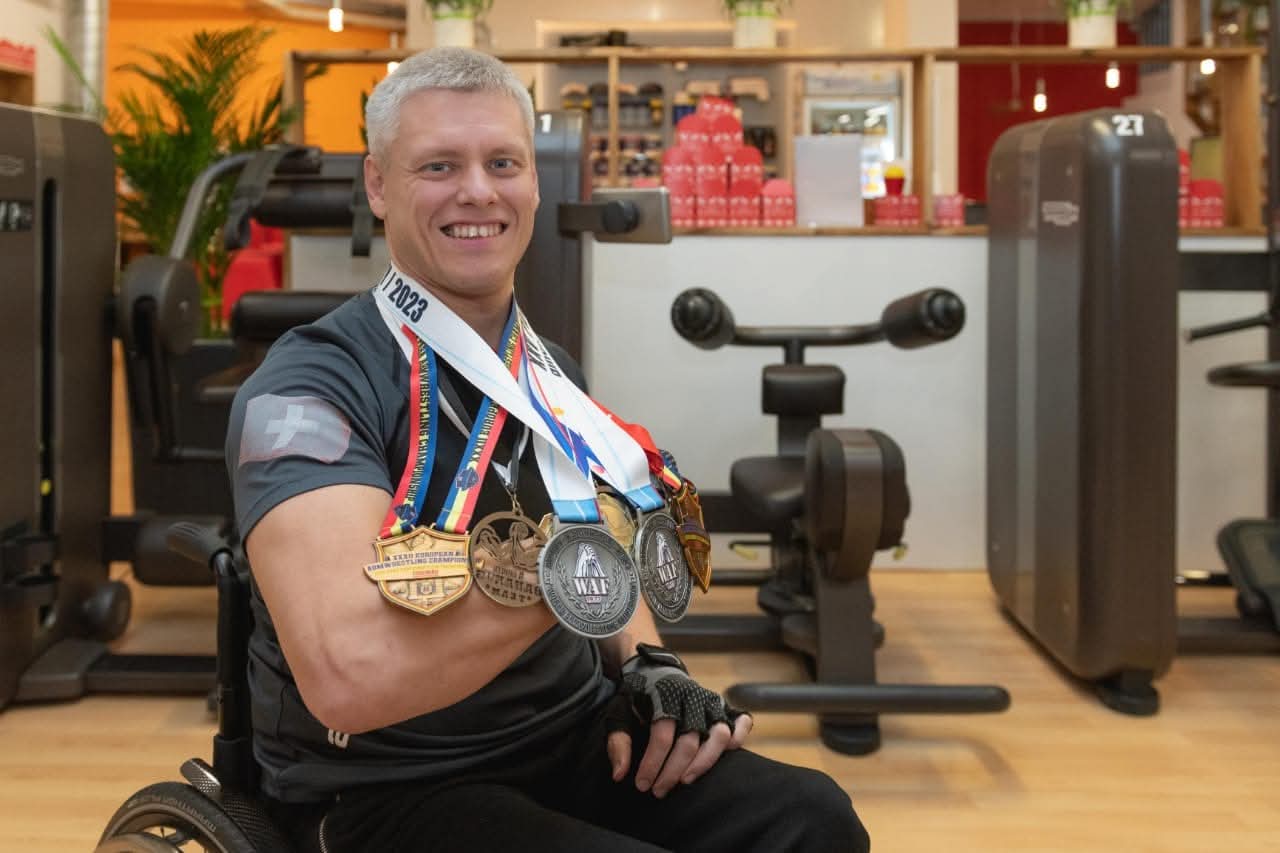
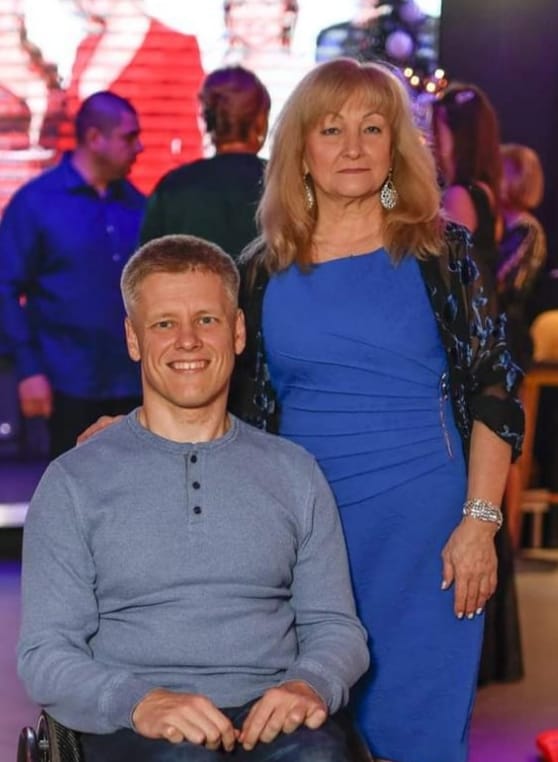
Oleh Aborniev was born with cerebral palsy and uses a wheelchair. But from the very first minutes of conversation, it becomes clear: this is not a story about suffering, but about movement — sometimes physical, sometimes internal, but always persistent.
Russia’s attack on Ukraine changed his life suddenly and without any chance to prepare. Together with his mother, Oleh was forced to leave Kharkiv — the way thousands did: quickly, almost instinctively, taking only the essentials. With no plans and no answer to the main question — “what next?”
Switzerland became an unexpected point of support for him. A new reality that had to be accepted step by step. But this is not a story about sadness. It is a story about life that continues even when everything around changes forever.
Integration, language, and everyday barriers
The first challenge was the language. Oleh spoke English well, but quickly realized it was not enough for full integration. He began learning German and reached a B2 level.
However, studying was not easy. Buildings were not always fully accessible, and when the elevator in the language school didn’t work, getting around became an additional challenge. Now Oleh recalls it with irony:
“They carried me up to the third floor. That was also part of integration.”
Despite the difficulties, the courses became an important step toward a new life. But after completing them, another problem arose — the lack of an official certificate. Oleh cannot take the exam due to dyslexia, which makes the written part impossible for him. He can write correctly only on a computer, while the exam must be handwritten.
“This is not about language knowledge. I can write in Ukrainian, English, and German. But the system does not take my condition into account,” he explains.
Volunteering as a way of life
The largest part of his activity in Switzerland has become volunteering. Oleh helps Ukrainians in hospitals and social services, accompanying them as a translator. Often in situations where not only language skills are needed, but also a precise understanding of medical or social processes. “The need for translators is huge. People sometimes simply cannot explain what is happening to them. It’s critically important,” he says.
He offered his services to official organizations, but the system turned out to be strictly regulated: you can only work as a translator with certification. Even where his help would clearly be useful, bureaucracy prevented official employment. “I do this as a volunteer. But the need is so great that sometimes it feels illogical: people wait for weeks while someone nearby could help,” Oleh explains.
Experience that cannot be replaced
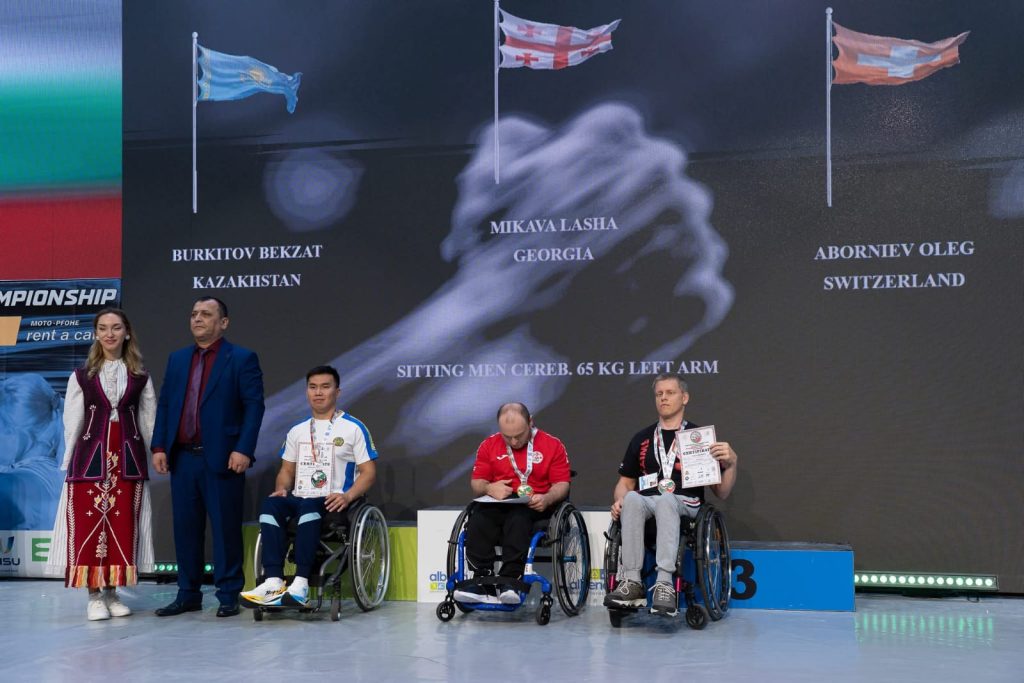
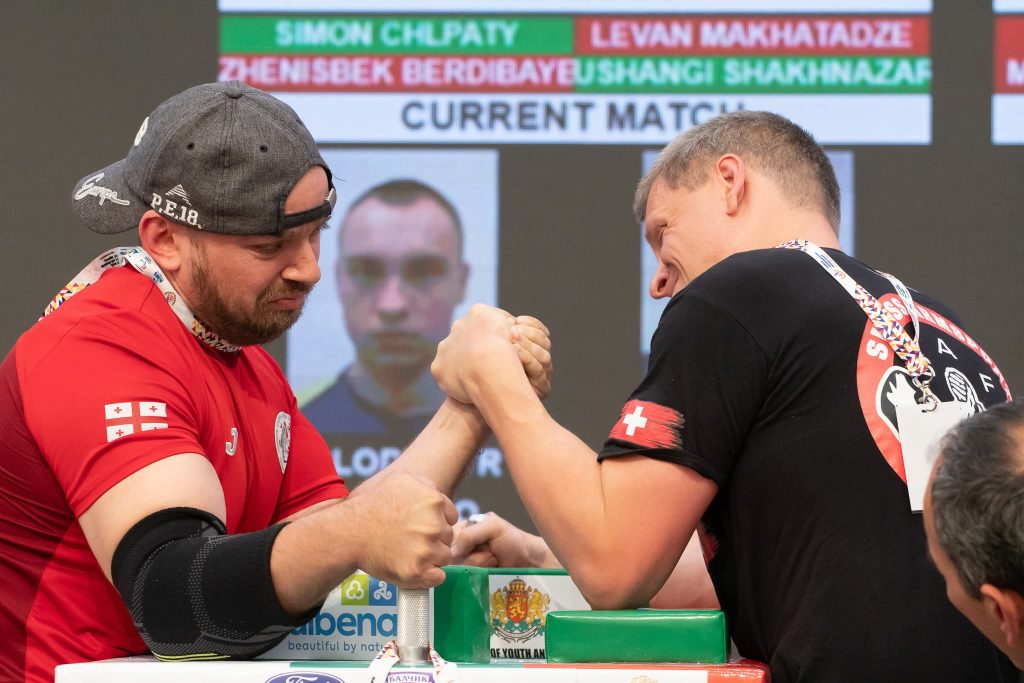
In Ukraine, Oleh had extensive professional and social experience: he worked as a translator, organized international business conferences, seminars, children’s camps, and led social projects for children from orphanages and displaced families. Multiple-time European champion in arm wrestling and two-time world vice-champion. Since 2022, he has been competing for Switzerland. Two-time world champion in fitness and bodybuilding. “I wanted to be an example: disability is not a sentence. If I can do it from a wheelchair, others can do even more,” he says. After moving abroad, this philosophy did not fade — it grew stronger and gained new meaning.
Barriers in the labor market
Despite his experience, integration into the professional environment proved difficult. Employers often focus on two things: migrant status and physical disability. “Often they don’t even consider you as a specialist. First they see the wheelchair, then the temporary residence permit — and only then the person,” he says. But life is not “temporary.” It cannot be put on pause. Oleh maintains a very active position in life and has no time for self-doubt.
He lives in Bern, which he calls one of the most accessible cities in the world for wheelchair users.
“The accessibility here is very good. I feel it every day. There are small issues, of course, but compared to other countries — the difference is huge,” he says. Recently, Oleh got married. His wife works in healthcare, and her daughter from a previous marriage — whom Oleh considers his own — attends school and already speaks German well. The family does not receive social assistance. In their free time, they organize charity events to support children affected by the war in Ukraine.
Community as support
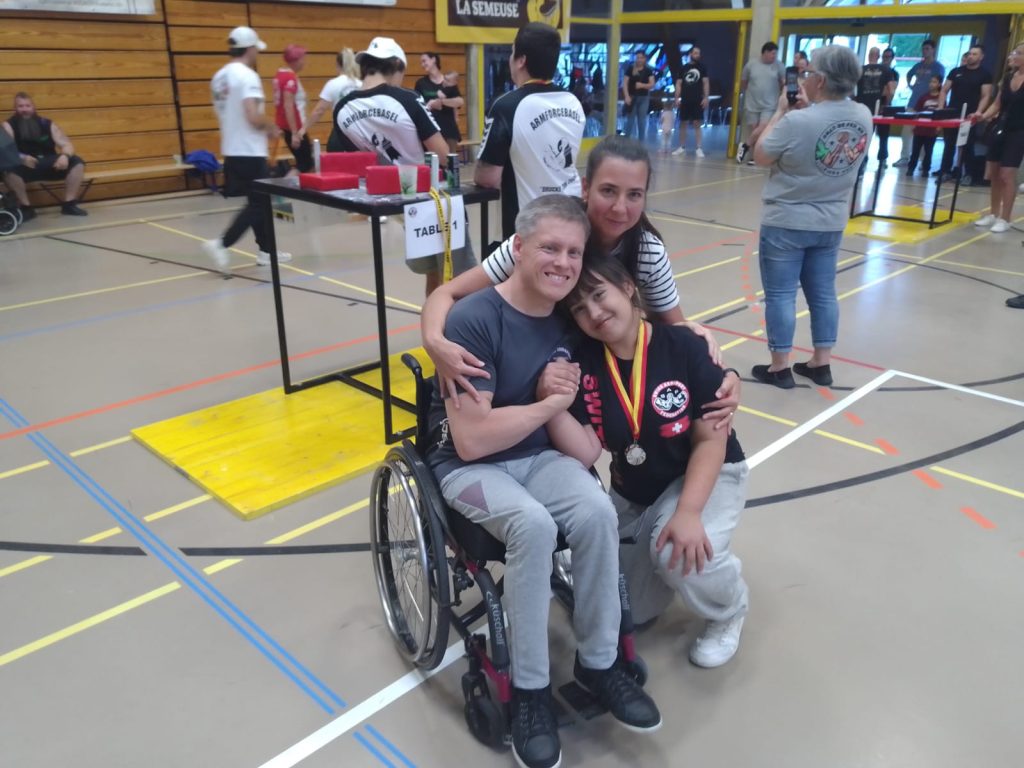
An important part of Oleh’s life is organizing meetings for the Ukrainian community in Bern. They take place in a church where people of all ages gather to communicate, support each other, and help one another. “It’s a small Ukrainian family. Here we speak our language and support each other. And more and more people are joining,” he says.
Despite all the challenges — war, migration, systemic barriers — Oleh does not speak in the language of defeat. His story stands on three pillars: experience, action, and helping others. He continues to look for a job, considers starting his own business, and at the same time works daily as a volunteer. “I just do what I can. If there’s an opportunity to help, I do it. And that’s probably the most important thing,” he concludes.