Notes from Basel Art Week, where I spent a day among the new voices at VOLTA — and found the art world asking the same questions our community lives with every day.
By Marina Bondarenko, USB Art Studio Coordinator
For four days in June, Basel once again became the centre of the art world. From 18 to 21 June, 290 galleries from 43 countries filled Messe Basel, and some 90,000 visitors from more than a hundred countries walked its halls. In the opening hours of the fair, a Picasso changed hands for 35 million dollars. But the real story this year was not in the numbers.
Two minutes from the main fair, in Hall 4.U of the Congress Center, VOLTA — the satellite fair that has served as a springboard for emerging artists for twenty-one years — built this year’s edition around a single idea: reframing what home and nationhood mean, and how personal and collective histories shape our sense of belonging in a shifting political landscape. Artistic director Lee Cavaliere put it plainly: the fair’s task is to “reframe notions of home and nation”.
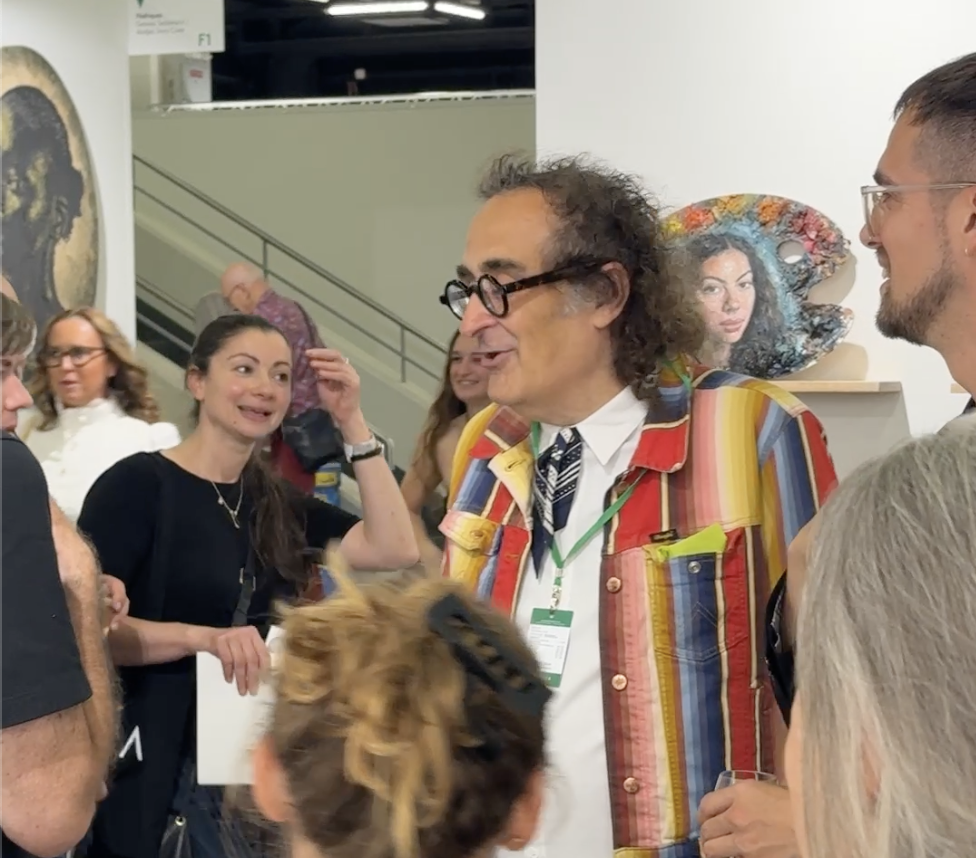
I coordinate USB Art Studio and work every day with people rebuilding their lives between two countries — so walking these aisles as a neutral observer was impossible. I spent a day in Hall 4.U, reading the fair with an artist’s eye and, at the same time, as a coordinator thinking about the artists of our community: is there room in these aisles for them?
Five trends that defined Basel 2026
1. Quality over speculation. The fever of the boom years is over — and no one at the fair seemed to miss it. Dealers described a measured, stable market where collectors take their time and say yes to substance — what advisers now call a “flight to quality”. Museum-grade historical works dominated; the new Basel Exclusive programme, which asks galleries to hold works back from online previews so they debut physically at the fair, rewarded everyone who came in person.
2. Digital art has moved from the margins into the mainstream. Zero 10, Art Basel’s sector for digital and new-media art, made its European debut in Basel this year. According to the Art Basel and UBS Survey of Global Collecting, digital art now ranks third after painting and sculpture in collectors’ overall spending. The debate is no longer whether digital art is “real” art — but how to live with it.
3. Collecting is becoming more accessible. VOLTA launched The 5,000 Edit — a curated selection of works priced up to 5,000 francs, built to open the door for first-time buyers and younger collectors. The segment under 50,000 dollars is one of the most resilient parts of the market. The message: collecting art is not only for those bidding on Picassos.
4. Underrepresented voices moved to the centre. The VOLTA 2026 Pavilion, “Everywhen: Contemporary Aboriginal Art”, explored an Indigenous understanding of time in which past, present and future coexist — connecting artists with land, memory and identity. At both fairs, booths increasingly unfolded as curated narratives: memory, metamorphosis, displacement, transformation.
5. Art stepped out into the city — to ask how we live together. Art Basel’s Parcours sector, curated by Stefanie Hessler, placed site-specific works along Clarastrasse under the theme of “conviviality” — the joy and difficulty of living together. Art left the exhibition halls and moved into public space — exactly where questions of coexistence are actually decided.
The themes I brought home
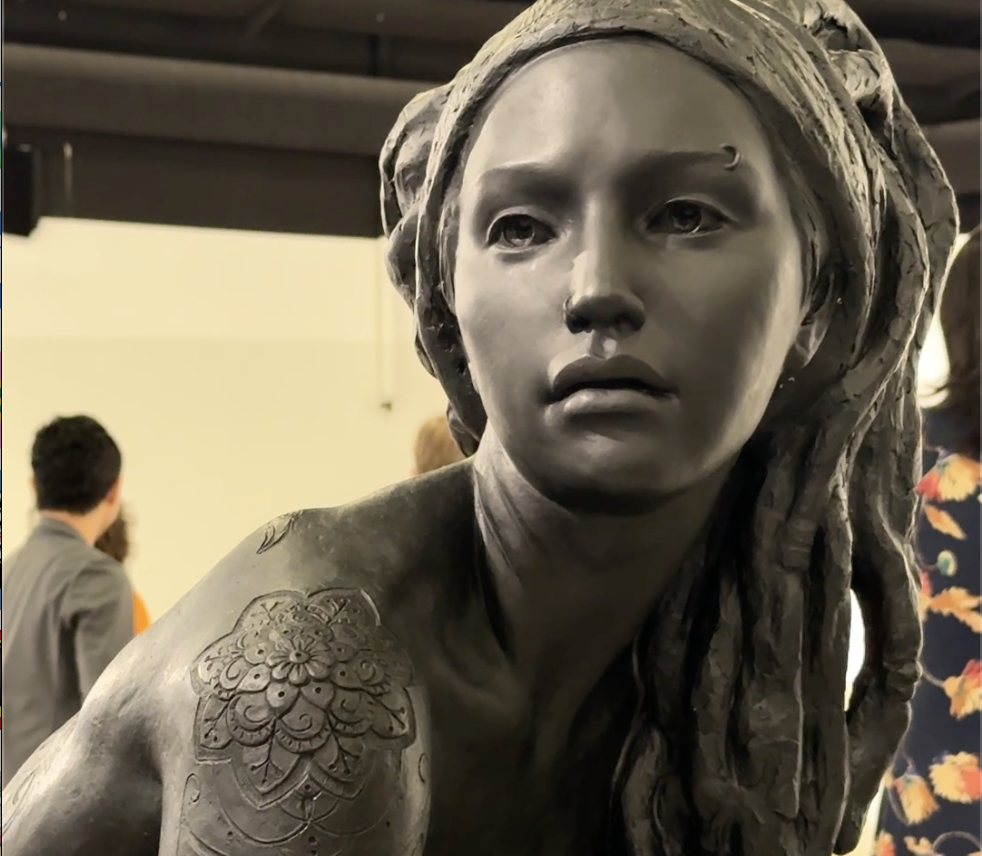
Belonging was everywhere. Not as a slogan, but as a working question artists were asking themselves and their audiences: what makes a place yours? What do you carry with you when you leave? What grows back after loss? VOLTA’s own framing — how artists reflect on their cultural histories, their sense of place, their connection to land — could serve almost word for word as a description of the conversations that take place every week in our community in Bern.
There was a Ukrainian thread, too. Among VOLTA’s exhibitors was Rukh Art Hub, a women-run initiative founded by Mariia Manuilenko and Olga Severina — two Kharkiv natives who built a platform in New York that has brought more than fifty Ukrainian artists to international audiences. “Rukh” means movement — and their presence in Basel was its proof: Ukrainian contemporary art is not waiting for the war to end to take its place in the world. In 2024, VOLTA’s New York edition hosted a full Ukrainian Pavilion in partnership with Razom; in Basel, that momentum continued through individual practices and galleries. Standing in the hall, I understood something about doors: this one is not closed. It is ajar — someone simply has to keep walking through it, again and again, until it stays open.
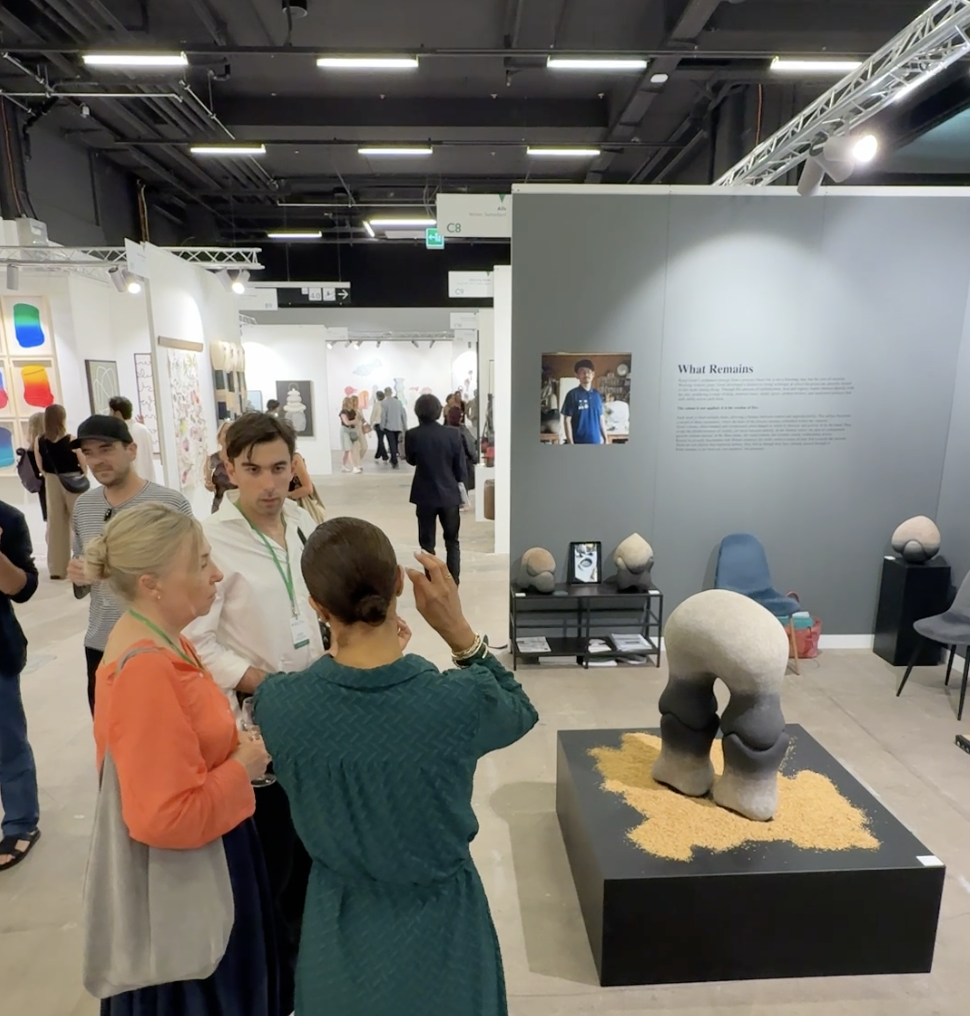
And there was a lesson about scale. The most talked-about works at VOLTA were not the most expensive ones. They were works with a story that holds: craft you can feel, narratives of identity and land that visitors carried out of the hall with them. Nobody was selling spectacle. The works people gathered around were quiet, handmade, honest about where they come from. For me, that was the most important professional observation of the day: this is exactly the strength the artists of our community already have. They do not need to become someone else to belong in these halls. The market is listening for precisely the stories they have to tell.
Why this matters for our community
USB Art Studio exists so that artists who have found themselves in Switzerland do not create in isolation — so that their work meets audiences, institutions and fellow artists. Basel Art Week is the most concentrated version of that encounter imaginable: a week when the entire art world stands in one city — less than an hour by train from the communities where our artists live and work.
The trends of 2026 point in one direction. The art world is actively looking for authentic voices with lived stories of home, displacement and rebuilding — and it is creating entry points, from collections under 5,000 francs to open city programmes, that did not exist ten years ago. The distance between a studio in Bern and the aisles of VOLTA has never been shorter.
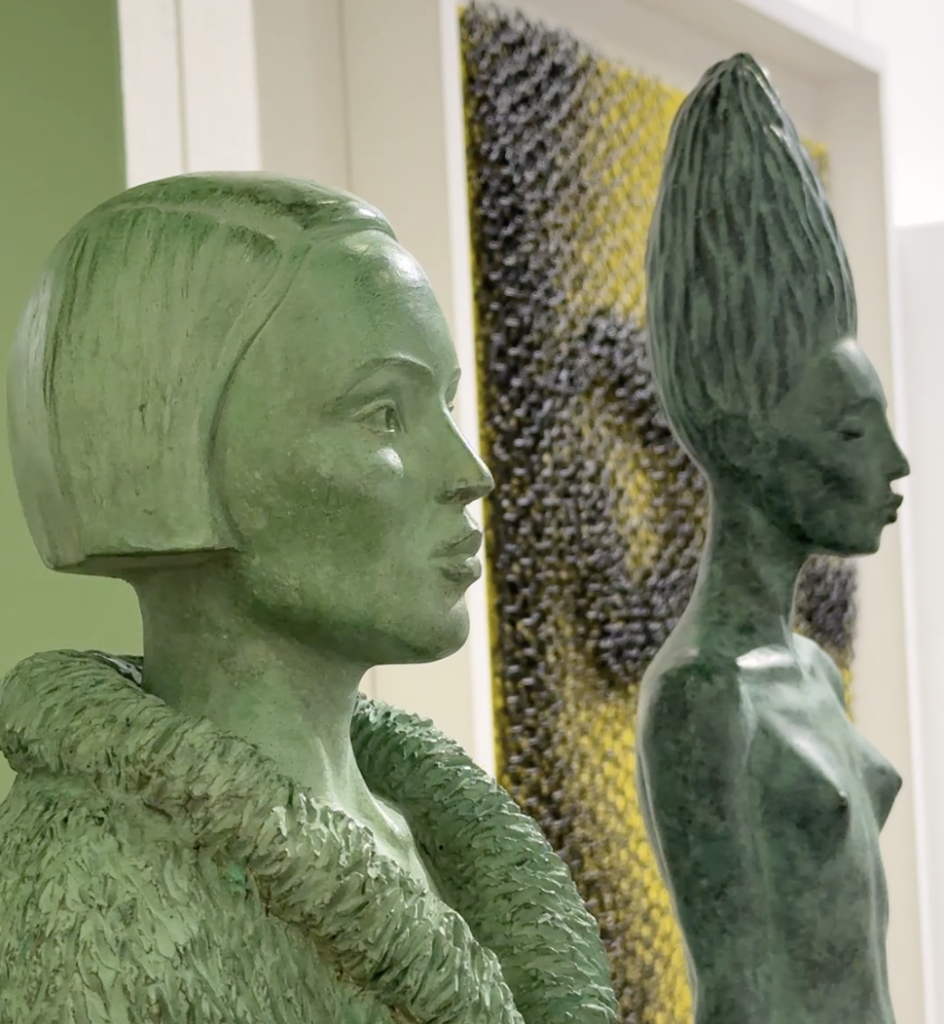
I came back with a to-do list in my phone: galleries to write to, artists I want to show this article to, and one idea I am not ready to let go of: next June, we should not be visitors only. The door is ajar — let’s walk through it.
Marina Bondarenko coordinates USB Art Studio. Facts in this article are drawn from official Art Basel and VOLTA announcements and closing reports, as well as artnet News, Artsy and MutualArt coverage of the June 2026 fairs.