Text from Svitlana Prokopchuk
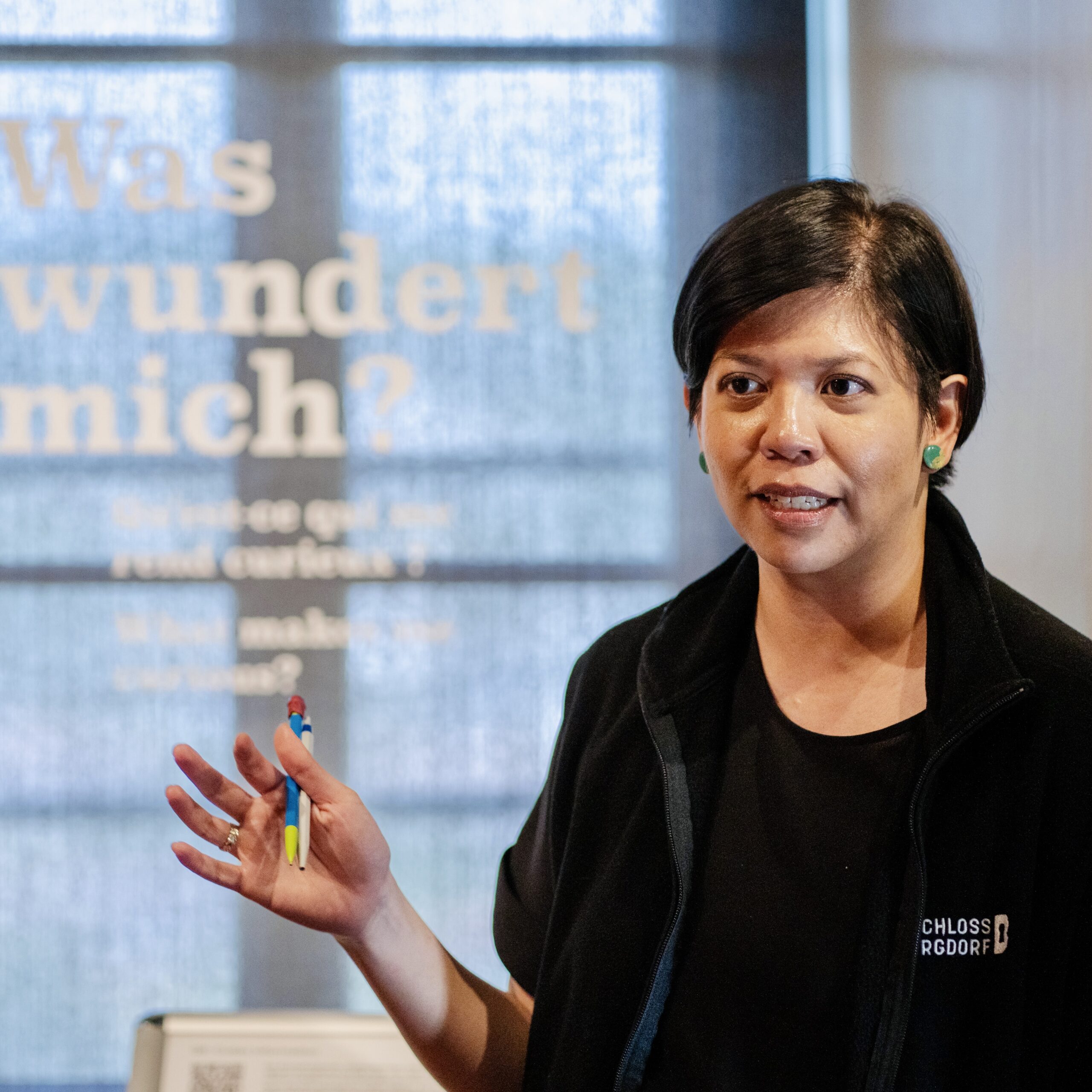
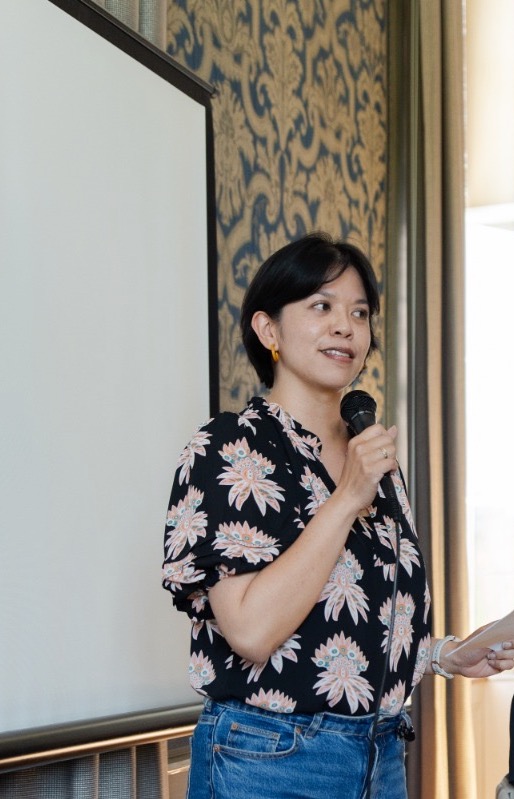
We met with Aisa Martinez at the Generation House in Bern. A calm voice, thoughtful tone — yet full of energy in every word. Her journey resembles a mosaic: from the feminist peace organisation Frieda to the city tour “Places of Participation,” from museum video installations at Schloss Burgdorf to a migration project in Thun. All these initiatives share one common thread: the voices of migrant women and the strong determination to make those voices heard.
“Imagine this — we had just arrived in Switzerland, and we invited two politicians.” Early projects and brave beginnings
— When I ask about your background, you say: “My God, it’s so much!” So where did it begin?
Aisa:
My first «real» project was in 2019. I had lived in Switzerland for only a year and participated in a mentoring programme at what was then CFD (nowFrieda). One requirement was to organise an event. We decided to host a panel discussion about migrant women in Swiss politics — and, incredibly, we invited Emine Sarıaslan, former Bern city councillor, and Sibel Arslan, member of the National Council from Basel. I thought: “Wow, we can actually do this!” We were all new in the country… and here were two politicians talking to us directly.
“Places of Participation”: Showing Bern through the eyes of migrant women
— You also lead city walks in Bern, but you show familiar places from an unfamiliar perspective. Why is that important?
Aisa: It’s not just a tour with stops at the station or town hall. We show where and how participation is possible for migrant women — in politics, culture, education. But it’s a challenging topic. The groups we have are quite different — some are open, some are quieter and more cautious. We speak only from our lived experience, not from specific laws or generalisations. Our experience is not universal. The most valuable part is the interest. People often stay afterwards to talk. That’s how a space for dialogue emerges.
“Voices of Burgdorf”: a Museum project to be proud of
— You completed a major museum project at Schloss Burgdorf. Real migrant voices! How do you reflect on this experience?
Aisa:
The project was called Zum Wesen der Dinge (“On the Essence of Things”). We added the voices of people with and without migration backgrounds — who live in Burgdorf — to the permanent exhibition. They researched the topics themselves, spoke on camera about objects or historical periods, and did so in their native language, in addition to German. For me, this is a huge personal achievement. Before Switzerland, I worked as a curator for large museum projects in the UK and the Arab world for more than ten years — but never saw a project fully completed. Something always intervened. But here, I finally did it — and with the community.
Integration, multiculturalism, and a critical view from inside
— How do you understand multiculturalism in Switzerland?
Aisa:
Switzerland is multicultural at its core — autonomous cantons, four official languages, its geography. And then, there are workers who migrated here and helped build modern Switzerland: from the Balkans, Portugal, Spain, Italy. They are as much part of the country as multilingualism. I understand this deeply because I grew up in the United States, and my parents were migrants. I know how challenging migrant life can be.
— And the intercultural dialogue? Any universal tools?
Aisa:
Empathy, openness, the ability to listen — and the courage to set boundaries when racism or discrimination occurs. I am also a migrant. I know how hard it is to be new, without a social network, without understanding the system.
Language integration: support exists, but it is not enough
— Communication depends on the language of the country — especially for entering the labour market.
Aisa:
For women, it’s especially hard. Many come through family reunification and want to work. But the language level required for work is much higher than that the official level for a residence permit. A2/B1 is enough to stay — not enough to get a job. The problem: after B1, it becomes almost impossible to find subsidised courses. Especially for women. Especially for mothers of young children! I appreciate the programmes that exist, but I want to say this clearly: Adults need just as much support as children.
“You only need one person to get things moving” — networks, support and “vitamin B”
— How do you ensure migrants can participate more in society?
Aisa:
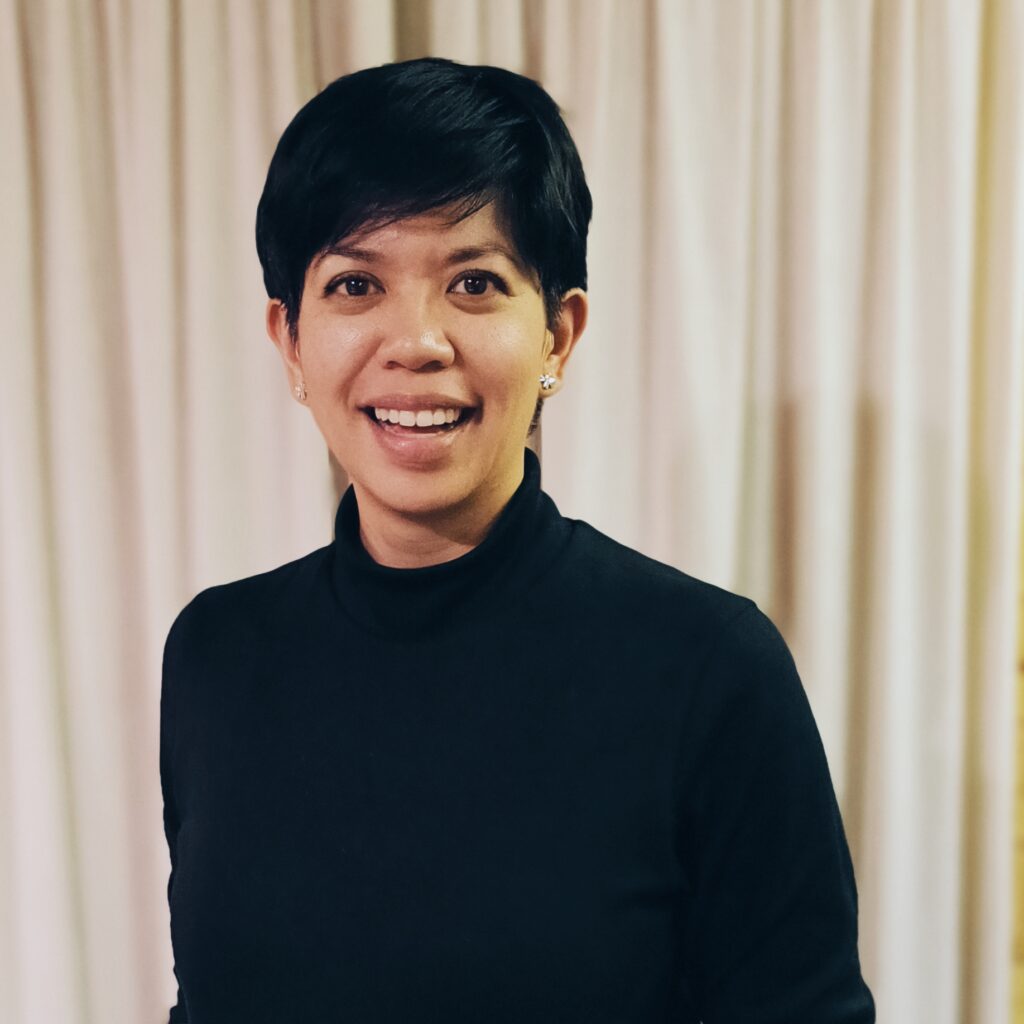
You need people. This famous “vitamin B,” but not in the sense of privilege — in the sense of human connections. If you find even one person who shares your values, that’s success! For me, those people were tthe Swiss women I met in Thun and my former colleagues in the City of Bern administration, when I did an internship there. It was hard for me too. I thought: “I have no network, only a thin thread.” And then, a few years later, you see everything growing — when the right people are around.
How do you measure success when it’s about people?
— What is a result for you?
Aisa: Sometimes it’s physical: screens, recordings, numbers. But often it’s interest. When people want to continue. When they stay to talk. Numbers don’t always capture reality. Sometimes one person saying “Let’s continue” is enough.
Success stories: museum, city and… recognition
— What professional achievement are you most proud of?
Aisa: First, the Burgdorf project – definitely. And second — being selected to the Immigration Commission of Thun. This selection says: “We see your work.” It’s not just a position — it’s trust and recognition.
— What’s next?
Aisa: We are updating the city tour — adding new initiatives. There are ideas for further museum work. And of course, plans in Thun. And in general? Nurturing social connections. Not just building new ones, but weaving together the ones that already exist. Many groups work separately, even though they share similar goals. Together, we can do much more. That is my mission.
Epilogue: One person, one step — more possibilities
Integration is not only structures, laws, and programmes. It is the courage to recognise your own experience as valuable. It is about the people who open doors. Those who support quietly but consistently. And those who, like Aisa Martinez, make this work visible — step by step, project by project, voice by voice. Because no one understands migrants better than someone who has walked that path — and no one can support them better.