Text by Svitlana Prokopchuk
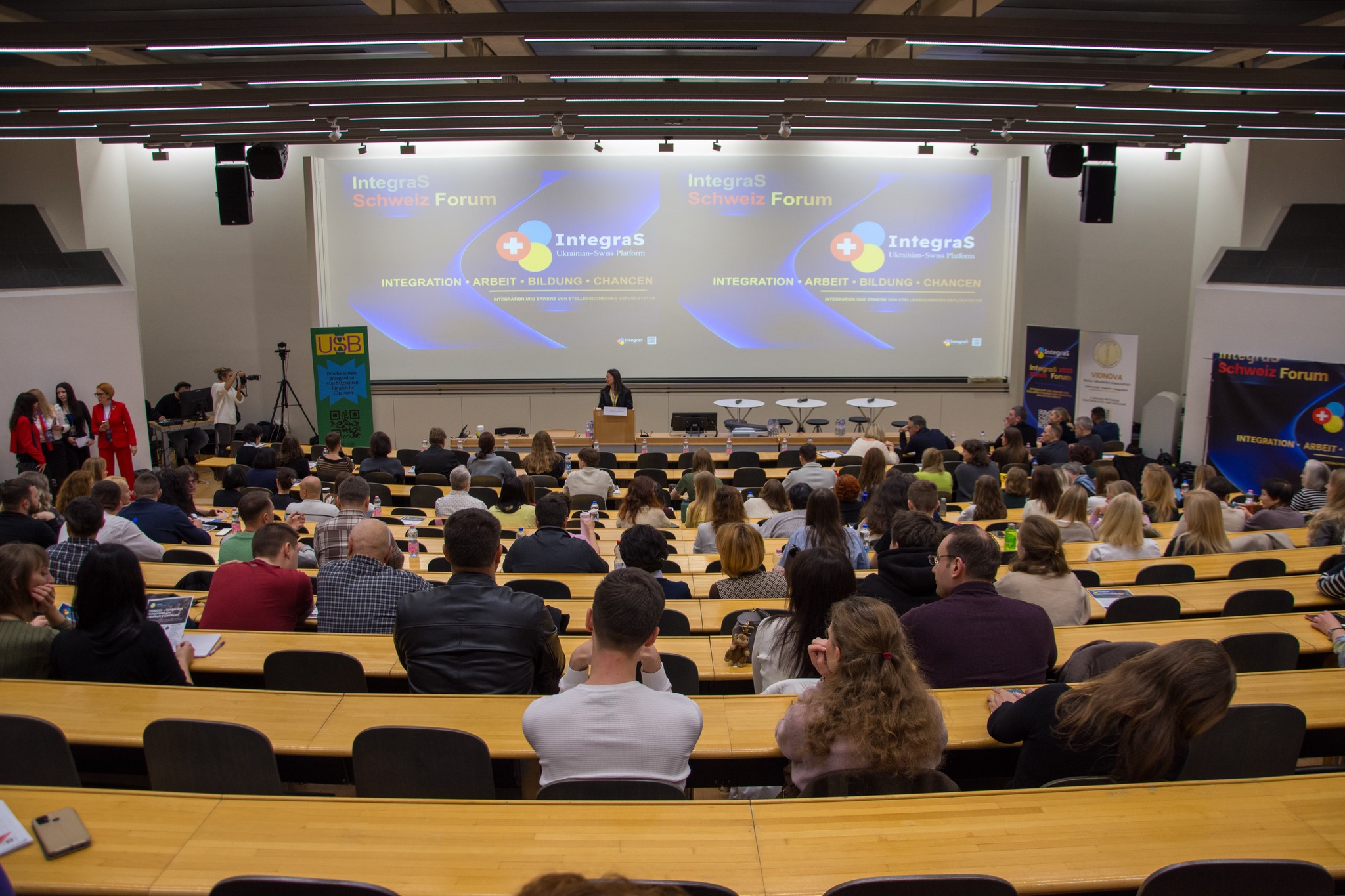
The IntegraS 2025 integration forum took place in Zurich, bringing together Ukrainian refugees, representatives of civil society organizations, and government officials to jointly discuss the challenges and successes of migrant integration in Switzerland. This year, the key focus was on dialogue—between authorities and society, cantonal structures and practitioners “on the ground,” theory and the lived experiences of people. The forum was partnered by the USB Association.
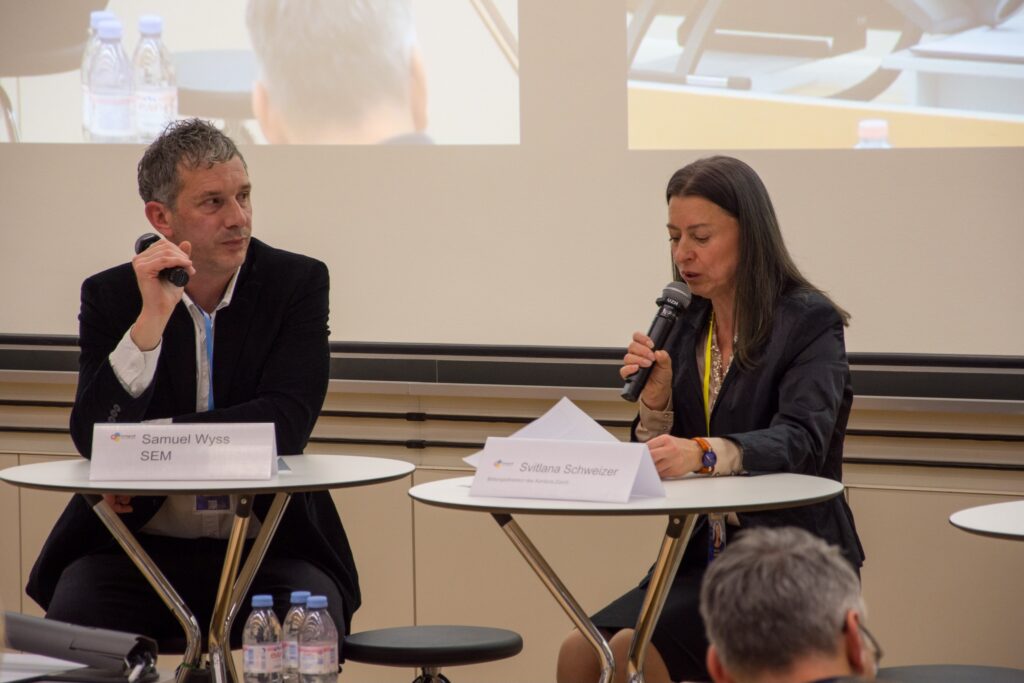
The forum on the integration of Ukrainians in Switzerland became a platform for an open discussion about the future of Protection Status S. Samuel Wiss, a representative of the State Secretariat for Migration (SEM), explained the key rules, prospects, and challenges currently facing people who were forced to leave Ukraine due to the war. “The Federal Council has already made a decision: Protection Status S will not be revoked before March 2027. An exception would only be possible in the event of a real end to the war and the disappearance of serious danger to life in Ukraine,” Wiss stated. However, this “extension of stability” also has a downside: prospects after 2027 remain uncertain—and, according to Wiss, this uncertainty is one of the main psychological and social challenges for both Ukrainians and employers.
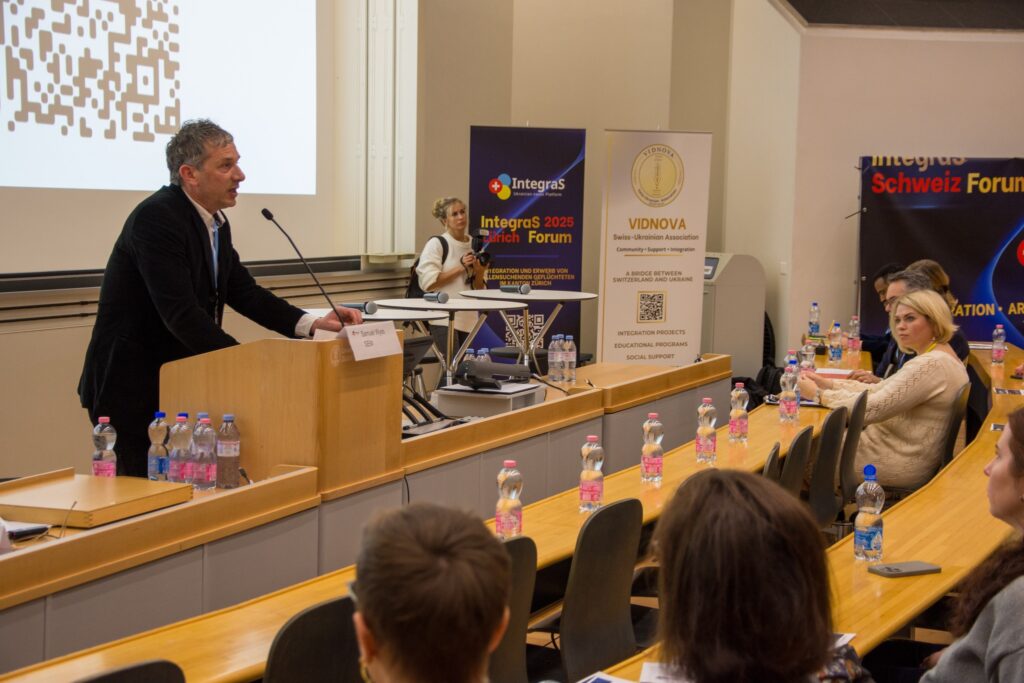
Half of Ukrainians of working age who have been living in Switzerland for more than three years are already employed—around 17,000 people. The state views this as a positive signal and aims to increase this figure. To that end, the work permit procedure has been abolished—now only a notification by the employer is required—and job coaches and RAV (Regional Employment Centers) are actively involved. Integration support is financed by the state, amounting to approximately CHF 3,000 per person per year. At the same time, Wiss does not idealize the situation. He is aware that many Ukrainians are forced to accept jobs below their qualifications. Nevertheless, Wiss emphasizes that this is a typical situation even for Swiss citizens at the beginning of their careers. The main thing is to gain initial experience, references, and a foothold in the labor market.
Motion Friedli: Who will receive Status S from the end of 2025—and who will not?
One of the controversial topics was the implementation of the parliamentary initiative Friedli. Since November, SEM has been analyzing whether returns to specific so-called seven “safe” regions of Ukraine are “acceptable.” This means that some new applicants may not receive Protection Status S. In addition, the list of so-called “safe” regions may be updated depending on the security situation in Ukraine. Decisions regarding each newly arrived refugee will be made on an individual basis. “Importantly, those who already have Status S are not subject to the new rules,” Samuel Wiss emphasized.
Travel to Ukraine—no more than 15 days per half-year
In his speech, Samuel Wiss also highlighted new parliamentary rules. It is stipulated that stays in Ukraine will be permitted for up to 15 days in each calendar half-year. At the same time, the number of trips is not limited—the restriction applies only to the total number of days. Exceeding the limit may affect one’s status.
Legal uncertainty—the biggest challenge
What will happen after five years of Ukrainian refugees’ stay in Switzerland? There is no clear answer. Currently, there are two mechanisms. The first is a transition to residence permits of category B. However, even a B permit in this format is temporary and depends on the validity of Status S. The second mechanism is hardship cases. A hardship case is a legal possibility whereby immigration authorities may make an exception to the rules and allow a person (or their family members) to stay in or come to Switzerland, even if general conditions (such as financial independence, documentation requirements, or standard grounds) are not met. The decision is based not on an automatic right, but on an individual assessment of each case—authorities or courts evaluate all circumstances of a specific person and their family. Wiss acknowledges that due to these mechanisms, Ukrainians are unable to make long-term life plans; employers are reluctant to invest in employees without a stable status; and integration without clear prospects becomes psychologically more difficult. Political decisions will evidently continue to be developed. However, there are currently no concrete guarantees. As a result, confidence in the future is not yet assured—but tools for self-realization are available.