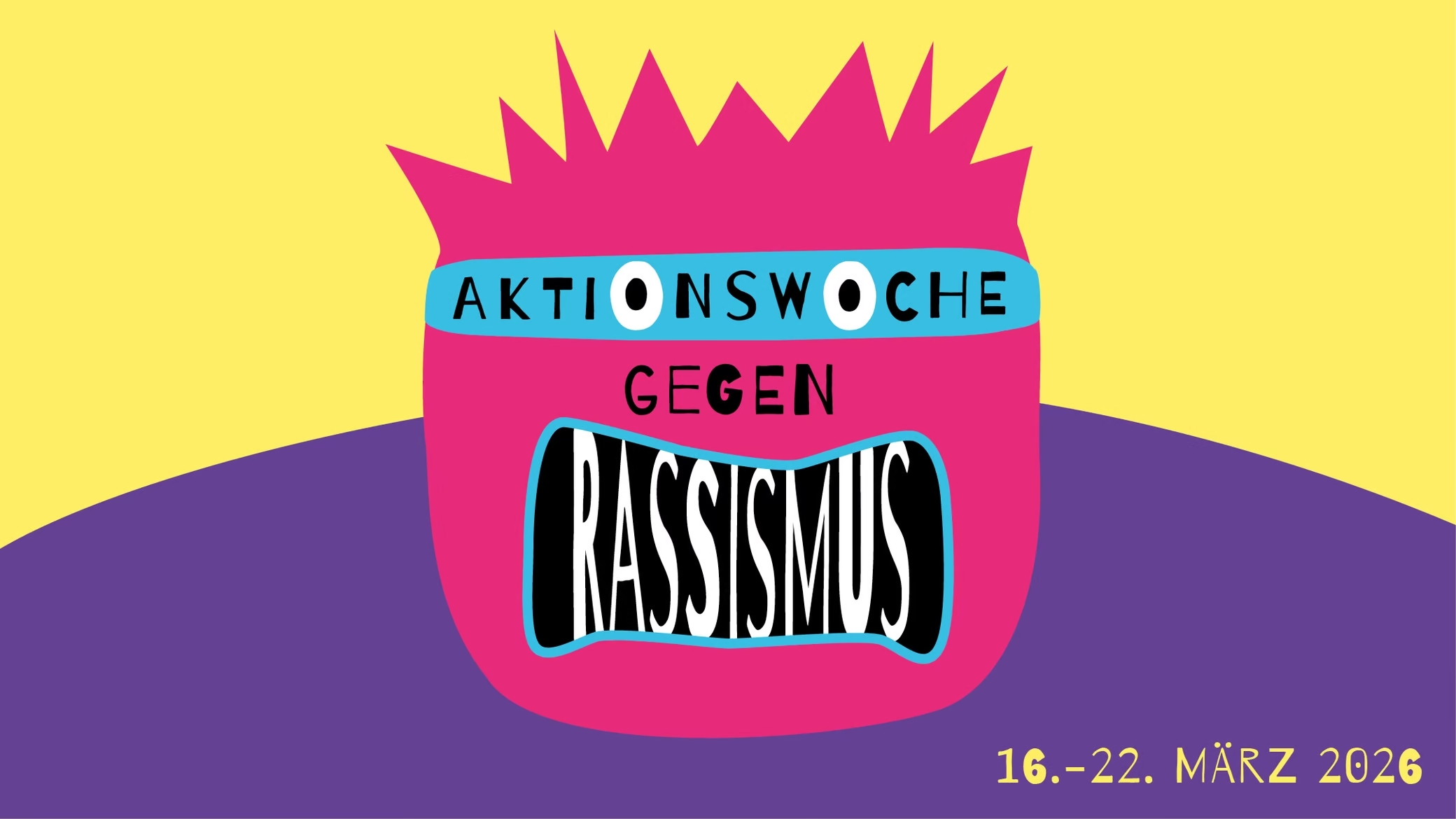
Basel, March 2026. For one week, the city of Basel transformed into a living forum. Classrooms, theatres, public squares, and community centers became spaces for a shared question: how does racism shape everyday life, and what can be done about it? From 16 to 22 March, the Action Week Against Racism2026(Aktionswoche gegen Rassismus2026) brought together activists, institutions, and residents in a dense program of workshops, discussions, and cultural events. But beyond the diversity of formats, a common thread ran through the week: racism was not an abstract issue. It was embedded in daily experiences, structures, and systems.
From the Workplace to the Street
According to the official program and reports from participants, the week opened with an interactive theatre performance addressing racism in the workplace. Rather than a traditional lecture, the format invited the audience to step into real-life scenarios, test reactions, and explore how discrimination often appeared subtly—through remarks, assumptions, or silence.
This focus on everyday situations continued throughout the week. Public street actions encouraged passersby to engage in conversations about racism, share their experiences, and reflect on their own perspectives. The goal was clear: to make racism visible where it was often overlooked.
Education as a Barrier and a Possibility
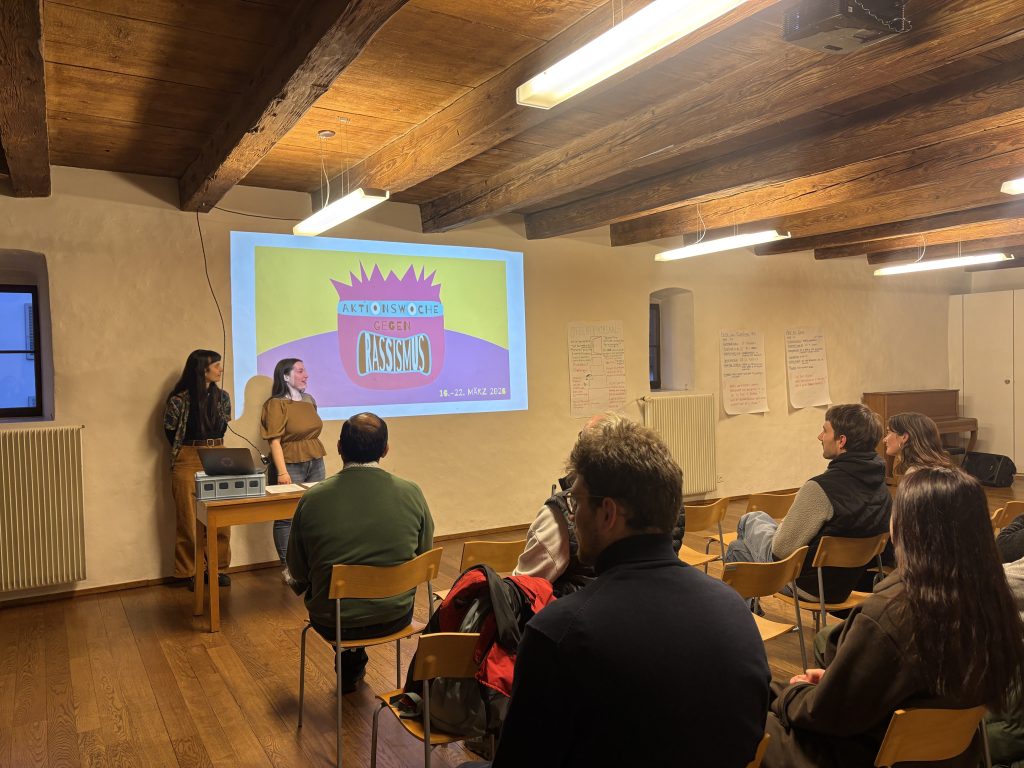
One event we attended, organized by Offener Hörsaal Basel, shifted the focus to education. The workshop was based on four case scenarios. Each case presented a hypothetical individual, outlining their background, opportunities for education, and the barriers they might face.
Through these scenarios, participants explored how access to higher education could be shaped by bureaucratic obstacles, legal status, language barriers, and limited access to information. The exercise illustrated how the path to education, even for those who were motivated and qualified, could become complex and at times unfair.
Beyond the workshop, other events shared by fellow students and outlined in the program highlighted how racism operated within institutions. At the University of Basel, for example, a panel discussion addressed racism in healthcare, bringing together professionals and patients to reflect on unequal treatment and structural bias. Moments like these captured the essence of the Action Week Against Racism: creating spaces where lived experience became knowledge, and knowledge could lead to action.
Racism Across Systems
Beyond the workshop, other events shared by fellow students and outlined in the program highlighted how racism operated within institutions. At the University of Basel, for example, a panel discussion addressed racism in healthcare, bringing together professionals and patients to reflect on unequal treatment and structural bias. Another event focused on discrimination in politics, raising questions about representation and the implications for democratic participation. Together, these discussions pointed to a broader reality: racism was not only interpersonal—it was systemic, shaping access, opportunities, and outcomes across different areas of life.
Remembering, Reflecting, Relearning
Historical perspectives also played an important role throughout the week. Guided tours and museum events invited participants to examine Basel’s connections to colonial history and reflect on how these legacies continued to shape the present. Exhibitions and discussions explored how narratives were constructed, asking whose stories were told, whose were omitted, and how images and representations could reinforce stereotypes. In some formats, visitors were encouraged to reflect on their own “blind spots,” highlighting how perception itself could be shaped by social and historical contexts.
Building Community, Not Just Awareness
Yet the Action Week Against Racism was not only about critique. It was equally about connection. Events such as a shared Iftar, cultural exchanges, and workshops for different age groups created spaces for dialogue beyond formal discussions. Participants spoke about experiences of discrimination, but also about identity, culture, and everyday life. These encounters suggested an important shift: anti-racism was not only something to be discussed, but something practiced in everyday interactions and relationships.
More Than a Week
As the Action Week Against Racism came to a close, its impact extended beyond the program itself. Conversations had been initiated, perspectives challenged, and networks strengthened. If there was one takeaway from Basel’s approach, it was this: addressing racism required both critical reflection and collective engagement. It meant listening as much as speaking, questioning as much as teaching, and recognizing that change began not only in institutions, but also in everyday encounters. For one week, Basel became a city in dialogue. The challenge, as many participants suggested, was to ensure that this dialogue continued long after the events had ended.
Photo https://surl.li/coahel