Text: Svitlana Prokopchuk
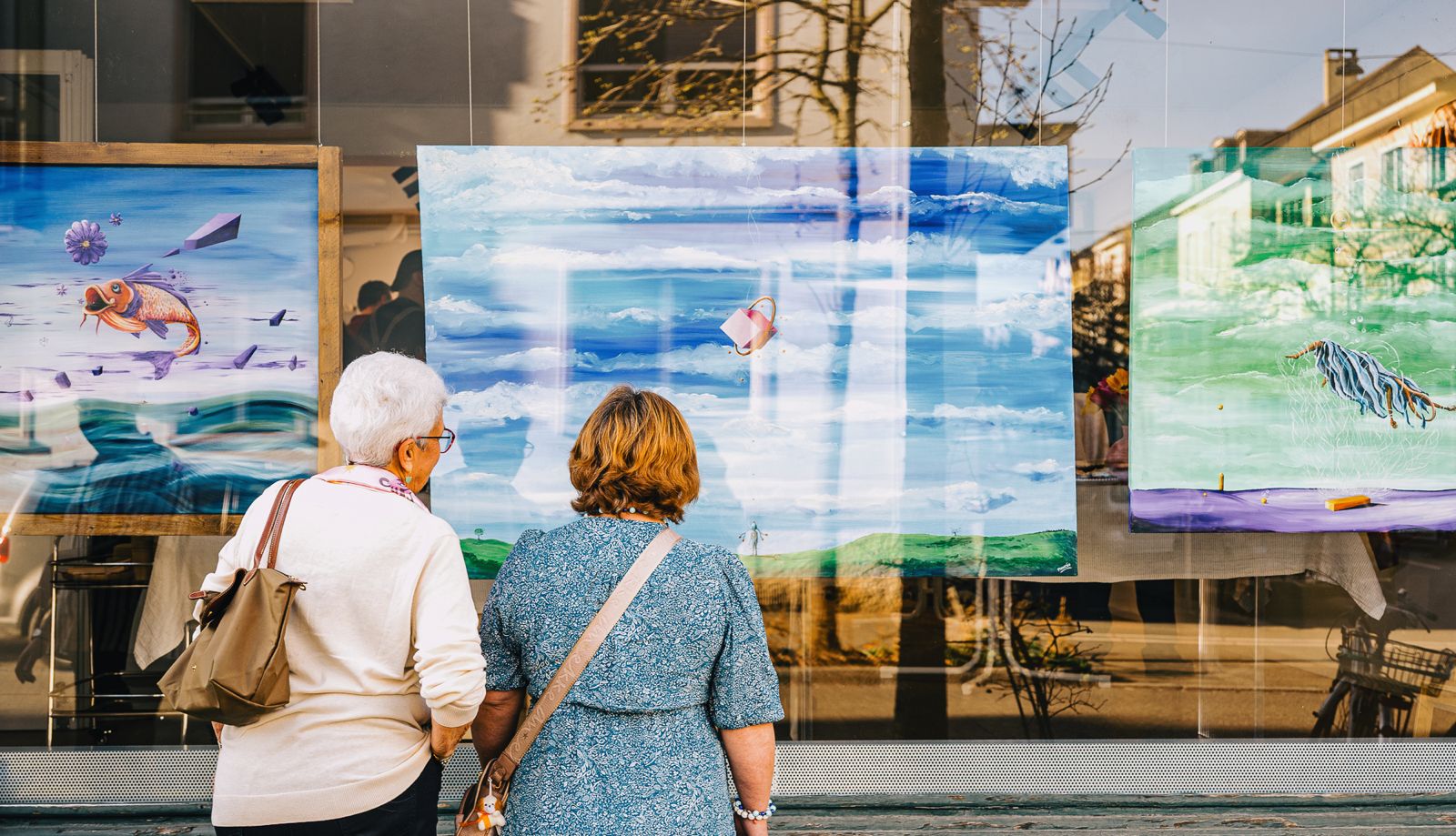
In Basel, contemporary art is increasingly becoming not only an aesthetic experience but also a tool for social dialogue. This is precisely the role that Galerie Sechs has chosen for itself — a small but conceptually expressive gallery that works with young artists and new cultural contexts. Although the theme of migration is not highlighted as a separate program, it is organically present in the very philosophy of the space. The gallery collaborates with artists who have lived in different countries, and this experience often forms the basis of their work. The focus is on issues of identity, memory, belonging, and cultural interaction.
A special role in Galerie Sechs’ work is the support of young artists. For artists with migration backgrounds, this often represents the first step toward integration into the European art context. The gallery not only provides exhibition space but also helps build professional networks, reach an audience, and develop careers. This approach changes the very understanding of integration. It is not seen as a one-sided process of adaptation but as a mutual exchange — of ideas, experiences, and culture. In this context, art becomes a language that unites.
On Language and Belonging is an interdisciplinary project that explores language as a lived, emotional, and identity-shaping experience, particularly in the context of migration. Through photography, film, and sound, it examines how language carries memory, shapes belonging, and transforms across cultures. The collaboration between Galerie Sechs and USB, an NGO supporting migrants and cultural exchange, creates a meaningful bridge between artistic practice and lived social realities: the gallery expands its role as a socially engaged platform, while USB gains a cultural space to amplify voices and experiences. For migrants, the project offers visibility, alternative forms of expression beyond words, and a sense of participation and belonging, allowing them to reclaim and rearticulate their identities through art.

In an interview, Galerie Sechs’ founder, Huan Cao, explained how she managed to create a space where contemporary art can develop in a warm, human-centered atmosphere rather than in a distant, commercial environment. Huan also has a migrant background; she moved from China to Switzerland in 2018.
How did the idea of Galerie Sechs come about, and what role do you think the gallery plays in Basel’s cultural life?
Before opening the gallery, my professional work was related to finance, photography, and the cultural sector. Over time, I realized that I was interested not only in creating images but also in shaping a space where artists, collectors, and the broader community could meet around art in a meaningful way. Thus, the idea of creating the gallery arose quite naturally. Living in Basel, I felt there was a need for a gallery of a more intimate format. It could become a “living room” for art, where people would spend time, communicate, and gradually discover artistic works. Basel has an extremely developed art ecosystem, but it is also very international and sometimes quite fast-paced. Galerie Sechs seeks to offer a different rhythm: thoughtful exhibitions, close collaboration with artists, and opportunities for dialogue. I hope the gallery adds a small but meaningful layer to Basel’s cultural life, creating an open space where new names can be discovered and where conversations about art are accessible.
You work with many young artists. What is your main criterion when beginning collaboration with them?
The first criterion is always the authenticity of the artistic voice. I am interested in artists who are genuinely exploring something — emotional, conceptual, or material — and who have a distinct personal voice. Technical skill is important, but even more crucial is whether the work conveys a sense of inner necessity. I also pay attention to openness to dialogue, as the relationship between the artist and the gallery is a long-term collaboration, not just a single exhibition.
What are the biggest challenges young artists face today when entering the European art scene?
One of the main challenges is visibility. The European art scene is very active and vibrant but also highly competitive. Young artists often struggle to find platforms where their work can be seen in a meaningful context. Another challenge is sustainability: many have to balance their creative work with another job. Finally, the art world itself can be complex to navigate. Without support, it can seem extremely difficult to maneuver through networks, institutions, and markets.
Does the gallery support artists not only during exhibitions but also in developing their careers?
Our role goes far beyond organizing exhibitions. We work closely with artists on positioning their work, building relationships with collectors, and developing opportunities. For example, participation in fairs, publications, or cross-sector collaborations. Sometimes this involves creating a narrative around their practice; other times it is about very practical matters: print runs, pricing strategy, or introductions to curators and institutions. Our goal is to create an environment where artists can focus on their creativity, knowing that someone is supporting and helping structure their professional activities.
The contemporary art scene is becoming increasingly “international.” Do you notice that many young artists have migration or multicultural experiences?
Yes, absolutely. Many of the artists we work with have lived in different countries or have multicultural backgrounds. After all, Basel is a very international city, and this is reflected in the artistic environment. This is completely natural. I believe that such diversity enriches dialogue in the gallery and broadens artistic perspectives.
Does the experience of living between different cultures influence the artistic language and themes that artists explore?
Absolutely. Artists with experience living in different cultural environments often have heightened sensitivity to themes of identity, memory, and belonging. Their work may explore translation between cultures, hybrid identities, or the connection between personal history and collective narratives. These perspectives add depth to contemporary art and resonate well in a global context.
Do you consider your gallery a space for cultural dialogue between different communities?
Yes, this is an important part of our vision. In addition to exhibitions, we organize small gatherings, artist talks, and salon events where people with different experiences can meet and exchange ideas. Art has a unique ability to initiate conversations that might not otherwise take place. Consequently, the gallery can act as a bridge between communities and diverse perspectives.
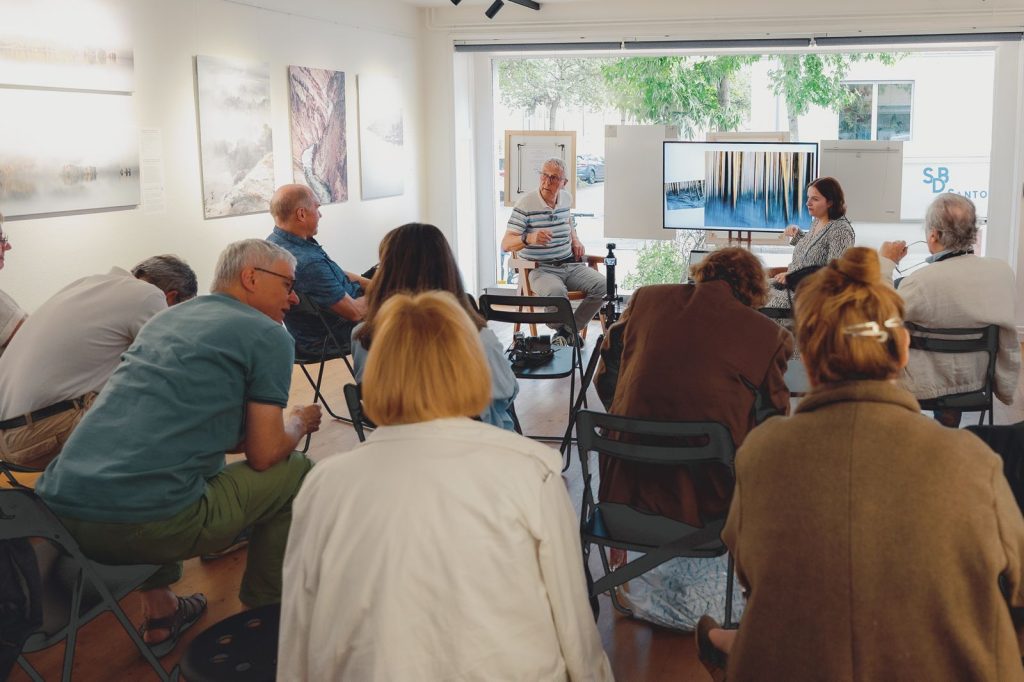
In your opinion, how does Basel’s international atmosphere and events like Art Basel affect opportunities for young artists?
Basel is an exceptional place for art. Events like Art Basel bring an international audience of collectors, curators, and institutions to the city every year. Even for small galleries and young artists, this creates visibility and connections that might otherwise take years to establish. At the same time, it raises the level of ambition and professionalism in the local art scene. For young artists, this environment can be very inspiring and motivating.
Can you recall a story of an artist whose career significantly changed after collaborating with your gallery?
Yes, there is one story that stands out for me. It concerns a photographer who had almost stopped working on new pieces. When he joined one of our group exhibitions, he initially showed older works. During the exhibition, he actively engaged with gallery life: interacting with visitors, participating in an artist talk, and engaging with collectors and other artists. Particularly important was that he sold several works during the exhibition. The support from the audience and the dialogue around his work restored his confidence, and he decided to return to artistic practice with renewed energy. For me, moments like these are reminders that a gallery is not only about sales or exhibitions. It is also a place where artists can rediscover motivation and continue their creative journey.