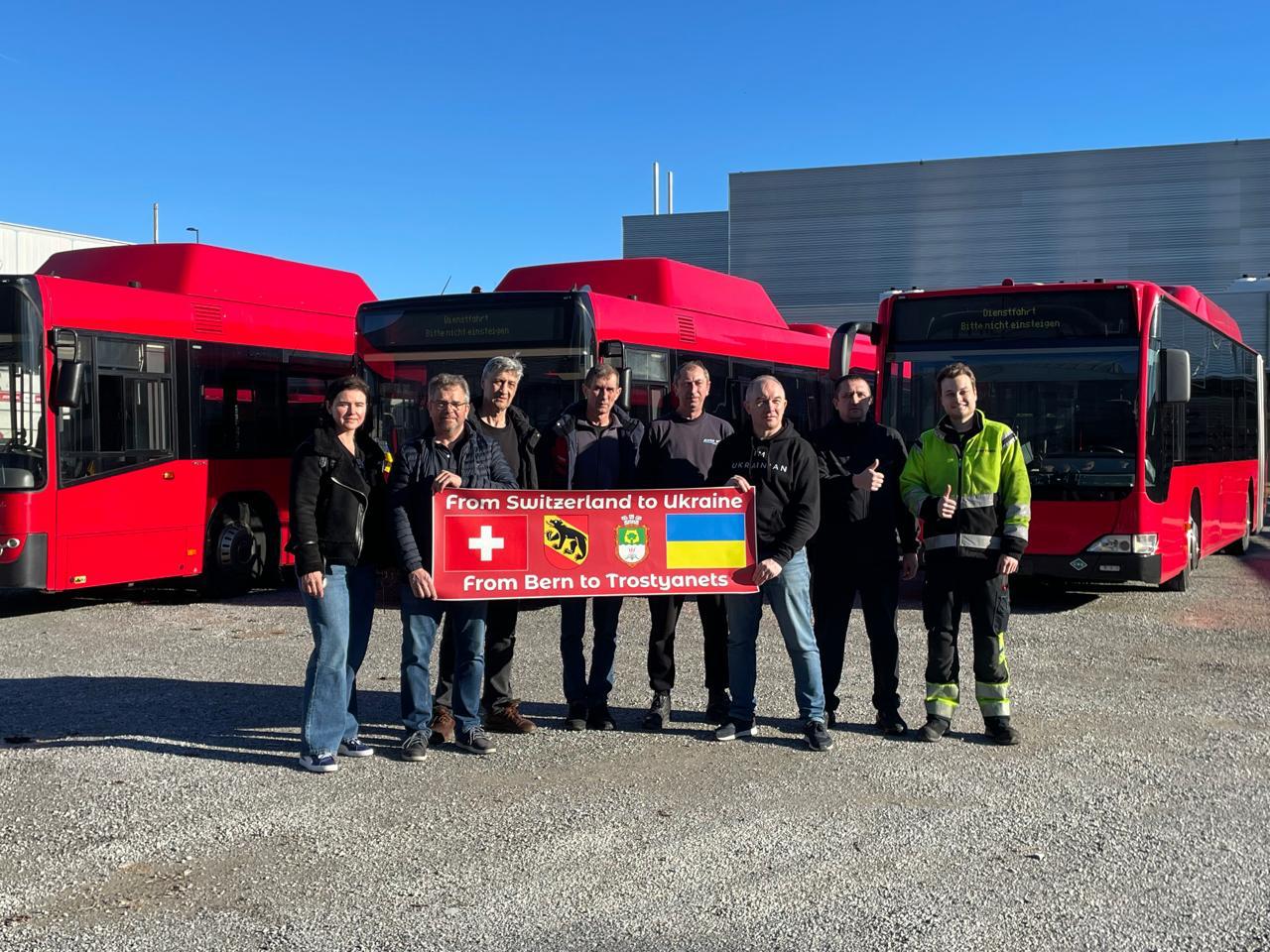
As part of our “Solidarity on Wheels” campaign, we continue to highlight support that turns into concrete action. Three more buses have departed from Bern to Trostianets. Especially these days, the symbol of unwavering solidarity with Ukraine carries profound meaning.
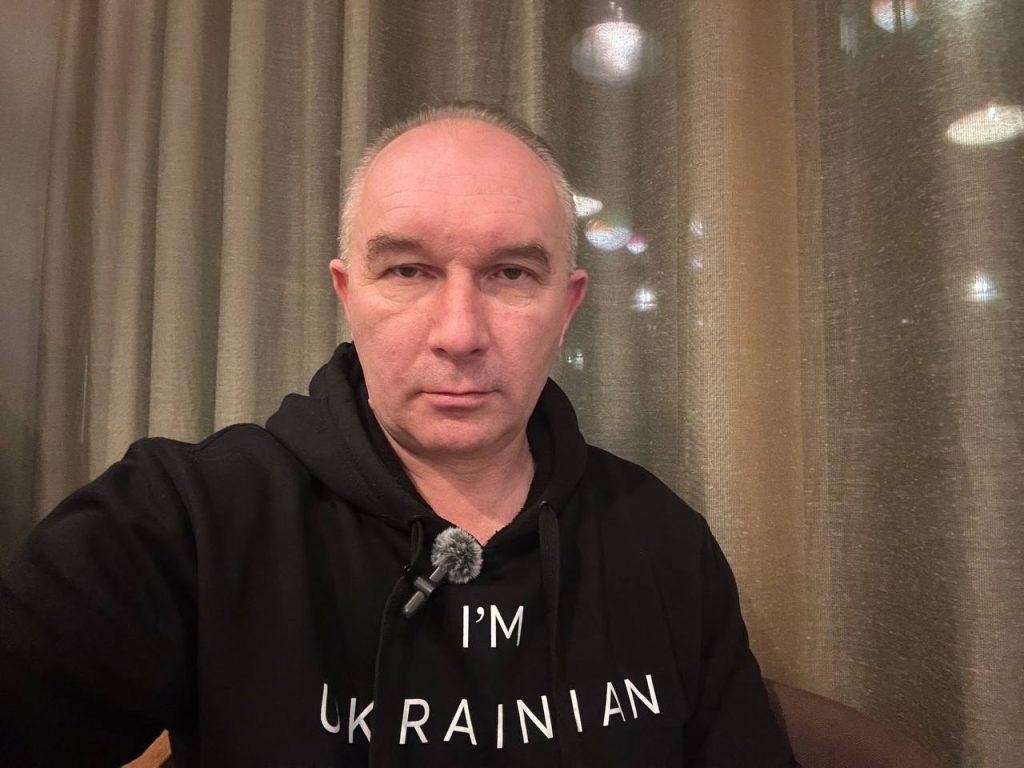
On the fourth anniversary of the start of the full-scale war, an exclusive interview by USB Media and Svitlana Prokopchuk with the Mayor of Trostianets, Yurii Bova, took place in Bern. He was on a working visit to Switzerland and personally received the vehicles for his community.
Transport Destroyed by War
Before the full-scale invasion, Trostianets had its own public transportation system. However, in February–March 2022, the city came under Russian occupation. All municipal transport was damaged or destroyed.
“Today, all the transport we had was affected during the 2022 occupation. Russian troops stayed in Trostianets for a month and destroyed our buses. Therefore, we are now forced to search around the world for opportunities to restore transportation for our people,” Bova says. That is why the support of Swiss partners has become critically important for the community.
45 Kilometers from the Border and One Month of Occupation
Trostianets is located just 45 kilometers from the Russian border. Russian troops entered the city on February 24, 2022 — effectively without a fight. Large military columns, including units of the First Tank Army of the Russian Federation, moved through Trostianets. Each column included dozens of tanks, armored personnel carriers, and military vehicles.
The enemy’s plan was to seize Kyiv rapidly, and one of the attack routes ran through Trostianets. However, failing to capture the capital within a few days, Russian forces remained in the city, set up headquarters there, and stayed until March 25.
Torture, Killings, and Looting
According to the mayor, the occupation was a true nightmare for the community. Forty-nine civilians were killed in the city. A torture chamber operated beneath the railway station. People were abducted, tortured, and executed. Around 1,200 buildings were damaged or destroyed, including 800 private homes. Residents were forced out of their homes at night in freezing temperatures so that Russian soldiers could be accommodated there. The city was massively looted: shops, banks, pharmacies, and administrative buildings.
“We did not find a single intact computer in the city council building. They took everything — from equipment to children’s dishes in kindergartens,” Bova recalls.After liberation, a diary of a Russian soldier was found in the city council building. In it, he described the looting and admitted that soldiers had robbed stores. The entries testified to the scale of the plunder and the moral collapse of the occupiers.
During organized “green corridors,” Russian soldiers confiscated phones to destroy potential evidence of their crimes. Some men were taken away in an unknown direction. When Trostianets was liberated on March 25, 2022, the city center resembled a landfill: scattered documents, broken doors, looted institutions, destroyed property. “It was horror for civilians. But we endured,” the mayor says.
Solidarity That Continues
It is symbolic that the visit to Bern takes place on the days when Ukraine marks the fourth anniversary of the beginning of the full-scale war.Yurii Bova emphasizes that without international support, it would have been much more difficult for Ukraine to endure.“This resilience of the civilian front is combined with international support. Without assistance in receiving refugees, as well as humanitarian and military aid, it would have been much harder for Ukraine. We are grateful to every partner,” he stressed.
The donated buses are not just vehicles. They are an example that European solidarity with Ukraine does not fade over the years of war. It continues through concrete decisions, assistance, and actions. Soon, three more buses will operate on the routes of Trostianets — a city that has endured occupation, loss, and destruction, yet continues to live, rebuild, and move forward.
Yurii Bova’s recollections of the occupation period can be viewed here:
https://www.youtube.com/watch?v=WN-FqOtdVUg&t=3s
The full interview can be heard on the program “Ukrainian Wave” on Radio Rabe on March 5, 2026, at 7:00 PM or via: https://rabe.ch/ukrainische-welle