Text: Svitlana Prokopchuk
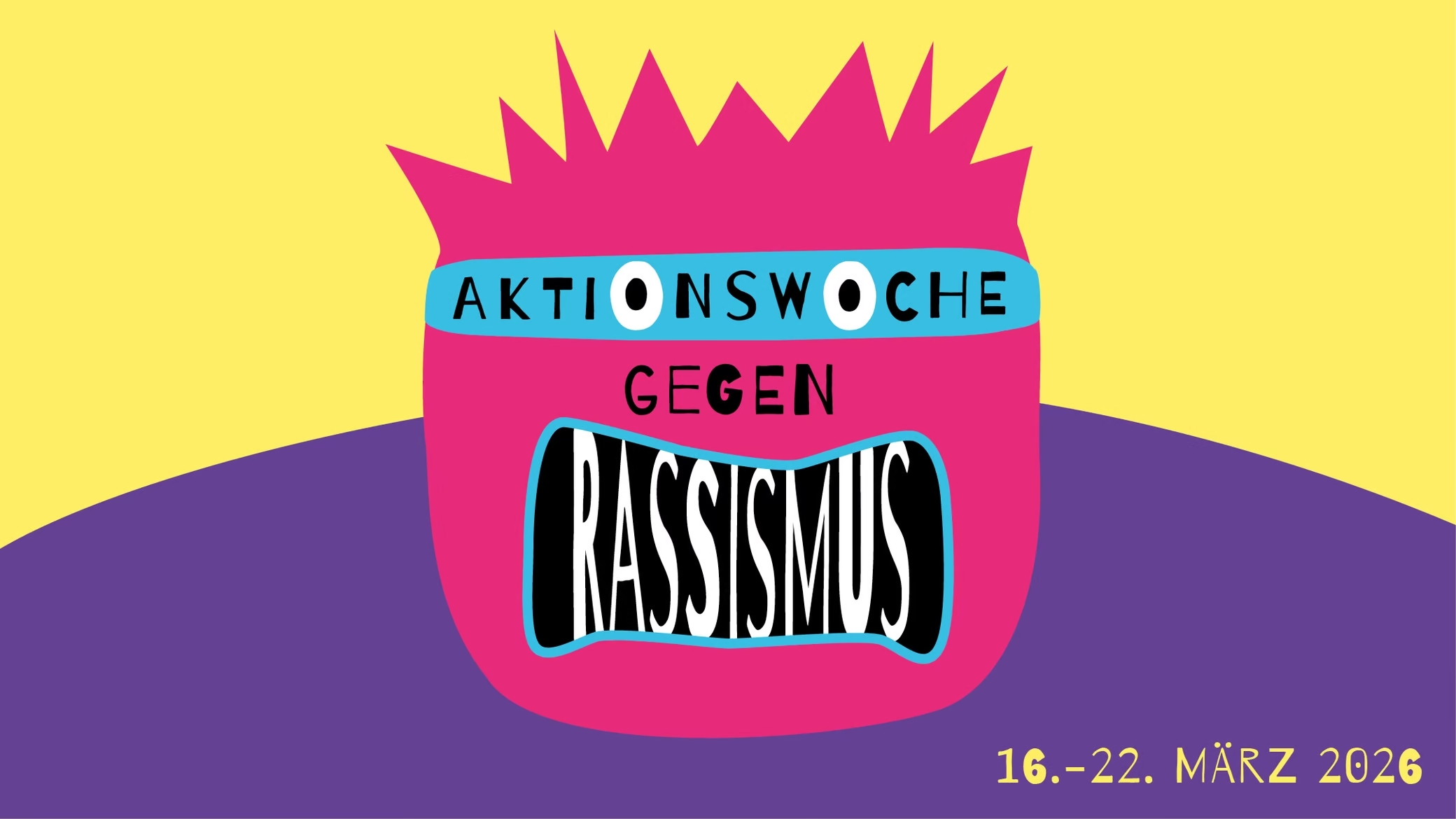
Bern will soon launch its annual Anti-Racism Action Week. For several days, the city becomes a platform for discussions, cultural events, and educational initiatives aimed at drawing attention to the issue of discrimination and encouraging open dialogue in society.
A City That Talks About Difficult Topics
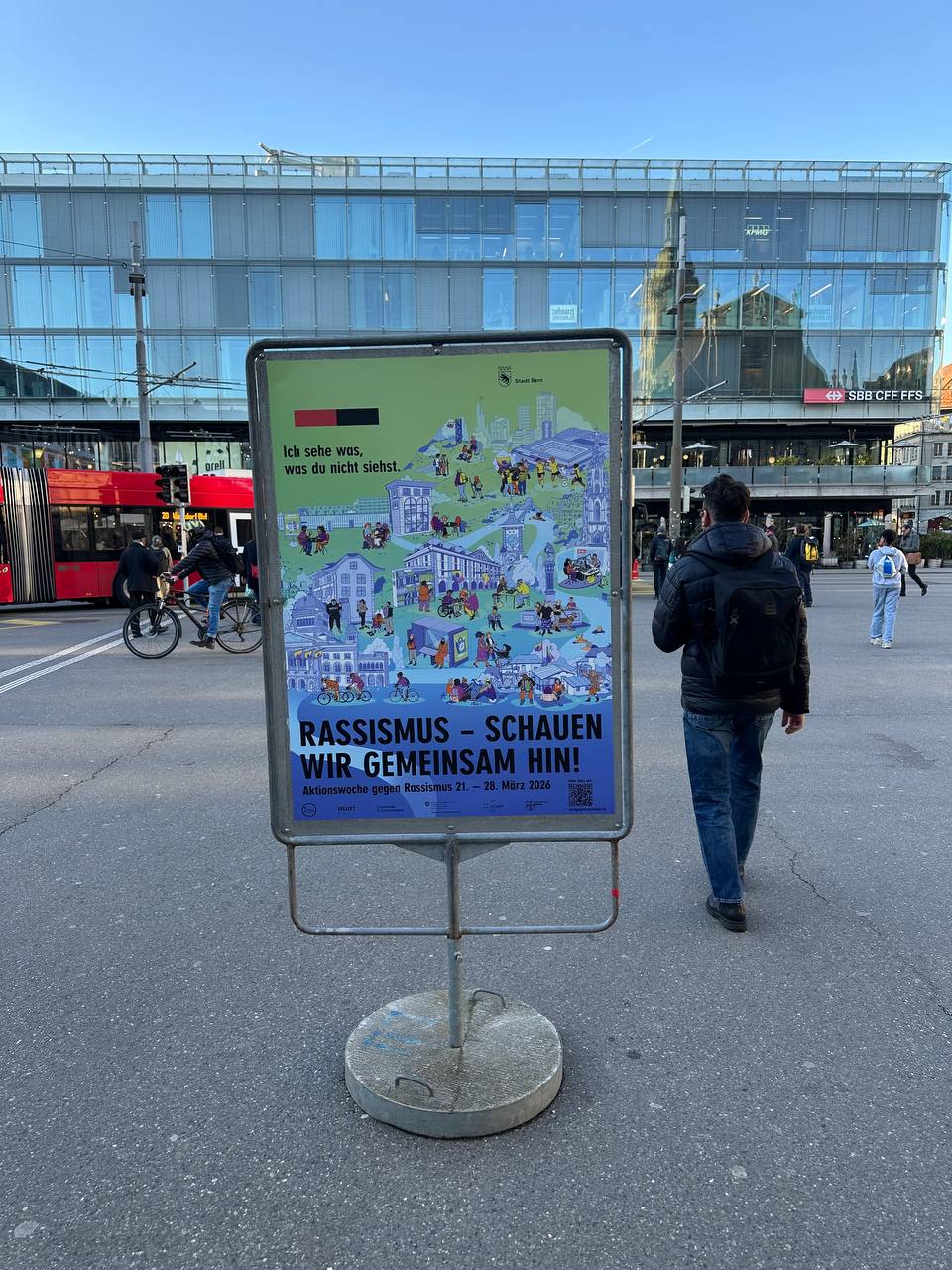
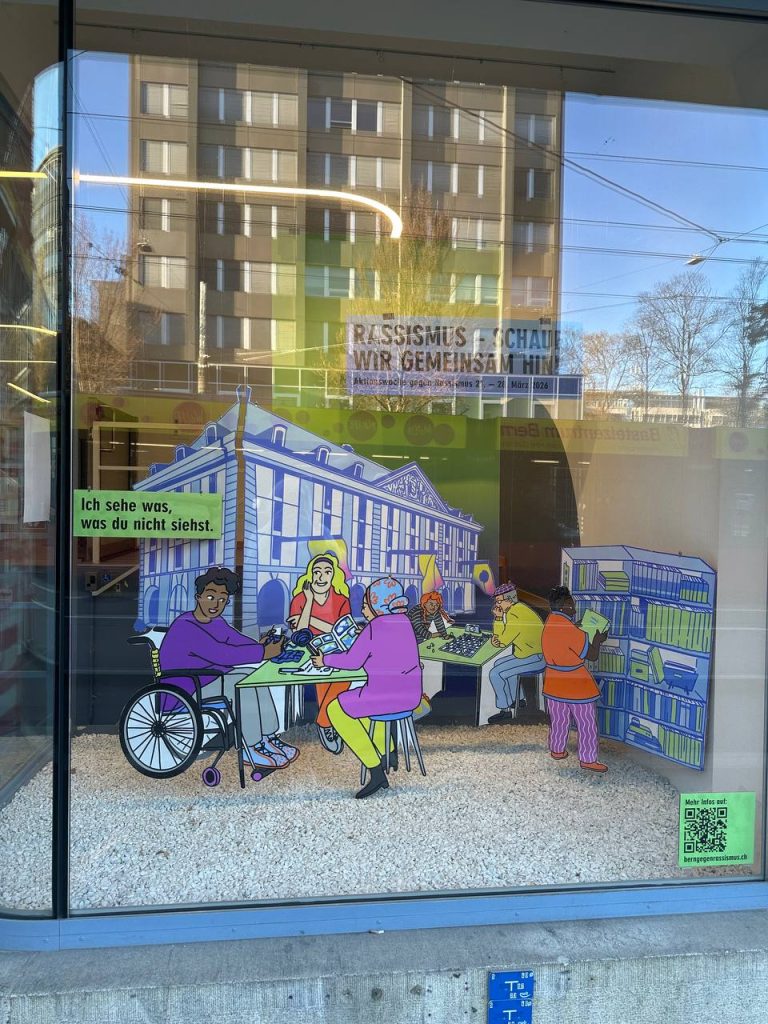
This year’s campaign will take place for the sixteenth time. It will be held from 21 to 28 March 2026 and is dedicated to the International Day for the Elimination of Racial Discrimination, observed every year on 21 March. The motto of this year’s week is: “Ich sehe was, was du nicht siehst – Rassismus: Schauen wir gemeinsam hin!” which can be translated as: “I see something you don’t see — racism. Let’s take a closer look together.” The organisers encourage society to pay closer attention to everyday situations in which prejudice and discrimination may appear.
Racism in Everyday Life
This year’s theme focuses on leisure and public space — areas where people usually relax and socialise: sports clubs, cultural events, youth organisations, or entertainment venues. According to the organisers, these are places where people with a migration background or different origins sometimes encounter prejudiced attitudes.
According to Swiss studies, one in six people in the country has experienced racist discrimination at least once in recent years. Therefore, it is important not only to document such cases but also to create spaces for discussion and mutual understanding. For this purpose, the programme includes open discussions and public lectures, film screenings and theatre performances, exhibitions and artistic actions, as well as workshops for young people and educational projects. The initiative involves civil society organisations, cultural institutions, and educational establishments, including the University of Bern, where thematic exhibitions and information events for students are also organised.
A Space for Dialogue
The main goal of the Anti-Racism Week is not only to talk about the problem but also to create an environment of mutual respect and equality. In a multicultural society, open dialogue helps break down stereotypes and build a community in which everyone feels accepted. For the residents of Bern, it is an opportunity not only to attend cultural events but also to reflect on how each person can counter discrimination in everyday life.
Photos: Svitlana Prokopchuk