Text by Svitlana Prokopchuk
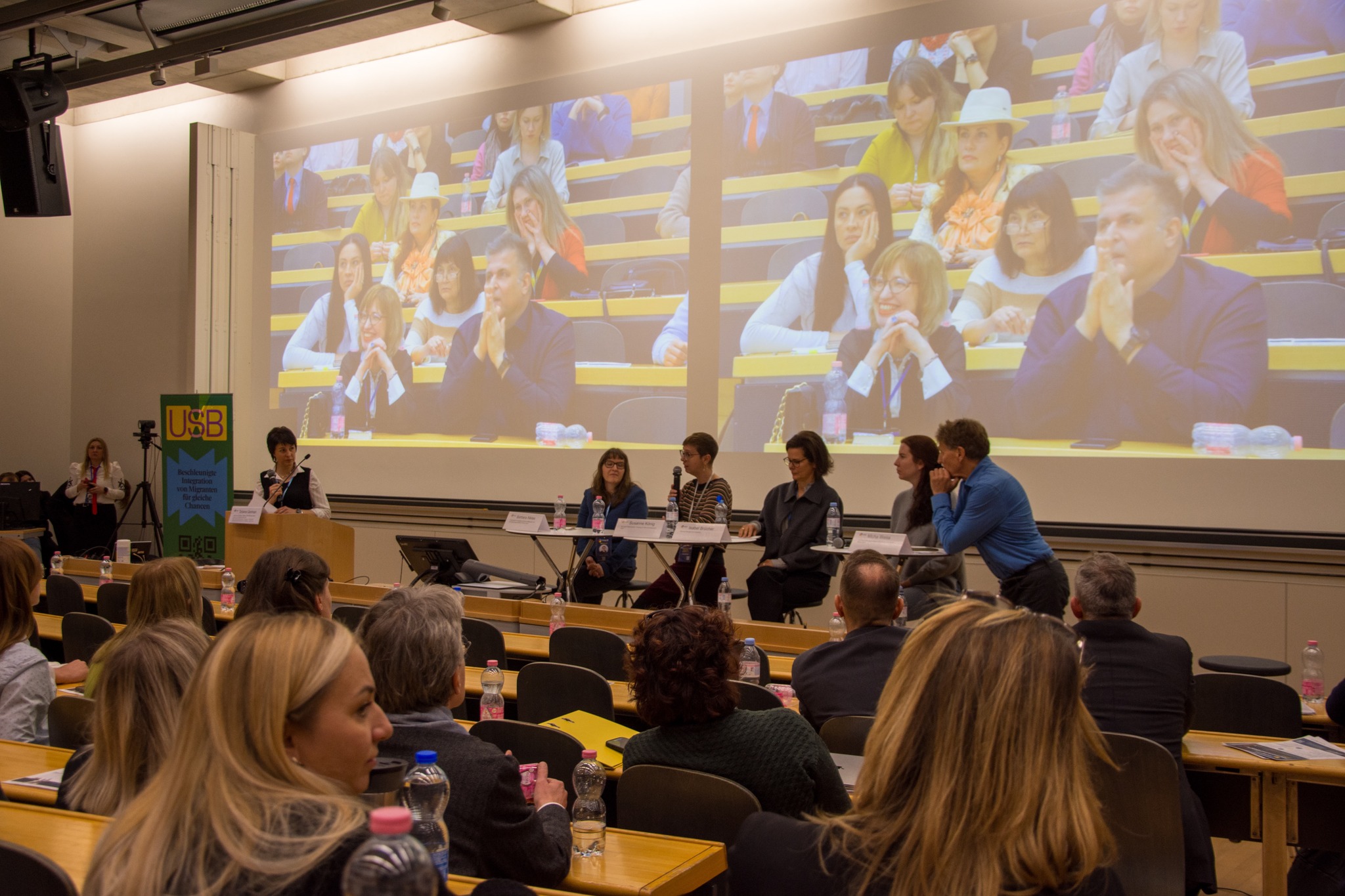
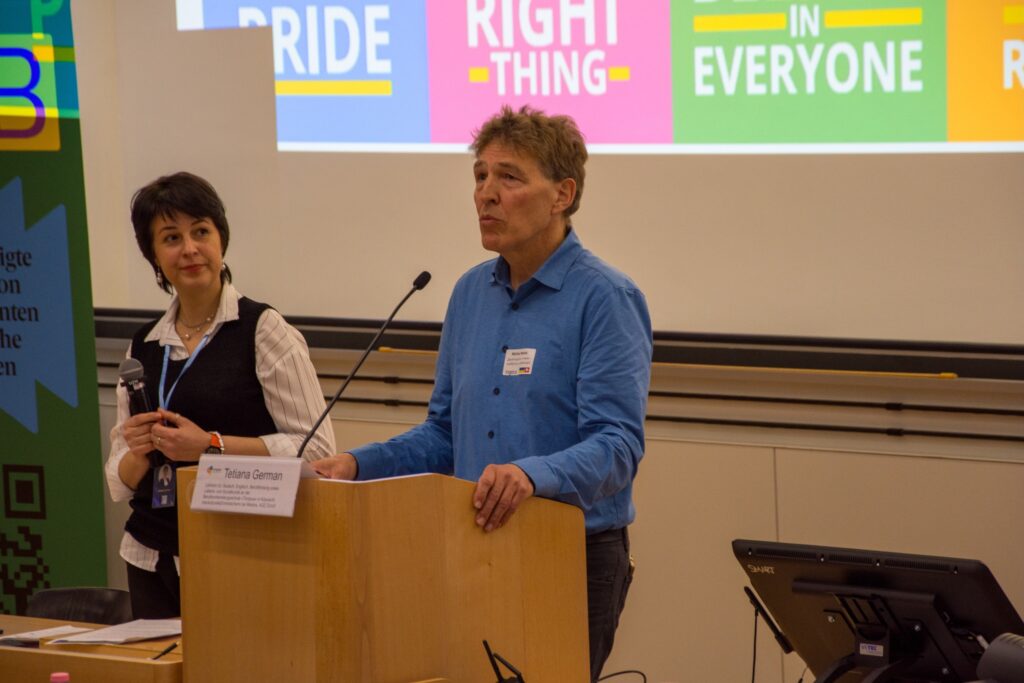
Another panel at the IntegraS Forum in Zurich, partnered by the USB Association, focused not only on how refugees can find jobs, but also on the pathways through which they achieve professional integration. The discussion covered pre-vocational education, specialized coaching programs, and IT courses. Across all these systems, one common denominator stood out—the human factor: trust, guidance, and networks.
Pre-vocational Education: A “Bridge” to a Swiss Apprenticeship (Lehrstelle)
Barbara Nikles from the Office for Upper Secondary and Vocational Education of the Canton of Zurich presented the Integrationsvorlehre program—a transitional format for those who did not attend a Swiss school but wish to pursue vocational education. The program combines school and company-based training: 1.5 days of schooling and 3.5 days of practical work per week. It is aimed at young people and adults aged 15 to 40 with at least an A2.2 level of German and prepares them for two- or three-year vocational training.
“This is just one of many transitional offers in the Canton of Zurich, but a very important one,” said Barbara Nikles. “Our task is to help people who did not grow up in the Swiss system find their way into vocational training.” The results are impressive: 82% of graduates move on to a Lehrstelle. Among the participants are also refugees with Status S. This means one thing: the classic Swiss path through vocational education is open to refugees as well—but it requires a well-structured “bridge.”
Capacity: Returning to One’s Profession
Isabel Brücher presented a different reality—people who already have education and professional experience. Her organization, Capacity, works with highly qualified migrants and refugees, helping them return to their professional fields. The program combines group sessions, coaching, and networking. “We create a space where participants not only gain knowledge, but also establish contacts with employers,” Brücher explained. The key indicator: 50–60% of participants find employment in their field within six months to two years. An important clarification: having Status S does not reduce their chances—for employers, it is not the paperwork but the competencies that matter, provided there is someone to connect talent with the labor market.
Powercoders: When IT Becomes a “Fast Elevator”
Susanne König from Powercoders spoke the language of code and startups. Their program is a three-month IT bootcamp in English, followed by a six- to twelve-month internship. “The goal of the program is to gain first work experience,” König said. “And within a few years, around 70% of graduates are working in IT.” Participation is free of charge, with costs covered by the canton, municipalities, and business partners. Here, a different principle of integration comes to the fore: if a person has talent, fast access to practical experience can change their future in literally a year.
A Living Testimony of Success
Olena Bahri, a Powercoders graduate, is a vivid example of successful integration. Her path is familiar to many: more than 150 job applications sent—and not a single response. “Only when I entered the program did a real connection with an employer emerge,” she said. “And that changed everything.” She now works at Swisscom. English is the working language of her team, while German is used for everyday life and social integration. Her main conclusion is simple: looking for a job blindly does not work—you need to enter networks and support programs.
Coaching as a Key Mechanism
Misha Weiss from Ingeus AG Zurich demonstrated how crucial systematic support is. In their program for Ukrainians, 70% of clients successfully enter the labor market—more than required by the state. This once again confirms that integration is not only about economics, but also about human relationships, trust, and support.
Looking Back
The main feature of the Swiss integration model is that it is not one-dimensional. Three approaches coexist: a structured path into vocational education, the reintegration of highly qualified professionals into the labor market, and fast digital solutions combined with practical experience. But all three only work if there is guidance, a network, and trust alongside them.