In the past, integration was associated with long brochures, even longer information sessions, and at least one PowerPoint presentation no one later remembered. Today? Integration arrives with music, subtitles, fast editing — and sometimes an awkward meme. Welcome to an era where integration is scrolled through, liked, and occasionally goes viral.
Young people, especially those with migration experience, don’t first ask which office to contact. They ask: Where do people hang out here? How do I make friends? What’s actually interesting in this city? And most importantly — who looks like me and has already figured this place out?
Social media has quietly become the most effective guide to integration — just without the official logo in the corner.
Social Media as the New Public Square
Instagram, TikTok, and YouTube are spaces where young people already live. They are visual, informal, multilingual and, most importantly, human. Instead of abstract information, they show lived experience: someone shares a park, a sports club, a cultural space, or simply a confident way of navigating life in a new city.
This matters. When young people see their peers managing everyday life, barriers disappear faster than after any brochure. Integration suddenly becomes real, attainable — and maybe even fun. And when content is created together with young people, rather than for them, participation stops being a buzzword and becomes reality.
As Svitlana Prokopchuk, Coordinator of USB Media, notes:
“When young people see someone like themselves confidently moving through the city, something changes. Integration stops feeling like an obligation and starts being perceived as an opportunity. Social media doesn’t replace integration work — it makes it more human.”
Humor, Authenticity, and the Power of the “Real”
Young people don’t want perfect campaigns. They want real voices, real accents, and real stories. Humor plays a key role — it eases tension, removes the fear of doing something “wrong,” and instantly creates connection. A funny video about someone getting lost on the tram can create more belonging than an official welcome speech.
Short videos allow complex topics to be addressed in seconds: belonging, discrimination, participation, everyday orientation. They are easy to share, easy to rewatch, and easy to understand — regardless of background.
“Sometimes 45 seconds of video can open more doors than 45 pages of text. It’s not about simplifying integration; it’s about making it accessible,” Prokopchuk adds.
Integration That Doesn’t Feel Like Integration
Successful integration projects don’t announce themselves loudly. They quietly empower, connect people, and normalize diversity in everyday life. When young people see themselves represented not as “cases” but as creators, confidence, agency, and visibility grow.
This approach aligns fully with modern integration strategies focused on low-threshold access, participation, anti-discrimination, and sustainable information dissemination — especially through migration media and social platforms. It also reflects the growing understanding that integration is not a one-way process, but a shared social experience. Sometimes — filmed vertically.
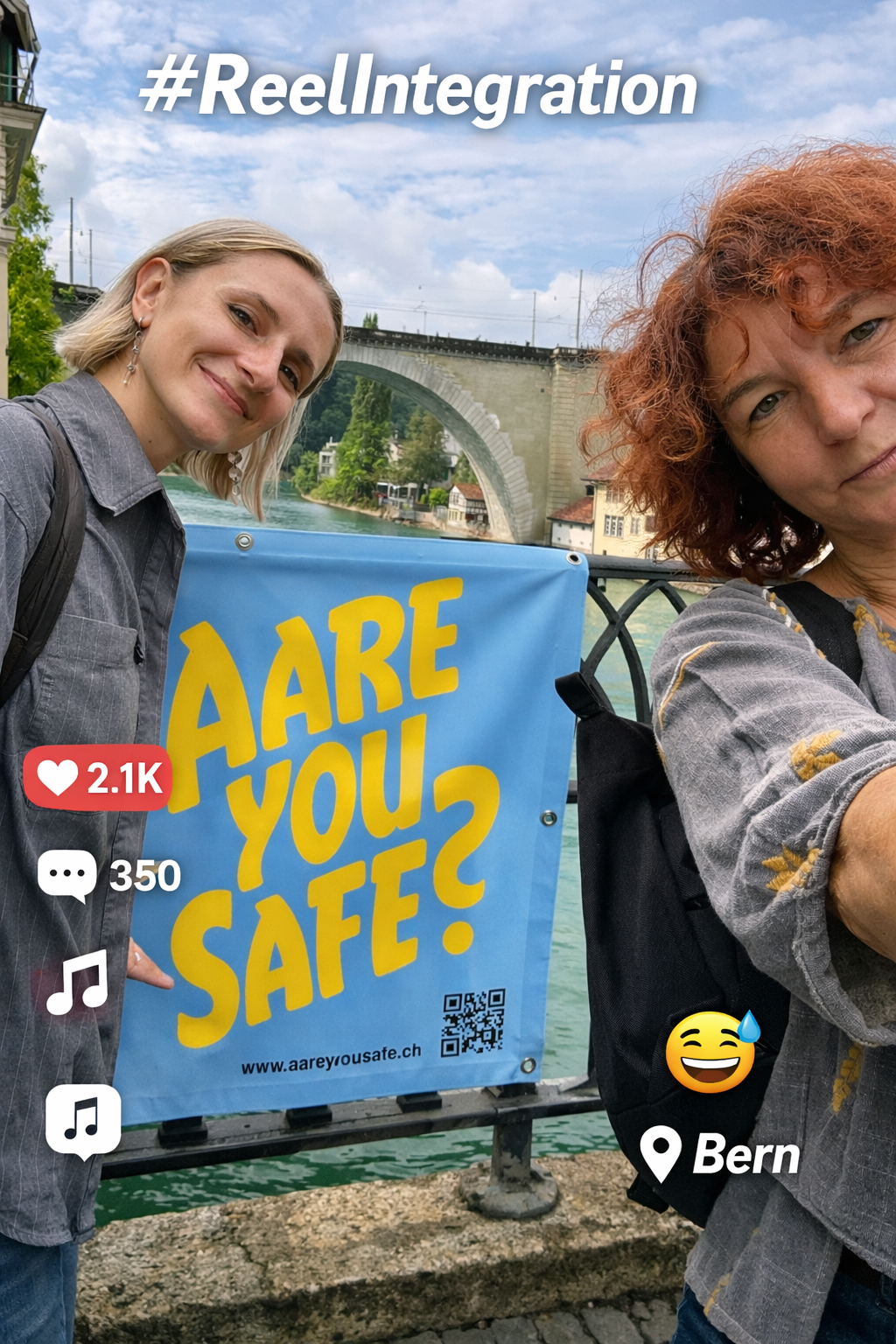
Coming Soon: Reel Integration
If integration had a trailer, it would be a short reel. Dynamic. Honest. Slightly chaotic. And surprisingly effective. Let’s just say: on the horizon, an idea is emerging that brings together young migrants, local creators, everyday urban spaces, and those small “aha” moments that transform a city from new into your own. An idea where integration doesn’t lecture — it invites. Where information inspires. Where belonging has its own soundtrack.
“Our potential development of integration topics on social media could jokingly be called Reel Integration,” says Olena Krylova, USB Manager, with a smile.
Not because integration should be taken lightly — but because sometimes the fastest way to feel at home is to see someone else already enjoying the city. And if that happens in under 60 seconds — even better.