Text: Svitlana Prokopchuk
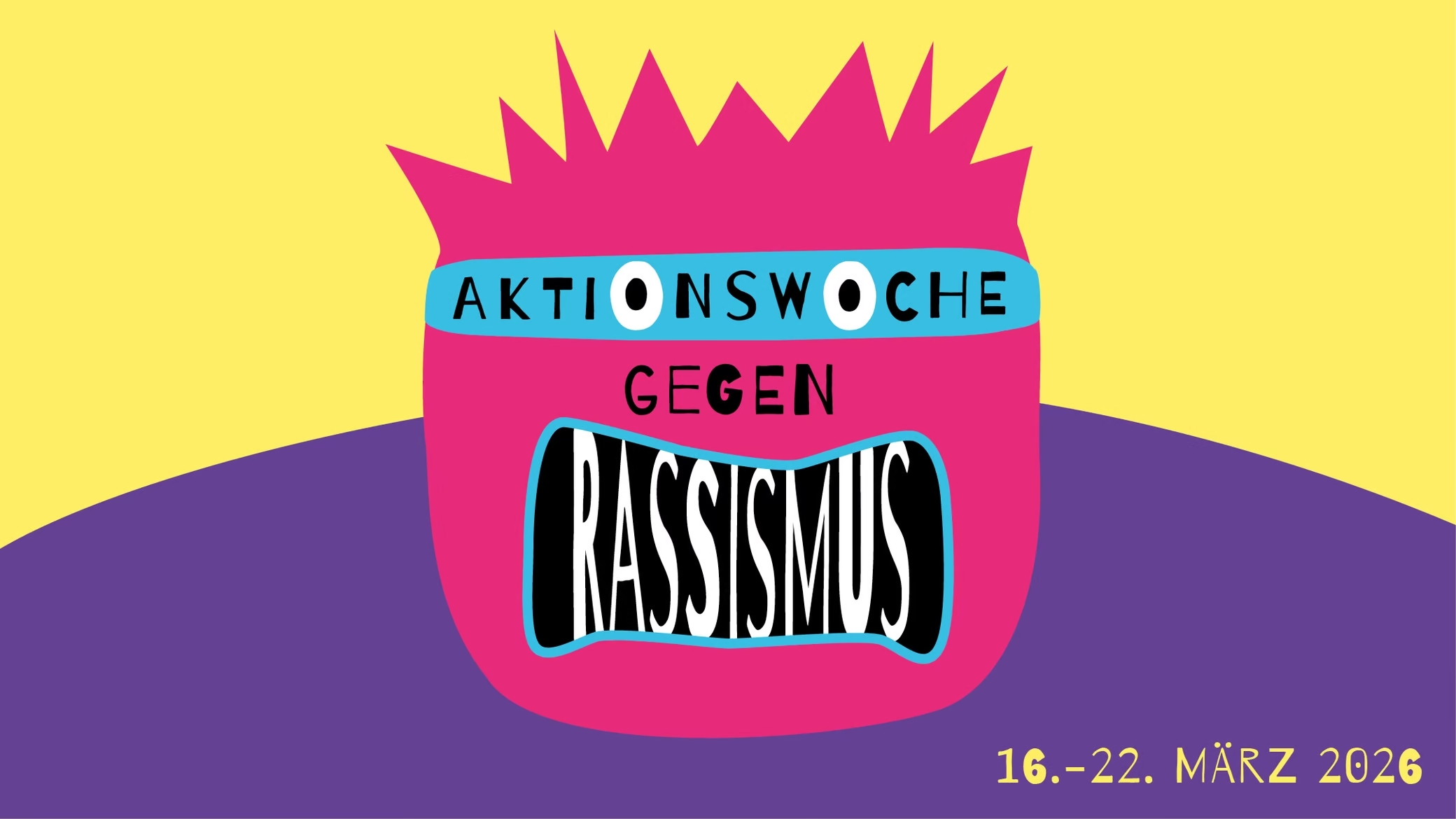
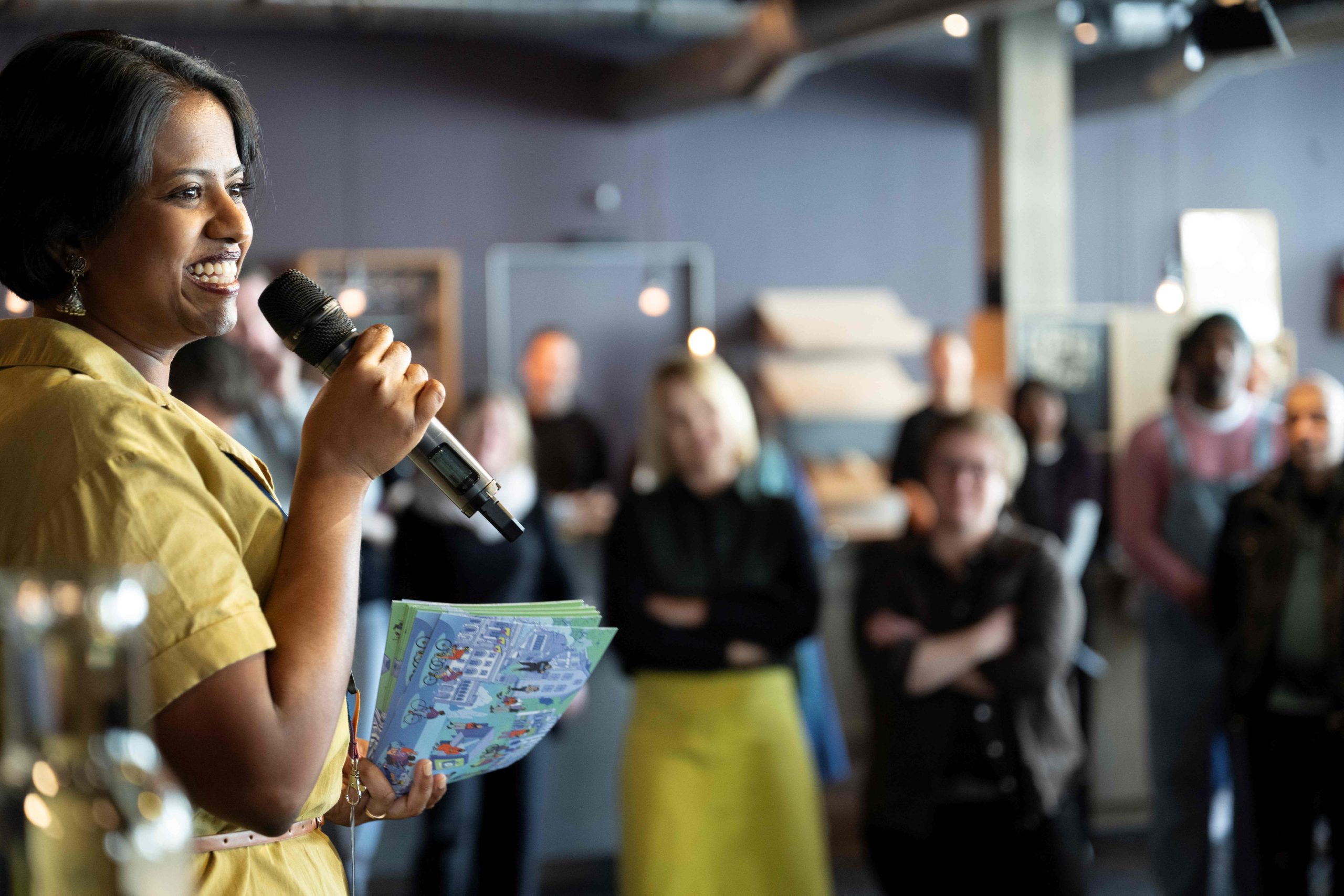
The city of Bern is organizing the Action Week Against Racism for the 16th time. This year, the focus is on leisure time—a sphere in which discrimination often remains unnoticed, but is no less painful because of that. Vithyaah Subramaniam is Deputy Head of the Office for Migration and Anti-Racism and co-project leader of the Action Week. In this interview, she explains how the city of Bern deals with racism and discrimination and what lies behind the campaign slogan.
Goals of the Action Week
Svitlana Prokopchuk: What are the goals of the Action Week and why was the topic of leisure chosen?
Vithyaah Subramaniam: Racism or discrimination in leisure time—sounds absurd, right? But even in the sphere of leisure, which we primarily associate with rest and relaxation, this phenomenon is very widespread. Racism and discrimination are structural, societal problems, and frankly, it would be strange if they suddenly did not occur in this area.
This can happen on a structural level. For example: who actually has the opportunity to have leisure time? People who work a lot, or single mothers who are disproportionately affected by poverty? For them, it is significantly more difficult to find time for leisure or to have the financial means to do what they want. So this is a question of social inequality.
But there is also an institutional level, which involves mechanisms of exclusion. For example, the theater. Who attends the theater, especially a large, relatively expensive city theater? Here too, the question arises: who has access, who is considered in the program, what are the ticket prices, who feels comfortable there? And there is also the personal, individual level—the so-called everyday racism in interpersonal interactions: in public transport or during leisure activities, when people interact with one another. When a person who was born and raised in Switzerland is asked in “standard German”: “Where are you from?”—this can also be racism.
So there can be very different forms of discrimination or racism, and they are also clearly visible in the area of leisure. The goal of the Action Week is therefore to name the problems of racism and to provide a platform for those affected as well as for organizations working in this field.
Yoga as a safe space
Svitlana Prokopchuk: Why is yoga included in the program?
Vithyaah Subramaniam: Every year we make an open call for participation for individuals, professionals, and organizations. This way we receive many applications and then make a selection. Yoga—like other program items—was therefore an idea from outside.
However, yoga is a very interesting example. Because even here, many discussions arise about cultural appropriation: where yoga comes from, who practices it, who profits from it, and how it is connected to capitalism and the industry for clothing and accessories. And what yoga actually is, since it did not originate in Switzerland but is widely practiced here.
Overall, we have very different formats: chess, theater, videos, workshops, discussions, guided tours, the celebration of Nowruz, and much more. It is a very diverse program that reflects the diversity of needs and communities. Because people with experiences of racism are very different: with or without a refugee background, born here or migrants, and so on.
Support for vulnerable groups
Svitlana Prokopchuk: The program also includes events for refugee women. Do you consider this population group particularly sensitive or vulnerable?
Vithyaah Subramaniam: Yes, this is one of the most vulnerable groups. Women with refugee experience often face discrimination, stereotypes, and restrictions. That is why we create spaces for their participation in events, for exchange, and for development. But this too was only possible because there were corresponding submissions from organizations.
Campaign “I see what you don’t see”
Svitlana Prokopchuk: What does the slogan mean and how does it work on the posters?
Vithyaah Subramaniam: It is a reference to the children’s game: finding something hidden. Ultimately, racism is often not obvious and not immediately recognizable at first glance. The poster with the hidden-object illustration shows scenes in which forms of discrimination are not always immediately noticeable. This encourages people to pause and reflect.
What one person perceives as racism may go unnoticed by another. Our idea was therefore to give people the opportunity to look more closely and to engage more deeply. People who have never experienced racism themselves often find it difficult to even understand what the problem is. To understand it requires time, willingness, and motivation—often also a prompt to reflect. And perhaps that is one of the goals. Society is becoming increasingly diverse and complex. There is no single solution—there are many.
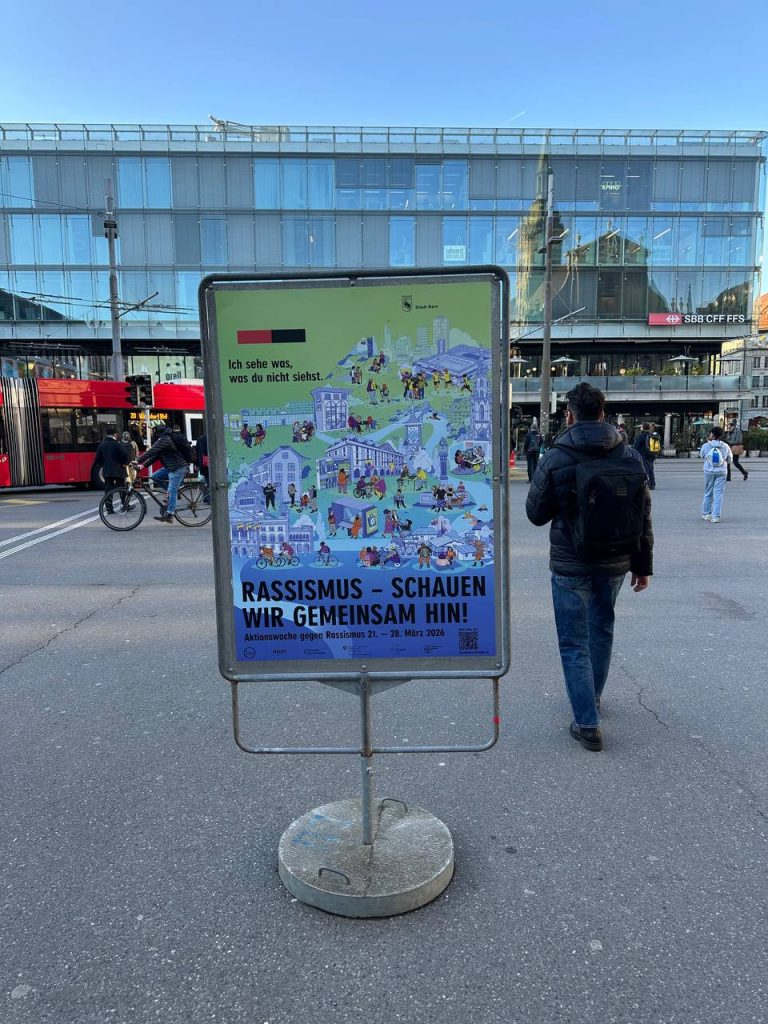
Photo: Svitlana Prokochuk
The role of the city of Bern
Svitlana Prokopchuk: Everything we are talking about concerns one week of active events and activities. At the same time, discrimination, racism, and insults based on nationality occur daily in Switzerland. The overall statistics for Switzerland are alarming: in 2024, 1,211 such cases were registered here. This number has increased compared to 2023. If you divide 1,211 cases by 365 days, that is about 3–4 registered cases per day. Of course, this number is proportional in Bern. How does the city fight racism in everyday life?
Vithyaah Subramaniam: We cannot control people’s private lives, but we can act where we have responsibility: in schools, in administration, in public institutions. We provide training, raise awareness about discrimination, and create support mechanisms.
There is a reporting office for racism that receives complaints and advises those affected. Much of the work takes place within the administration—it is not visible externally, but it is crucial for protecting diversity and preventing discrimination.
The fight against racism is not only about large campaigns, but also about everyday attentiveness to small manifestations. Creating safe spaces and a platform for those whose voices often go unheard makes life in a diverse society safer and more interesting.
Event program here:
https://www.bern.ch/themen/auslanderinnen-und-auslander/integration-und-migration/diskriminierung-und-rassismus/bern-gegen-rassismus/programm
Main photo: Carmela Odoni