Text: Svitlana Prokopchuk
When a person changes countries, they change more than just their address. They change their rhythm of life, their social circle, and their professional direction. But along with challenges come new opportunities—the opportunity to create new ideas, new professional stories, and even new forms of social entrepreneurship. It is from this idea that the project supporting civic engagement and social entrepreneurship, “Gesellschaftliches Engagement für geflüchtete Frauen,” was born on the platform United for Support and Belonging (USB) in Bern. Its goal is to help Ukrainian women with forced migration experience regain professional confidence, develop their own ideas, and implement small social or entrepreneurial initiatives in the communities where they live.
The project is based on a simple idea: integration becomes real when a person has the opportunity not only to adapt to a new society but also to contribute to its development. As part of the program, a group of Ukrainian women went through a journey from initial ideas to their own projects. It was not just a series of trainings. It was a process—of searching, doubting, mutual support, and ultimately, believing in their own abilities. Since the summer of 2025, the project has been supported by the Zonta Women’s Club and the Reformed Church Bern-Jura-Solothurn, which promote the development of social entrepreneurship initiatives and the integration of women with migration experience.
Why the Need for Such a Project Arose
The idea for the project emerged from practical experience working with Ukrainian women trying to integrate into a new society. “Among Ukrainian women, there are many highly competent individuals with extensive professional experience and strong ambitions for self-realization. However, they cannot always realize themselves here—due to a lack of knowledge of the system, difficulties with legalizing social projects or self-employment, or simply uncertainty about whether their idea will work in Switzerland,” says project coordinator and integration coach Svitlana Manzer.
Many women in Ukraine worked in private companies, had their own businesses, or were just starting them when the war began. Some had to completely reorient themselves to a new type of work. In Switzerland, many are forced to start with jobs far removed from their previous professional experience. That is why there was a need for a space where ideas could be tested without risk, where knowledge and support could be gained.
“We wanted to create an environment where women could formulate their ideas, understand their strengths and weaknesses, and gradually begin implementing them,” explains Manzer. The project consisted of several stages: a survey and selection of participants, a series of training games, educational sessions, mastermind meetings, and a final presentation of projects. In total, more than fifty women participated in the survey, and fifteen participants were selected for the main program, two-thirds of whom successfully completed the course.
Ten projects received support in Bern and are now actively developing.
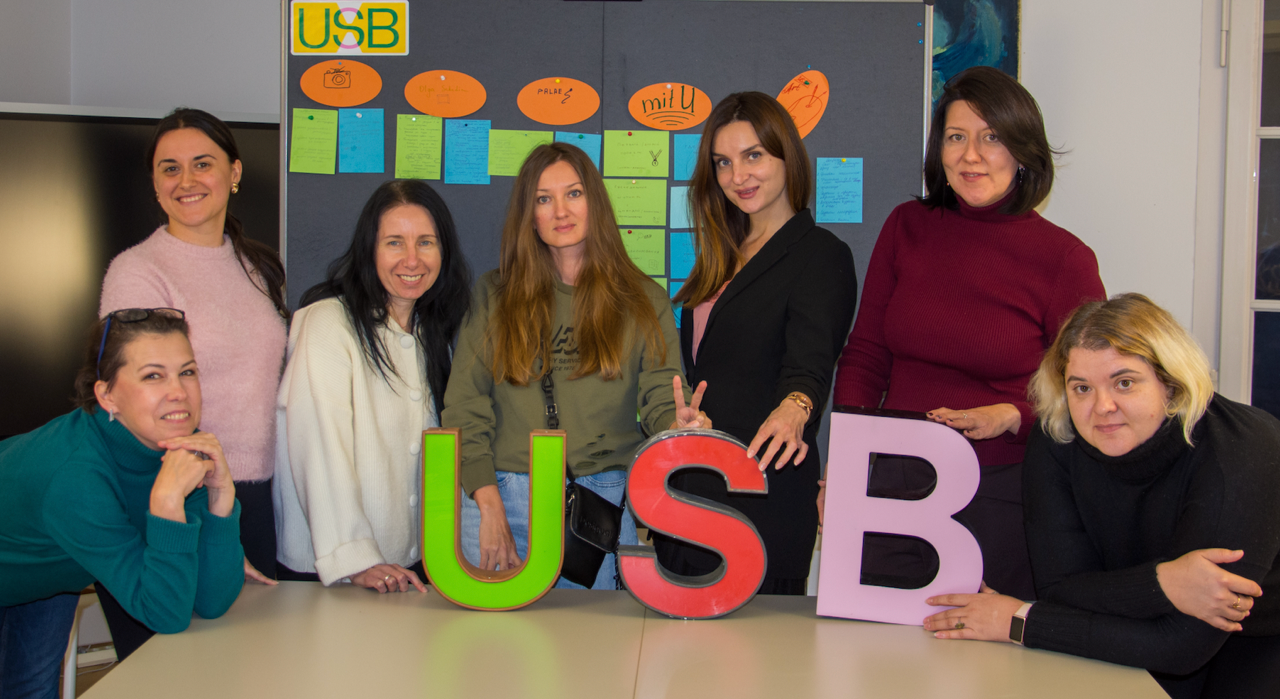
Among them: a photography workshop, candle production, design and marketing services, an educational art studio, a creative workshop, a dance studio, consulting services in various fields, etc. For some participants, these ideas became the first steps toward their own businesses. Others realized that at this stage it is better for them to work as employees—and this is also an important outcome. “When a person understands where they are heading, stability and confidence appear. And that is already half the success,” adds Svitlana Manzer. The program’s experience shows that even small initial support—mentorship, training, and microfinancing—can help people turn ideas into real initiatives that benefit both the participants and local communities.
A Space Where Women Learn to Speak About Themselves
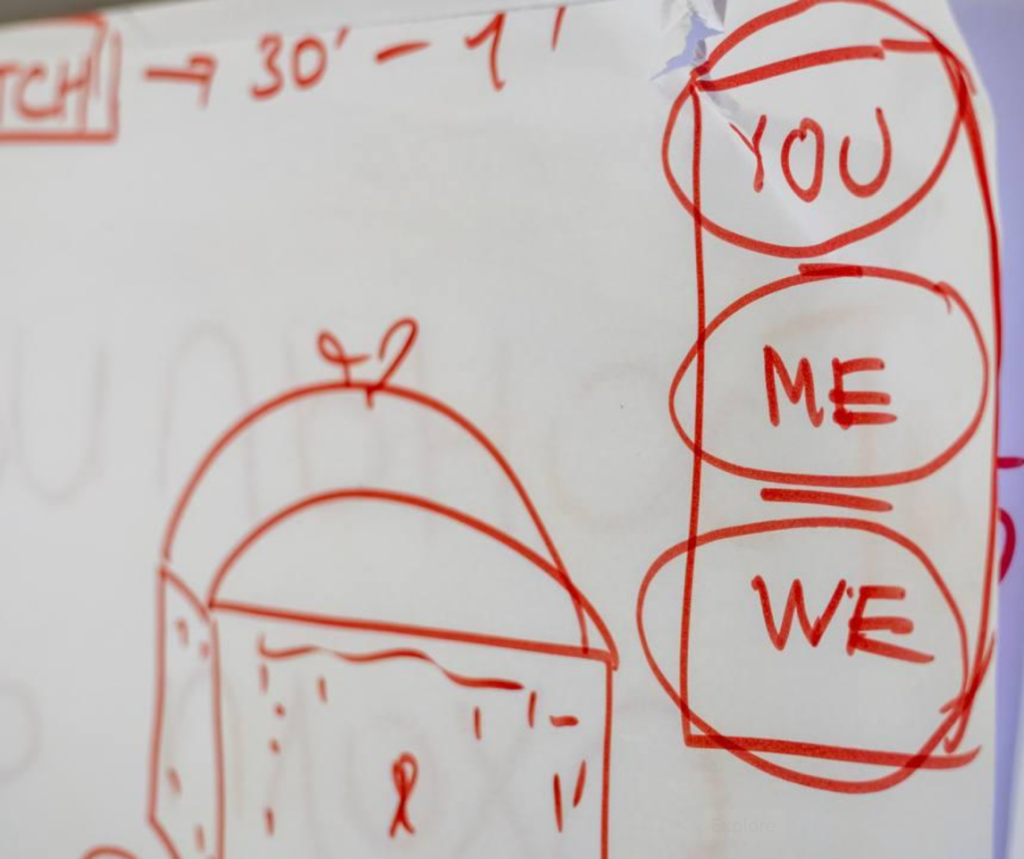
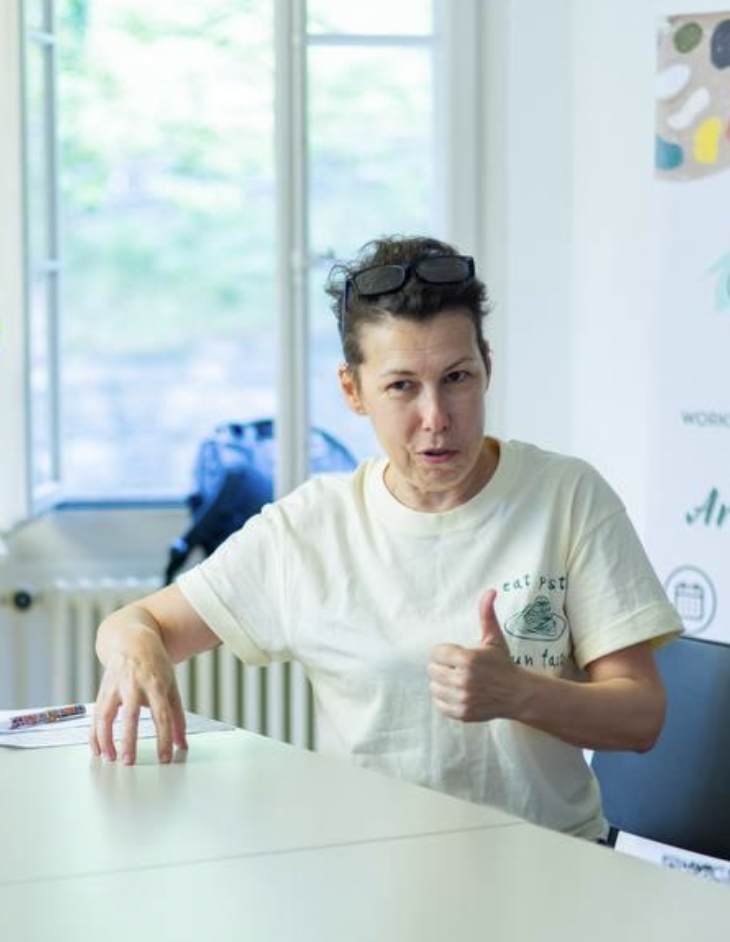
One of the project’s mentors was Lili Bauer, an experienced coach and communication trainer. “For me, it was a very interesting experience because so many exceptionally talented people gathered here. Many discovered new opportunities and found inspiration in them,” she says. According to Bauer, one of the main obstacles for many women remains the difficulty of speaking about their own achievements. “For a long time, we were taught to think in terms of ‘we’: team, collective, school. But I wanted to tell them: ‘You are the center of your universe. And it is from this position that you should speak about your talent and what you do.’”
Lili was especially impressed that even after difficult life experiences, the participants had not lost their desire to create and move forward. “They have overcome many challenges but have not lost their spark. They just needed help understanding how to preserve that spark and show it to the world,” she adds.
From Idea to First Step
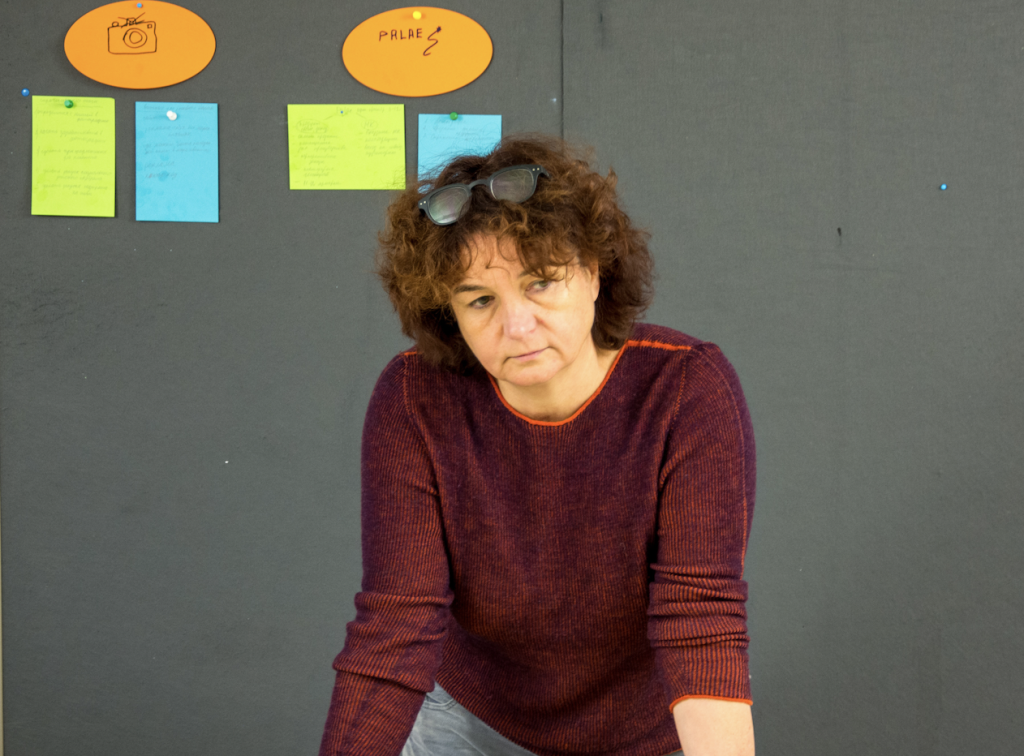
For Olena Nikolaieva, participation in the program became a driving force for developing the candle brand Palae. “I am very grateful to the project organizers for the opportunity to gain practical knowledge and support in implementing my own business. Teamwork was especially valuable for me,” she says. During the training, Olena was able to clearly define her plans, create a development strategy for the brand, and set priorities for its step-by-step implementation.
Thanks to the project’s support, which provided equipment, space, and an advance for purchasing materials, Olena is already actively conducting candle-making workshops, producing candles for seasonal sales, and developing the marketing of the Palae brand. Her workshops are gradually becoming not only a creative activity but also a form of local interaction and cultural exchange, bringing together people from different communities.
From Doubt to Confidence
For photographer Halyna Khramova, this experience became an important stage of personal development. “Photography was a hobby for me—I was invited as a volunteer photographer to various events. I didn’t think I would reach a semi-professional level so quickly,” she says. The training helped her structure her ideas and define the next steps. “This project became a pillar of support for me. I realized that I am moving in the right direction, became more confident, and now know how to implement my strategy step by step.” Thanks to the program, Halyna was able to upgrade her photography equipment, expand her presence on social media, receive recommendations, and take additional photography courses.
When Ideas Become a Team
For IT specialist and photographer Liuba Kulyk, the main value of the project was new professional connections. “First and foremost, it’s meeting wonderful, talented women, a creative and professional partnership, career prospects, and, of course, support,” she says. This is also where the idea emerged to create a joint marketing project together with marketing specialist Mariia Baldina and designer Svitlana Bielova. Thus, the marketing hub MitU was created, which already has its first clients and helps develop brands for small businesses.
Integration Begins with Trust
The stories of these women show that integration is not only about language, documents, or work. It is also about the opportunity to realize one’s experience, find a new professional environment, and feel that one’s talent matters. “I have lived in Switzerland for more than twenty-five years, and I see that real integration happens when a person not only adapts to a new environment but also brings something of their own—their ideas, experience, and energy,” says USB Executive Director Olena Krylova-Müller.
According to her, USB’s approach is based on creating conditions in which people can move from being recipients of aid to becoming active participants in social and economic life. “Our experience shows that even small support at the beginning can change the trajectory of a life. When people are given the opportunity to test their ideas, they begin to see their future in a new country and become an active part of local communities,” adds Krylova-Müller.
The experience of this program shows that such initiatives can work as an effective model of integration. The combination of education, mentorship, small initial support, and professional networks creates conditions in which ideas quickly turn into real projects. This approach can be applied in other cities and communities as well. From such small steps—ideas, trust, and cooperation—a new professional story of Ukrainian women in Switzerland gradually takes shape. And perhaps the most important thing in this process is that there are always people nearby who are ready to say: Your idea is worth bringing to life.