Text: Svitlana Prokopchuk
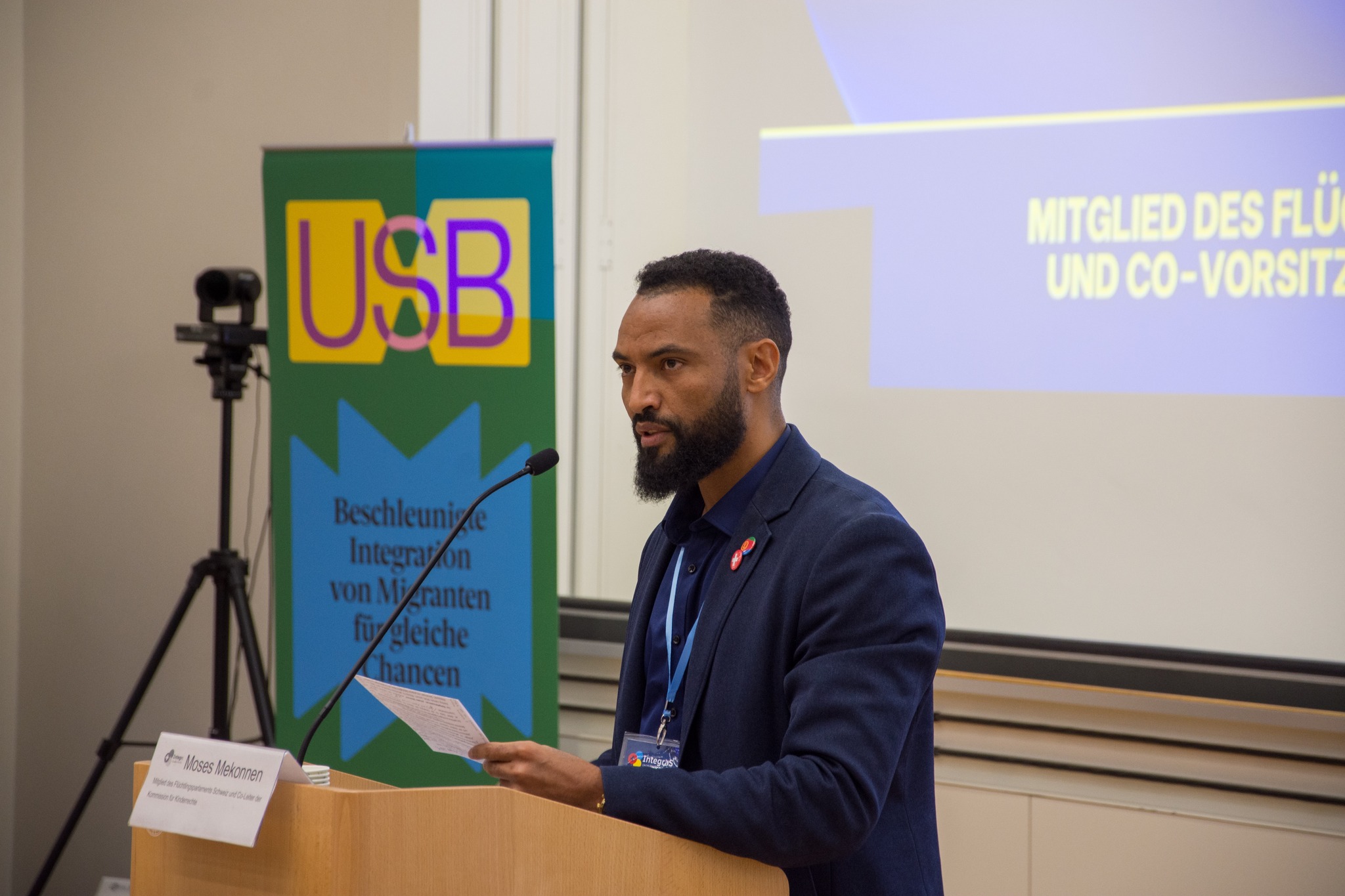
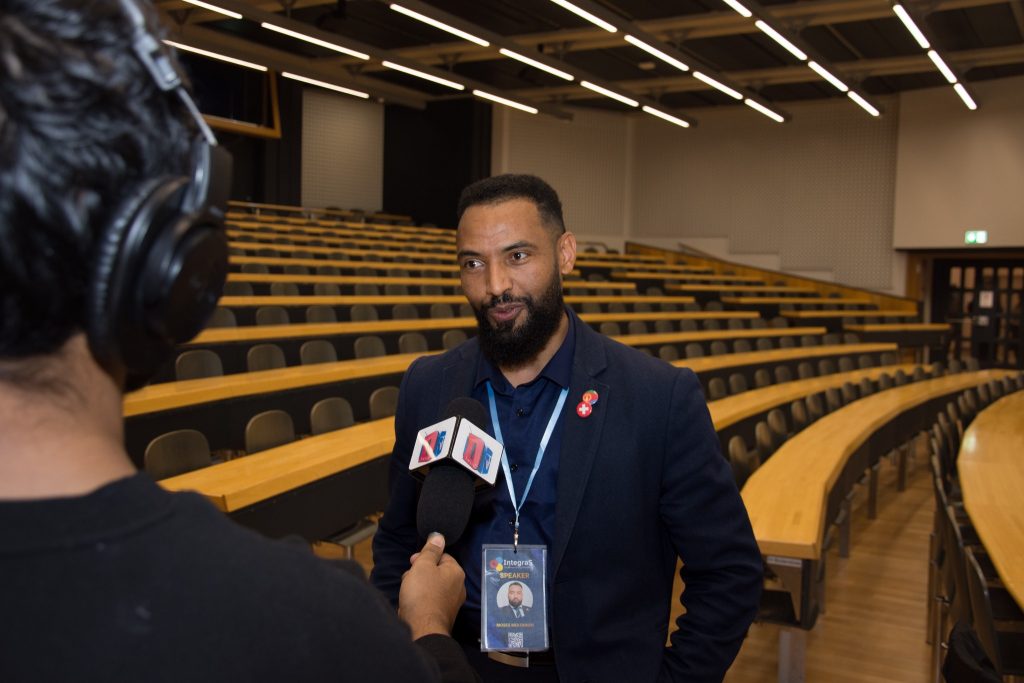
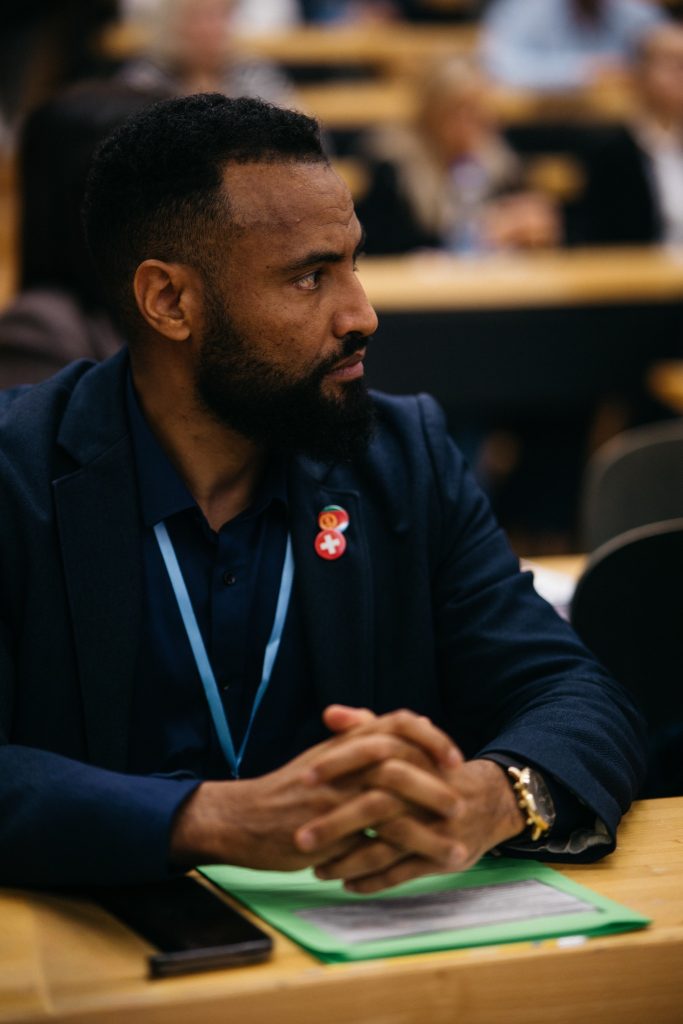
Moses Mekonnen has been living in Switzerland since 2014. He has gone from being an asylum seeker to becoming a co-founder of the platform known as the “Refugee Parliament.” His voice is calm, reasoned, with a clear position. At the center of his work today are children from migrant families. Mekonnen is Co-Head of Children’s Rights at the Refugee Parliament of Switzerland and lives in Lucerne. We spoke about his journey, identity, equality, and why change begins not with loud statements, but with dialogue.
“People talk about us, but it is important that they talk with us”
— Moses, if we go back to the beginning. It was 2014 and you found yourself in Switzerland. A new environment, a new language. What turned out to be the most difficult?
— The most difficult thing is not only the language. It is the feeling of invisibility. When you are physically present in a country, but politically — as if outside of it. A lot is said about people with a migration history. But very rarely do they ask: what do you think? Integration often means: you have to adapt. But participation means: you have a voice. We cannot become members of parliament without citizenship. But that does not mean we have no right to an opinion. And if democracy is dialogue, then it cannot be that part of the population is automatically excluded from it. That is how the idea of the “Migrant Parliament” emerged. Not as a protest, but as an invitation to conversation.
— You speak very carefully, without confrontation. Is that a principled position?
— Yes. Because confrontation quickly closes doors. We are not enemies of society. We are part of it. If we begin with struggle, everyone loses. If we begin with dialogue, together we have a chance to win.
“Equality Is Not a Privilege — It Is the Norm”
— You often emphasize equality. But equality in the context of migration is a complex issue.
— Equality is not about sameness. It is about equal dignity. Children are the most sensitive indicator of how just a society truly is. If a child has fewer opportunities only because of their parents’ status — that is a signal. Formally, children’s rights are protected. But life is not always formal. If a family lives in instability, if financial resources are limited, if parents fear the future, this affects the child. And then the question arises: do we see the child as a bearer of potential, or as an appendix to a migration case? Partly, I am speaking about the gap between law and practice. But above all, it is about the responsibility of adults. A child does not choose where to be born. But we choose how we treat that child.
“The Sandwich Generation Is Not a Weakness — It Is an Opportunity”
— You call migrant children the “sandwich generation.” Is that more of a crisis or a resource?
— Both are possible. They are between two cultures, sometimes between two languages, sometimes even between two value systems. This can create internal conflict or uncertainty in self-identification. But if society provides support, if schools recognize multilingualism as a strength, if parents do not live in constant fear, a child’s multicultural background becomes an advantage. These children can connect worlds. They are flexible, adaptive. In a global world, this is a competence, not a problem. A dual identity is not a tragedy. Isolation is.
“Without Resources, Good Intentions Remain Intentions”
— You mentioned financial difficulties in the Migrant Parliament. How much does this hinder your work?
— A lot. You can have ideas, you can have motivation. But without resources it is difficult to organize educational events, invite experts, create a stable structure. And children are our future — support for such initiatives should not be occasional, but sustainable.
“We Are Part of the Solution”
— You often repeat the phrase: “We are not part of the problem — we are part of the solution.” Why is it important to you?
— Because narratives matter. If you constantly hear that migration is a problem, people begin to believe that they themselves are the problem. And that is dangerous, first of all for social stability. A person who feels unwanted will not feel responsible. But a person who is recognized as part of society wants to contribute. Trust works both ways. We trust society — society trusts us.
“The Future Is a Shared Project”
— What kind of future do you see for children from migrant families?
— A future in which they are not asked, “Where are you really from?” but are asked, “What can you do?” A future in which their multilingualism is an advantage, not a suspicion. But this will not happen automatically. It is the result of political decisions, educational policy, and media discourse.
— You speak like a politician.
— (smiles) I take that as a compliment. But I am not a professional politician. I am a person with migration experience. And that experience has taught me: either we build a bridge, or we build a wall. I always choose the bridge.
Photo: Halyna Khramova