Text: Svitlana Prokopchuk
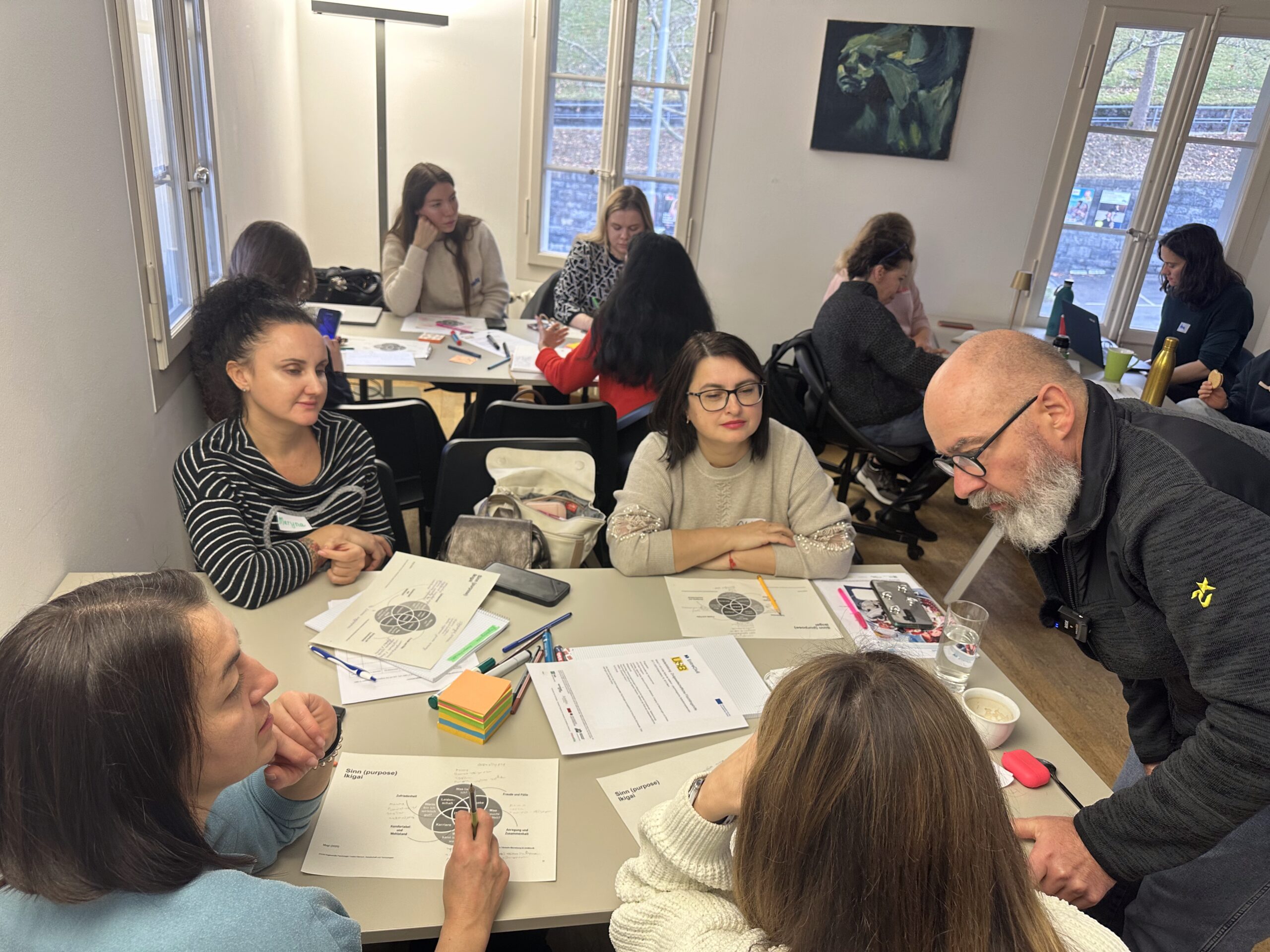
Supporting people who have been forced to leave their homes due to war is profoundly important, yet emotionally exhausting. USB’s experience in working with forcibly displaced individuals in Bern, Thun, and Basel shows that the well-being of those who help directly impacts the quality and sustainability of the support they can provide. Therefore, in collaboration with Professor Michael Zirkler from the University of Zurich and his colleagues Anna Binic-Schnauder and Zoe Dall’Aglio, the Association has organized a training program titled “Public Assistance to Refugees.”
The Invisible Burden Carried by Helpers
Individuals who take on the role of helpers often underestimate the emotional burden that accompanies this work. Refugees come with experiences of war, loss, separation, and uncertainty. Listening to, accompanying, and supporting them is a significant act of empathy, but boundless empathy can lead to exhaustion. As a USB volunteer noted: “You want to be strong for others, but sometimes you forget that you also need space to breathe.”
Psychological research and practice confirm that helpers often face secondary stress, emotional overload, and a sense of responsibility that exceeds their role. In community work, where the structure is less formal, these risks are felt even more acutely.
Why Self-Reflection and Boundaries are Essential
Understanding one’s own values, motives, and boundaries is not a “soft skill,” but a protective resource. Those who can recognize their emotional triggers and internal boundaries are capable of supporting others without losing their own balance. One participant in the program later shared: “I realized that helping is not just about giving, but also about knowing when to take a step back.” Healthy boundaries allow helpers to remain effective, attentive, and emotionally stable while preventing burnout. This is particularly important in USB’s work, where volunteers and the team support youth, families, and individuals in the process of integration and recovery.
The Power of Resilience – The Strength of Community
Self-care and psychological hygiene are often mistakenly perceived as selfish actions. In reality, they are the key to long-term and quality support. Practices of reflection, stress management, and strengthening one’s own resilience enable helpers to be a stable support for others—especially in challenging life situations. As one member of the USB team, the head of educational and integration projects, Svitlana Manzer, aptly stated: “When I take care of my own balance, I become a better support for someone else.”
The Way Forward
USB continues to integrate psychological competencies of self-help into its practice of supporting refugees. The goal is not only to empower the refugees themselves but also to support those alongside them: volunteers, coordinators, and community members. After all, strong, resilient helpers create strong, resilient communities. And in working with refugees, it is this resilience that makes a real difference.