Text: Olena Krylova
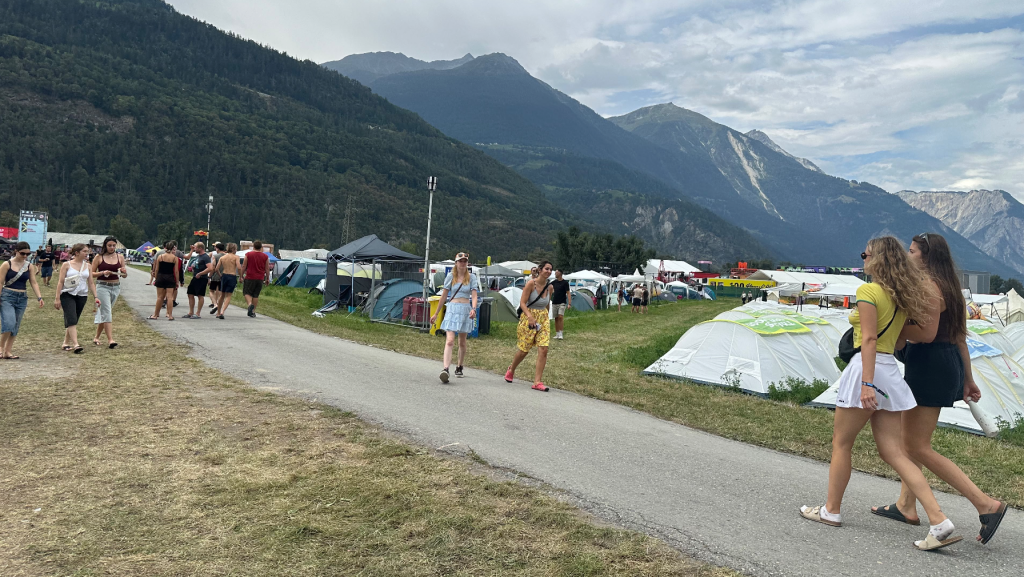
Just recently, Alexii received status S. This August, he spends two weeks at one of the country’s biggest music festivals, sorting waste and coaching festivalgoers on where their empty cups belong.
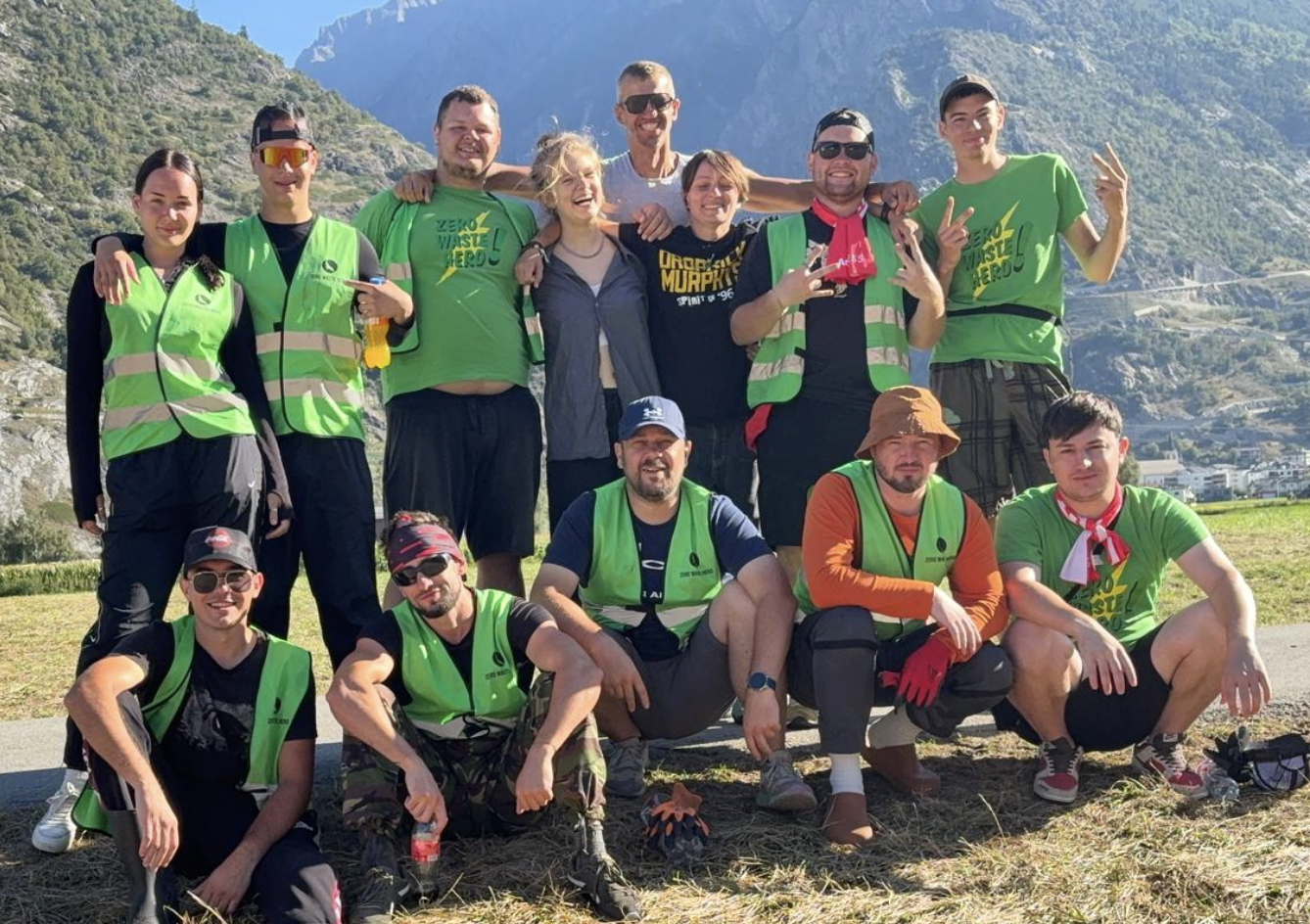
Alexii is one of a group of young Ukrainians recruited by USB NGO to join the on-site sustainability team at the Gampel Festival in Valais, working alongside Acting Responsibly AG, the Biel based consultancy that runs the event’s waste and reuse operations. It is a short term assignment — but, as organisers say, something closer to a training ground.
“I decided to take part in the festival for the sake of new experience, knowledge, and getting to know local people. And as a nice bonus, there were incredible mountain views, the chance to see the Swiss waste sorting system with my own eyes, and even to suggest my own tweaks to how it works!” said Alexii.
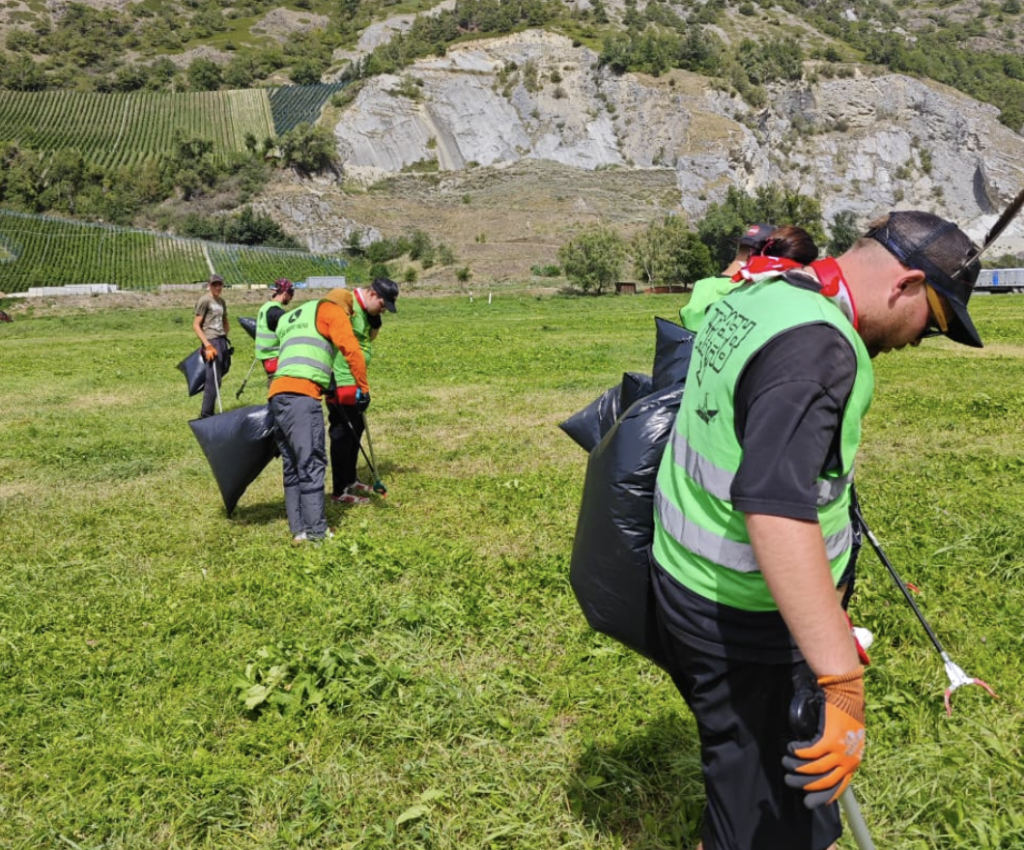
Acting Responsibly AG has built its reputation on greening large Swiss events and waste sorting stations at festivals across the country. At Gampel, the firm’s crews handle tens of thousands of visitors over a single weekend, moving fast and working in teams under pressure. For a newcomer to Switzerland, it is also a crash course in how a Swiss workplace runs day to day: shift schedules, safety briefings, direct feedback, teamwork with strangers.
“People don’t see what it takes to keep a festival this size from drowning in waste by Sunday night. It’s relentless, and it only works with a team that doesn’t cut corners. USB’s volunteers matched that pace from day one, which made a real difference to how clean we kept the grounds,” said a representative of Acting Responsibly AG.
For USB, the Bern based association that has spent the past years supporting integration of young Ukrainians and other migrants, the Gampel assignment is a chance to pair that support with something harder to teach in a classroom: a few days of hands on work inside a real Swiss operation, shoulder to shoulder with Swiss colleagues.
“This Open Air Gampel 2026 festival proved once more that no matter where young people are from or what challenges they are currently facing, they can be united by common things like music and the desire to make the world a better and cleaner place,” said Natalia, USB volunteer and a Zero Waste Lutsk NGO board member and ecological activist.
Switzerland’s festival circuit has become something of a testing ground for waste systems that other countries are only starting to explore. Deposit schemes for cups and cans, reusable dishware loops that get washed and recirculated within the same event, colour-coded multi-stream sorting stations staffed by trained crews, and strict pre-event agreements with vendors on packaging are now standard at larger Swiss gatherings, not optional extras. The result is measurable: well-run events routinely divert the large majority of their waste away from landfill or incineration, simply because the sorting infrastructure and the staffing behind it are treated as core event logistics rather than an afterthought. It’s this combination — the physical infrastructure plus a workforce that knows how to run it under pressure — that makes the Swiss model transferable, and it’s precisely the know-how USB’s young volunteers are absorbing hands-on at Gampel.
There is a second idea taking shape behind the festival gates. Several of the participants come from cities in Ukraine that are themselves building out waste sorting and reuse systems, including Lutsk, where USB is developing a separate pilot on deposit based packaging for local businesses and events. Organisers see the two threads converging: the know-how these young people pick up handling sorting stations, deposit systems and crowd flows at Gampel could eventually travel home with them, feeding into Ukraine’s own push toward zero waste festivals and events.
“The young people are not just picking up litter at Gampel, they are picking up a mindset: that waste is a design problem, not a fact of life. What they learn on that festival ground in Valais, we want to see growing back home in Ukrainian cities rebuilding their own public spaces from the ground up,” said Olena Krylova, chair of USB.
For now, the plan is more modest: a handful of young Ukrainians in high visibility vests, sorting bottles and cans under the Valais sun, and a partnership USB and Acting Responsibly AG hope to bring this experience to Ukraine.