Text: Svitlana Manzer
For many Ukrainian women who arrived in Switzerland with Status S, the path to employment is not simply a matter of finding a job listing. It involves navigating an unfamiliar labour market, understanding a new legal and administrative system, overcoming language barriers, and — perhaps most fundamentally — rebuilding the confidence to believe that the next step is possible.
USB’s project “Jobs for Ukrainian Women” was designed to address exactly this. Implemented in the Canton of Bern with a total budget of CHF 20,000, the project combines information, individual support, and direct connections with employers to help women move from social assistance into sustainable employment. Reaching Women Where They Are The project’s primary outreach channel is the Telegram channel @usbrobota, which has grown to over 1,170 subscribers and is maintained with regular publications on employment, further training, and self-employment. Alongside this, a series of awareness-building videos and webinars has reached thousands of viewers. A webinar on the essentials of employment for Ukrainians in Switzerland drew 2,700 viewers. A video on leaving social assistance reached 1,500. Content on apprenticeships, the competitive nature of the Swiss job market, Status S specifics, and transitioning to self-employment has collectively reached tens of thousands of people.
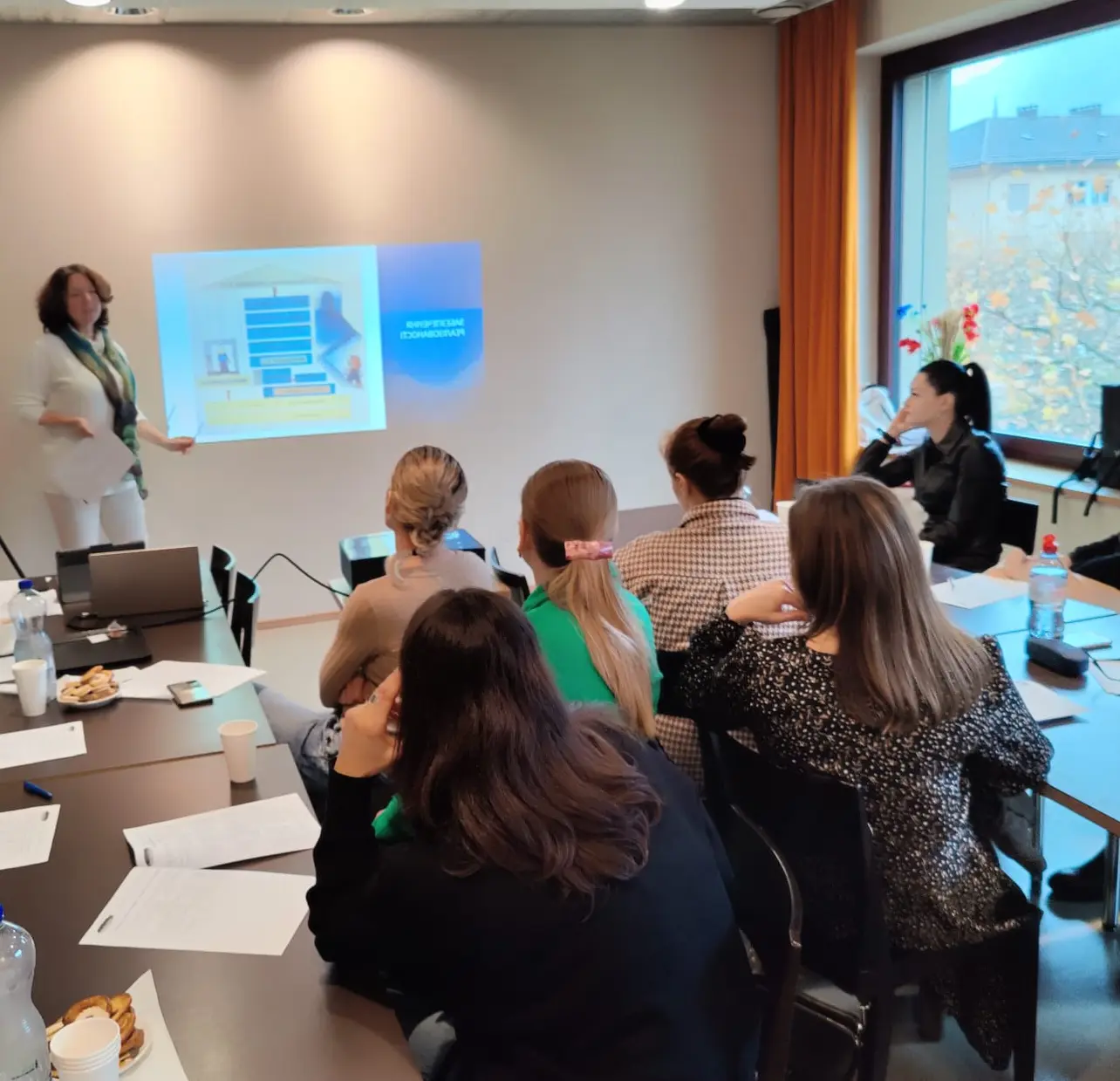
A Google database of job-seeking women — predominantly those with medical, social, and educational backgrounds — now holds over 100 registrations, providing a foundation for targeted matching with potential employers. Concrete Support, Individual and Collective The project has delivered over 400 individual consultations covering general employment questions, self-employment, RAV registration, and financial support from social services.
Women caring for disabled family members have received dedicated support in applying for care programmes. Teachers received 15 hours of specialist employment consultations. A private advisory channel, set up by Lyudmila Kashtalyan, has provided ongoing one-to-one guidance. One of the project’s most impactful areas has been the healthcare sector — an area where Swiss employers face genuine workforce shortages and where many Ukrainian women have professional backgrounds. Twenty candidates with medical qualifications and German at B1–B2 level were referred to the Red Cross programme for diploma recognition and employment in care. The project also processed 30 applications from medical professionals for the Red Cross programme, conducting selection interviews and liaising with the Ukrainian Ministry of Health on the issuance of registration certificates for nurses seeking diploma recognition in Switzerland. Partnerships with Spitex organisations across the canton — including Spitex Verband Kanton Bern, Spitex Stadt Bern, Spitex Köniz, and BelleVie Suisse AG — have opened pathways for work placements and Schnuppertage (trial work days). Collaboration with the Youth Red Cross has extended this further.
Building the Broader System The project does not operate in isolation. USB has participated in the coordination platform between Ukrainian NGOs and Adrian Gerber, the Canton of Bern’s commissioner for labour market integration. Information campaigns have been launched with RAV and BIZ. The project was presented at the IntegraS Forum in Bern, with a workshop on practical aspects of employment and the transition away from social benefits. Nine Documented Employment Entries — and Many More Nine participants have been verifiably placed into employment through the project. Many more have reported benefiting from the programme’s support, with their current employment status not yet confirmed. Behind the numbers are individual stories. Oksana found her way into care work through a Schnuppertag that, as she describes it, allowed her to bypass months of correspondence, anxiety about employer conversations, and waiting for responses. “Initiative and the right support from organisations can open new opportunities even in difficult life situations,” she says.
Her example has since prompted other Ukrainian women in her circle to ask whether USB will organise another trial day. Olena arrived in Switzerland in March 2022 and began learning German in May. Knowledge, she found, was not enough on its own. Psychotherapeutic consultations with Svitlana Manzer gave her the decisive push to overcome doubt and uncertainty. “If you believe in yourself and work on yourself,” she reflects, “no fear stands in the way of success.” Vitalina began with a 20% position, a few hours a week working with children. It grew. She now works four days a week and has received a work reference — a document that opens doors to further positions in education and childcare. She holds two university degrees in economics from Ukraine. In Switzerland, she is building something new. Employment as Integration What the project makes visible is something USB has long understood: employment is not a separate track from integration. It is integration. For women who came to Switzerland in circumstances not of their choosing, a job is not just income. It is structure, dignity, social connection, and the beginning of a life that is genuinely theirs. The project continues.