Text: Svitlana Prokopchuk
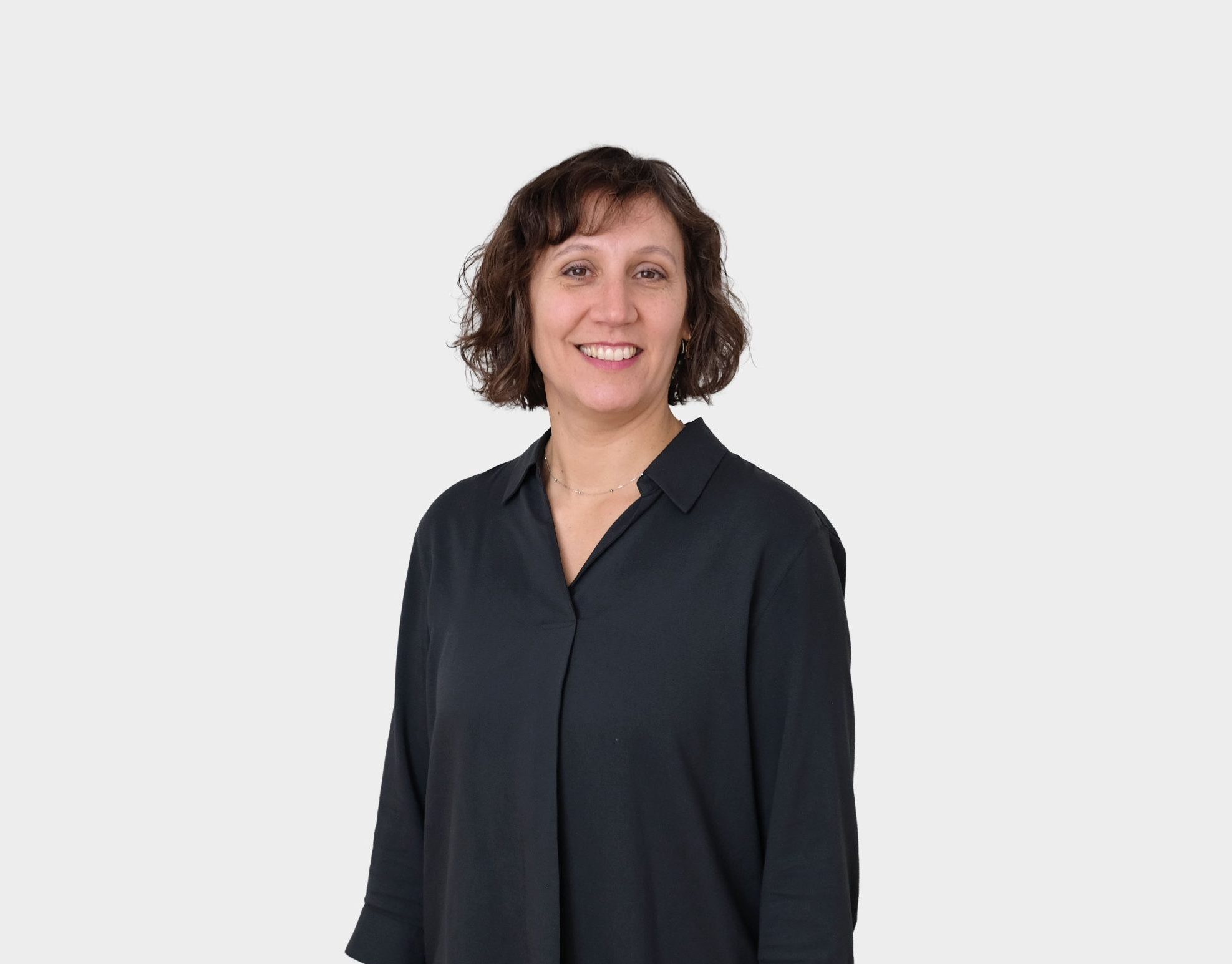
Integration in a new country means far more than learning a language or finding a job. For many migrants in Switzerland, it is a daily struggle with invisible barriers: prejudice, bureaucracy, unrecognized diplomas, and limited opportunities. Why do even highly motivated and qualified people often remain excluded from the labor market? Where does the system fail, in the laws or in their implementation? And what role does society itself play? In a conversation with migration specialist and politician Anette Vogt, the focus is on the real challenges of integration without embellishment, illusions, or simplifications. Anette Vogt lives in Burgdorf and is a trained migration specialist. She currently heads the Integration Office of the city of Burgdorf. Politically, she is a member of the city council of Burgdorf. She was also recently elected to the Grand Council of the Canton of Bern and will be sworn in in June.
Which barriers for migrants in Switzerland do you currently consider the most difficult, linguistic, labor market related, or societal prejudice? What makes integration more difficult?
I think there are challenges in all of these areas. It does not only affect asylum seekers but also foreigners in general. In Switzerland, one often feels a certain skepticism toward migrants and sometimes even rejection. Unfortunately, this attitude is actively cultivated and promoted by certain political parties. I observe this particularly among employers, but also among landlords. As soon as a foreign name appears, distrust often arises immediately. I consider this a major obstacle because many people do not even get the chance to show that they are reliable and punctual and, for example, able to pay their rent on time without any problems. Of course, not everyone here thinks this way. But many of us have a certain underlying racist attitude that significantly slows down these processes. This also affects politics. When cuts need to be made, the asylum sector is often the first to be reduced, even though very little is available there already. This leads to limited resources for language courses and other structures, and this is a central barrier to integration. When people are forced to remain passive for months or even years, because asylum seekers are not allowed to work in the beginning, they become inactive and later have great difficulty returning to an active life. If they could learn the language and participate in programs from the start, many more people could integrate into the primary labor market more quickly.
Where do you think the system fails most often, at the legislative level or in implementation?
That is a difficult question. I think there are some laws that do not promote integration. For example, if someone submits an asylum application, they are initially not allowed to work and do not receive immediate support for language acquisition. There are signs of change here, and I hope that the legal framework will improve. The earlier one invests in integration, the faster results appear, especially in terms of economic independence. In implementation, the place of residence plays a major role. Legislation is uniform across Switzerland, but practice differs greatly from canton to canton.
Does integration depend more on the individual or on the system?
I think both play a role. People need strong inner resilience: being open, seizing opportunities, building connections. This helps integration succeed more quickly and languages are learned more easily. At the same time, this is not possible for everyone. People who are traumatized, sleep poorly, or are under severe psychological stress often cannot fully engage in a new life. In some cases, they are neurologically unable to learn a new language. The system could also do more, for example by providing additional resources and offers that do not only work for the strongest individuals. Today, those who have a lot of energy and resilience integrate faster. Unfortunately, not everyone has these qualities.
What could the system do for more vulnerable individuals?
More suitable structures are needed. For example, language courses for people with low levels of education or for slower learners. Also programs for very fast learners. This means expanding the range of services, and therefore again more resources. And this is exactly where we encounter the political issue of cost cutting. But without investment, integration does not work.
Why do many migrants remain unemployed or employed below their qualifications despite being qualified?
This is a structural problem. Many foreign diplomas are not recognized in Switzerland or only partially recognized. In some cases, they are practically considered worthless. This means that people who have been trained for years are often treated as if they have no professional background. A person who has worked in a hospital for 20 years in their home country brings a great deal of experience, yet re entering the medical field in Switzerland is extremely difficult. I see a lot of unused potential here.
Are employers open enough toward potential workers with a migration background?
Unfortunately not all. There are open minded employers, but they are in the minority. Prejudices or individual negative experiences often play a role and are then generalized to entire groups. This is a form of discrimination that many are not aware of.
Is the system prepared for people with double vulnerability, for example disability and refugee status?
Much more sensitivity is needed here. Discrimination must be understood more broadly, not only as racism but also in connection with disability, age, or social status. And again, without sufficient resources, real improvement is hardly possible.
Do language courses meet actual needs?
Overall, they function well. What is missing, for example, are dialect courses, although these are very important in certain professions, such as caring for elderly people. However, there are also good approaches, such as programs that combine work and language learning.
What should be changed most urgently in your opinion?
The most important thing is the recognition of foreign diplomas. Switzerland has a shortage of skilled workers, and improving this system would benefit everyone. There are many ideas and concepts for faster integration of migrants. But without additional funding, their impact remains limited.
Has your perspective changed since entering politics?
I have learned that political changes take a lot of time and nothing is possible without majorities. At the municipal level, the possibilities are limited. At the cantonal level, they are somewhat greater, but the most important decisions are made at the national level. There are also political majorities that simply do not allow many ideas. I am particularly concerned about the situation in deportation centers, where people, including children, sometimes have to live for years. I consider this inhumane and incompatible with the values of a wealthy country like Switzerland. I am convinced that one day there will be an apology for this, just as there has been for other dark chapters of history. One example is the practice of placing children in forced labor situations and taking them away from their mothers if they were born outside marriage, if the mothers were poor, or considered immoral. This practice ended in the 1970s. In 2013, the Swiss Federal Council officially apologized to the victims, and compensation funds and research programs were established. This shows that such changes require time and persistence. But I hope that in the future things will be different.