Text: Svitlana Prokopchuk
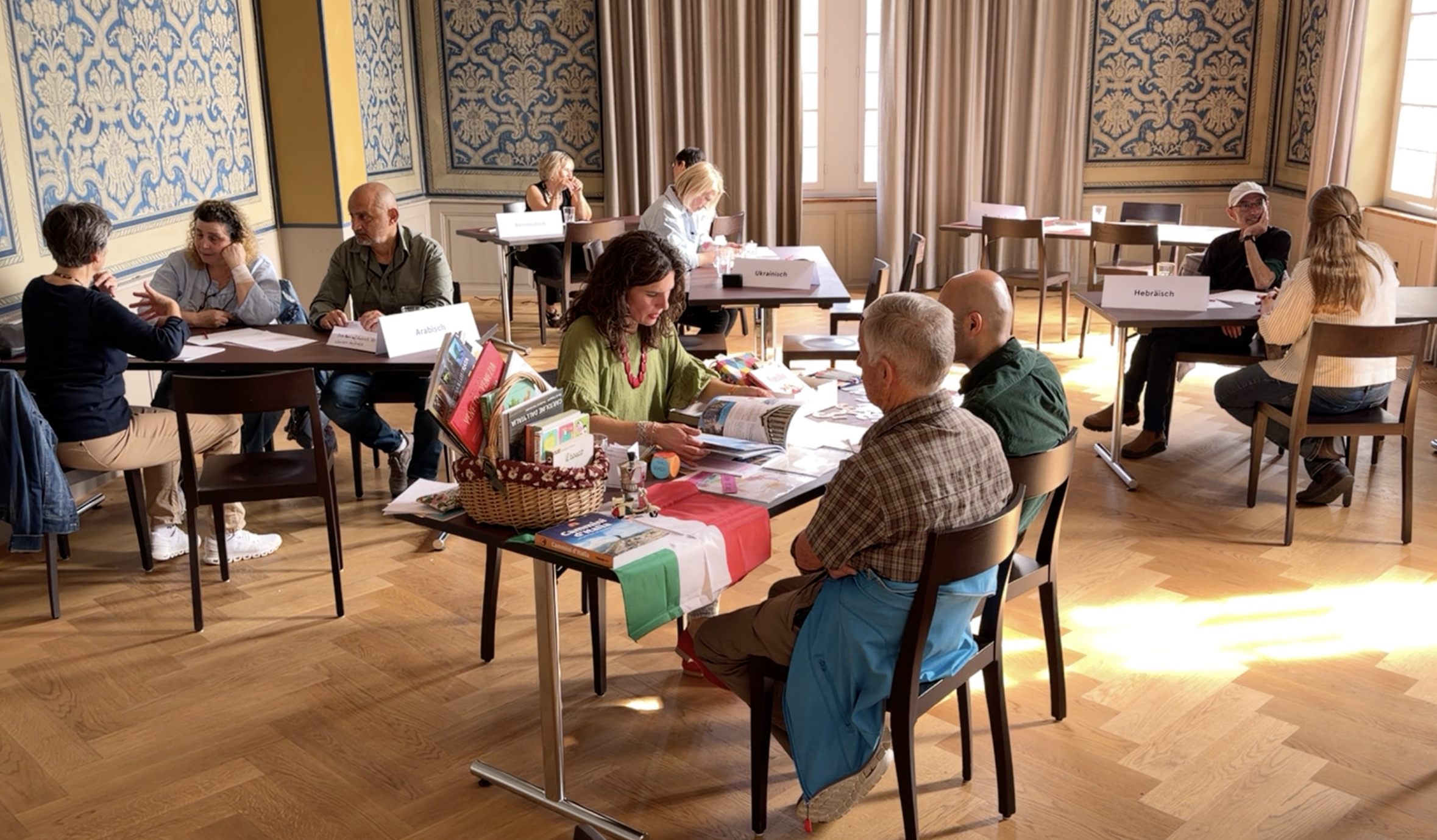
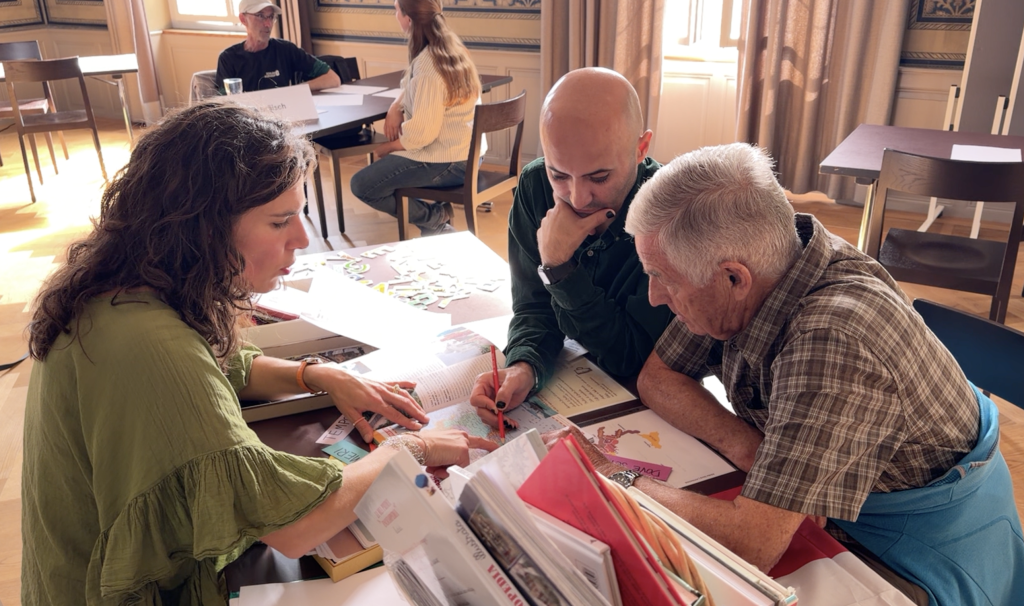
Shukri takes a sheet of paper and asks for your name. With a few strokes of his hand, he writes it in Arabic, from right to left. Suddenly, a familiar word looks completely different. This was the experience at the language café held at Burgdorf Castle on 4 October, as part of Swiss Castle Day (Schweizer Schlössertag). Visitors could hear Ukrainian, Arabic, Spanish, Italian, Persian, Hebrew and Bernese German. People approached the tables, asked questions, tried writing their names in a different alphabet, practised short dialogues or simply listened to the sound of a language they had never encountered before. It was a language café, but there was no coffee.
A Journey That Requires No Ticket
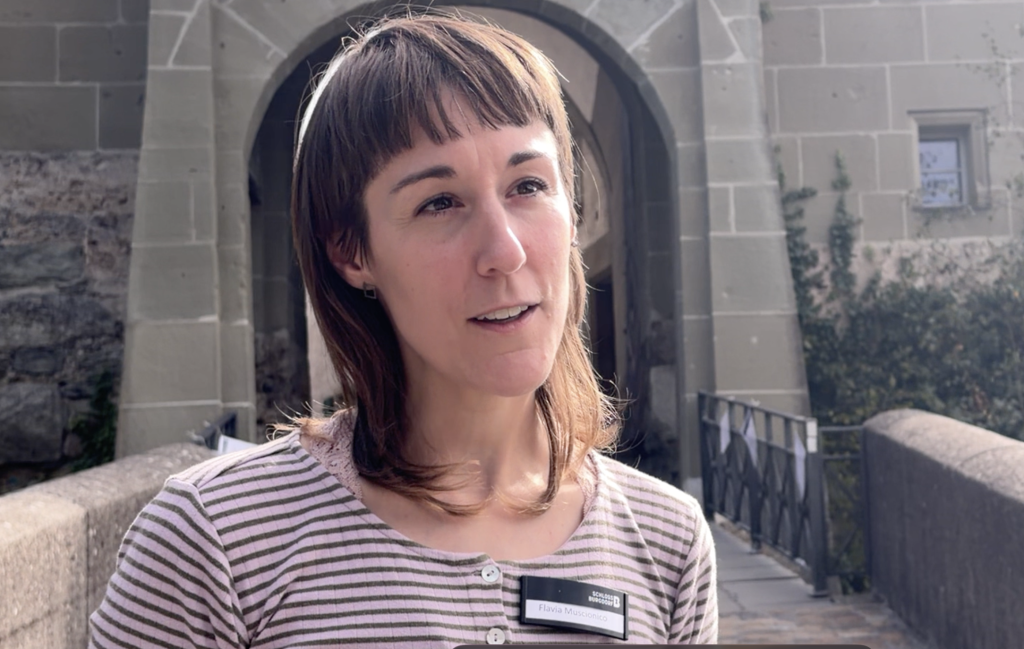
What does it take to find yourself in another country for a few minutes without leaving Burgdorf? Sometimes, all you need to do is sit down at a table, hear an unfamiliar language and try to pronounce a few new words. Flavia Muscionico, Director of the Museum Schloss Burgdorf, explains that the idea was deliberately designed to be accessible to everyone. People from different linguistic and cultural backgrounds live in the town. Therefore, the organisers believe, there is no need to travel far to discover other cultures. It is enough to talk to someone nearby. “We wanted to offer a very simple opportunity to immerse oneself in a language,” Flavia explains. The languages were presented by people associated with the museum, volunteers and participants in previous projects.
A Name in Arabic, a Few Words in Farsi
Shukri Al-Rayyan and Joumana Steif introduced visitors to Arabic. Joumana explains that Arabic is written from right to left, that its alphabet consists of 28 letters and that most of them are connected to one another. But what fascinated people most was not the explanation of the rules. It was the moment they saw their own names written in a different script.
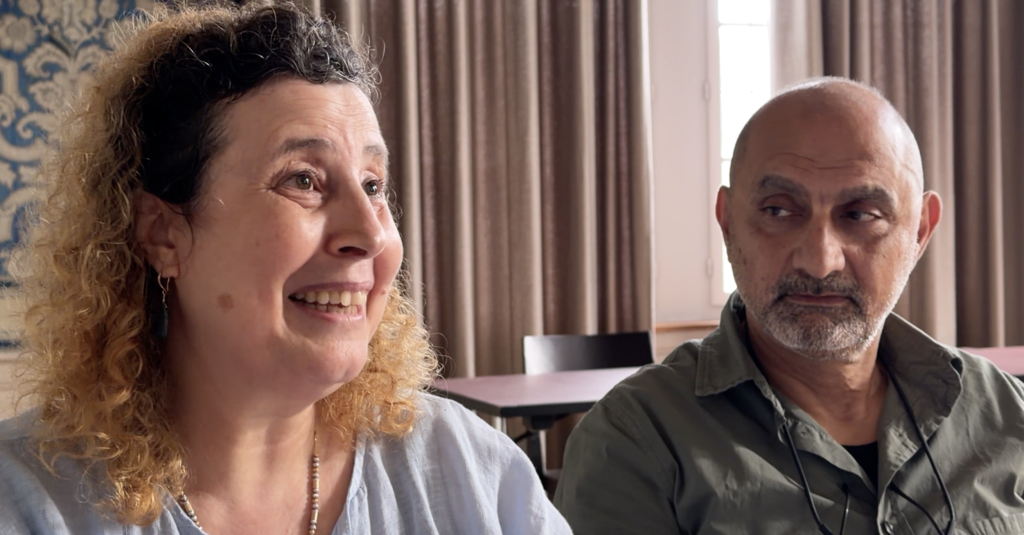
At the neighbouring table, Hadi Asadi introduced visitors to Persian, also known as Farsi. He demonstrated letters, words, simple sentences and numbers. “Of course, you cannot learn a language in thirty minutes. But you can remember a few words,” Hadi says. For a language café, that is enough. The aim is not for someone to be able to speak a new language after a brief encounter. Rather, it is about making a first connection, sparking a curiosity that stays with people even after they return home.
Language as Part of Who We Are
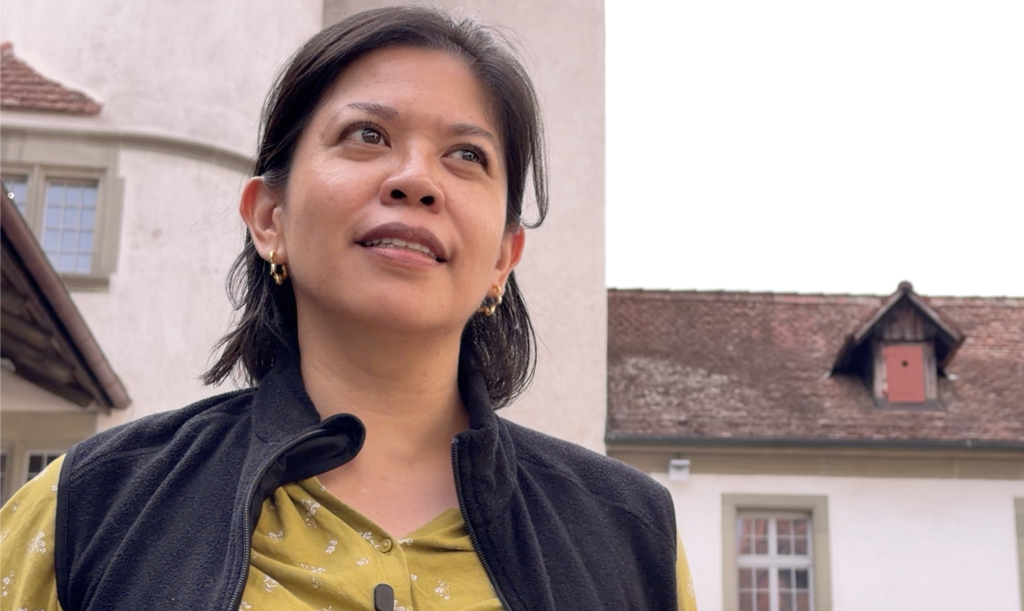
For those presenting their languages, the event was more than an opportunity to teach others a few words. Svitlana Prokopchuk, Media Coordinator at USB NGO, presented Ukrainian. For her, language is closely connected to personal identity. “I was pleased that people came not only out of curiosity about the Ukrainian language. They also talked about the history of Ukraine and Ukrainian writers they knew,” Svitlana says.
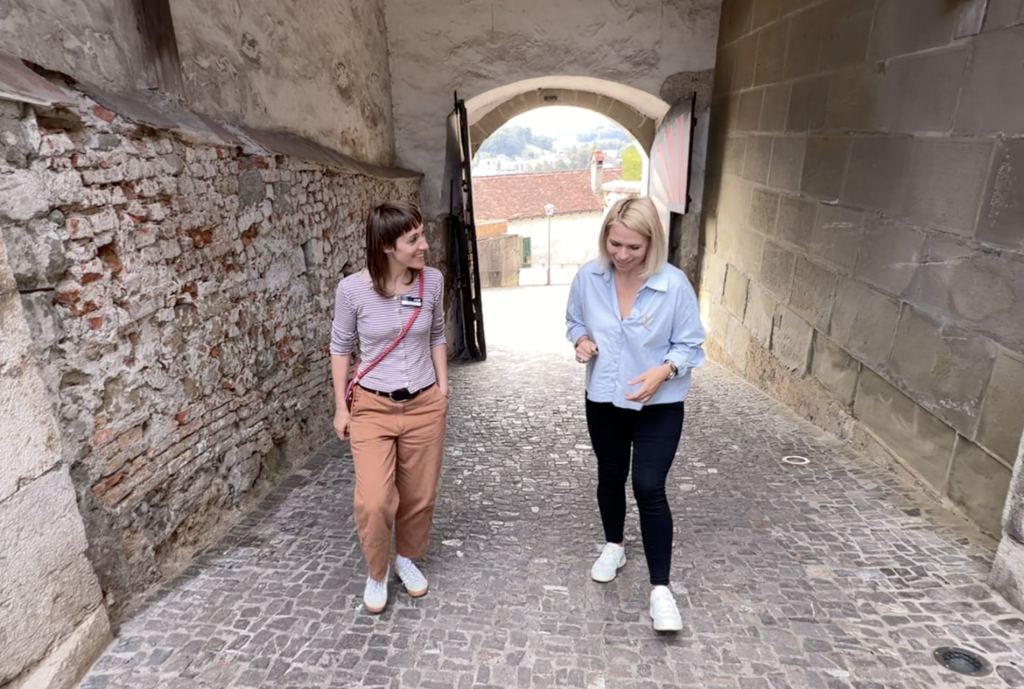
Beatriz Restrepo presented Spanish. She speaks about the importance of using one’s native language within the family and preserving it, because language is connected to one’s origins and sense of self. For Beatriz, Spanish represents love and passion. “It is a language that allows you to be yourself and share a part of your own story with others,” she adds.
Martina Bellotto, who presented Italian, expresses a similar view. “Language,” Martina says, “reflects character and roots.” She misses Italy and the place she comes from, even though she lives in Switzerland. That is why her session was not built around grammar. Participants rolled dice, introduced themselves, talked about food and the weather, learnt how to order something in a restaurant and imagined travelling to Italy. Language became not a subject to study, but a way to play, talk and interact.
Bernese German as a Sense of Home
The language café also featured a language that does not need to be brought from far away: Bernese German. Lilian Schönauer introduced visitors to the Bernese dialect. “You can know Standard German well and still have difficulty understanding Bernese German. It is difficult to learn from a textbook. Much of it comes only through listening and conversation,” she explains.
Flavia Muscionico also speaks of the Bernese dialect as part of her identity. It is the language she grew up with and the one that feels natural to her. The dialect contains words and expressions that do not need to be translated. They simply feel familiar. She also talks about people who grew up bilingual. She enjoys observing how people switch from one dialect or language to another in the middle of a conversation. For Flavia, this is a special form of linguistic richness.
Language Can Bring People Together, but It Can Also Divide Them
Nir Peleg introduced Hebrew at the language café. His perspective on language differs somewhat from those of the other participants. He agrees that people often find it easier to express themselves and feel comfortable in their native language. However, in his view, language does not define a person entirely. “On the contrary, sometimes linguistic differences can also divide people,” Nir says. This thought fits particularly well with the idea behind the language café. Here, different languages do not compete with one another. They simply coexist, each with its own sound and character.
Don’t Be Afraid to Speak
Aisa Martinez, Project Manager for Diversity Education at the Museum Schloss Burgdorf, whose native language is English, describes language as a key to another person and another culture. “Even a few words in the language of the country we visit can change the travel experience. They help open doors that would have remained closed if we had simply spoken English. But to do that, we need to dare to speak, even when we feel we are pronouncing everything incorrectly,” Aisa says. Mistakes are part of learning, and communicating with native speakers helps us gradually become more confident.
Language Opens the Door to Another Person
The language café at Burgdorf Castle lasted only a few hours. No one could truly learn a new language in that time. But visitors could discover something else: that Arabic letters are written from right to left; how Spanish sounds when spoken by someone for whom it is the language of family; how Italian can carry the scent of memories of home; why Bernese German is part of some people’s roots; what the Persian alphabet looks like; and why Hebrew can become an opportunity to talk about what connects us, regardless of the language we speak. Ultimately, that is exactly what Nir hopes for: “I would like people to understand one another better.”