By Olena Krylova
Wars are fought on battlefields. Recovery begins in conversations.
That may sound surprising, but lasting solutions are rarely created in isolation. They emerge when governments, civil society, experts and affected communities come together to discuss shared challenges and turn ideas into coordinated action.
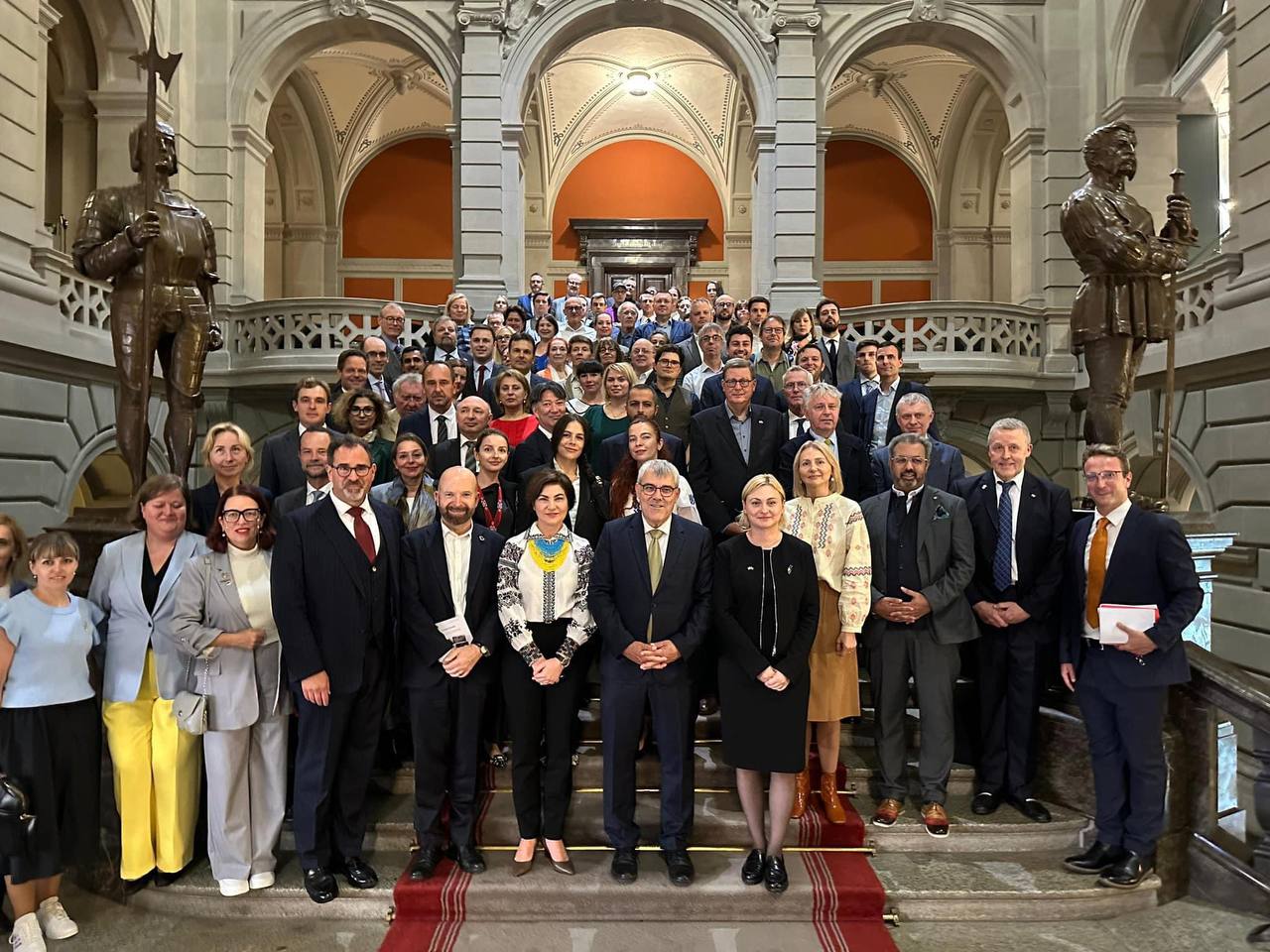
This is precisely the role of the Annual Ukrainian Forum, held in the Swiss Parliament in September 2024. Bringing together parliamentarians, diplomats, experts and representatives of civil society, the Forum has become an important platform for dialogue on Switzerland’s contribution to Ukraine’s resilience and long-term recovery.
The discussions reflected the complexity of today’s challenges. Participants addressed labour market integration for displaced Ukrainians, the mobilisation of frozen Russian assets for Ukraine’s reconstruction and the growing threat of disinformation across Europe.
Although these issues may appear unrelated, they share a common denominator: none can be solved by a single institution or even a single country.
Labour integration requires cooperation between governments, employers, educational institutions and civil society. Countering disinformation demands coordinated action across borders, bringing together public institutions, independent media and researchers. And the discussion on frozen Russian assets highlights the importance of international legal and political cooperation in supporting Ukraine’s future recovery.
One conclusion united the participants. Russia’s disinformation campaigns are highly organised and well financed, allowing false narratives to spread rapidly across the information space. Responding to this challenge requires more than fact-checking. It requires democratic societies to work together, strengthen independent voices and build public resilience against manipulation.
For USB, forums such as this are valuable because they connect local experience with national and international decision-making. Civil society organisations work directly with people affected by war and displacement. Their practical experience helps ensure that policy discussions remain grounded in reality.
Dialogue alone does not solve problems.
But without dialogue, sustainable solutions are difficult to achieve.
At a time when Europe is shaping its long-term response to Ukraine’s recovery, platforms that bring together policymakers, experts and civil society are becoming more important than ever. They remind us that rebuilding Ukraine is not only about reconstruction. It is also about building partnerships, strengthening democratic institutions and developing common European responses to challenges that cross national borders.