By Olena Krylova
Three years can feel both endless and impossibly short.
That was the starting point of “Drei lange, kurze Jahre”, an evening hosted by the East European Library in Bern, where artists, researchers and members of the Ukrainian community reflected on what three years of war have meant—not only for Ukraine, but also for the people rebuilding their lives in Switzerland.
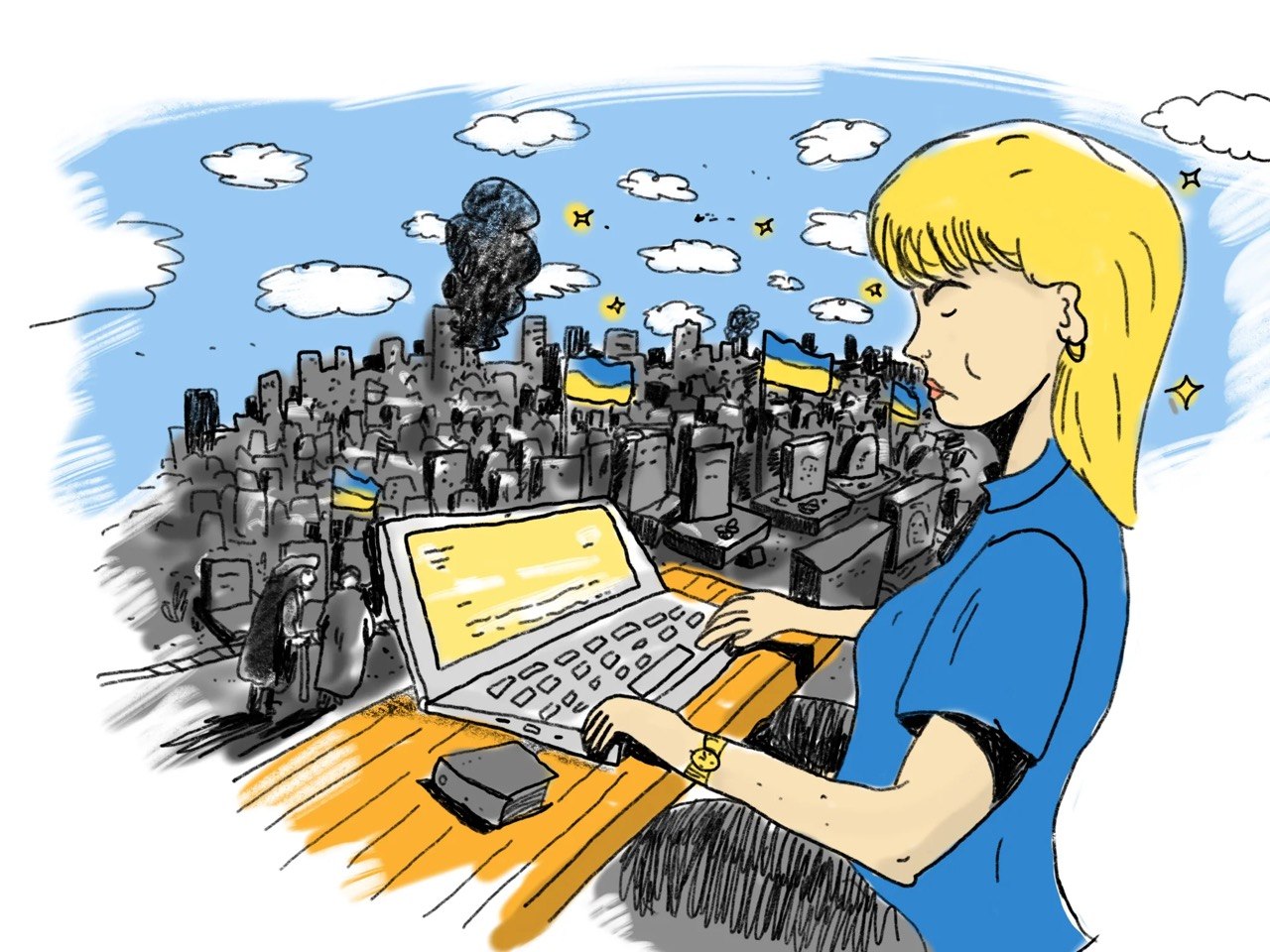
The exhibition brought together illustrations inspired by the experiences of Ukrainian women who arrived in Switzerland after 2022. Their stories were not presented as headlines or statistics, but as deeply personal moments of loss, resilience and new beginnings. Art became a language that crossed borders more easily than politics ever could.
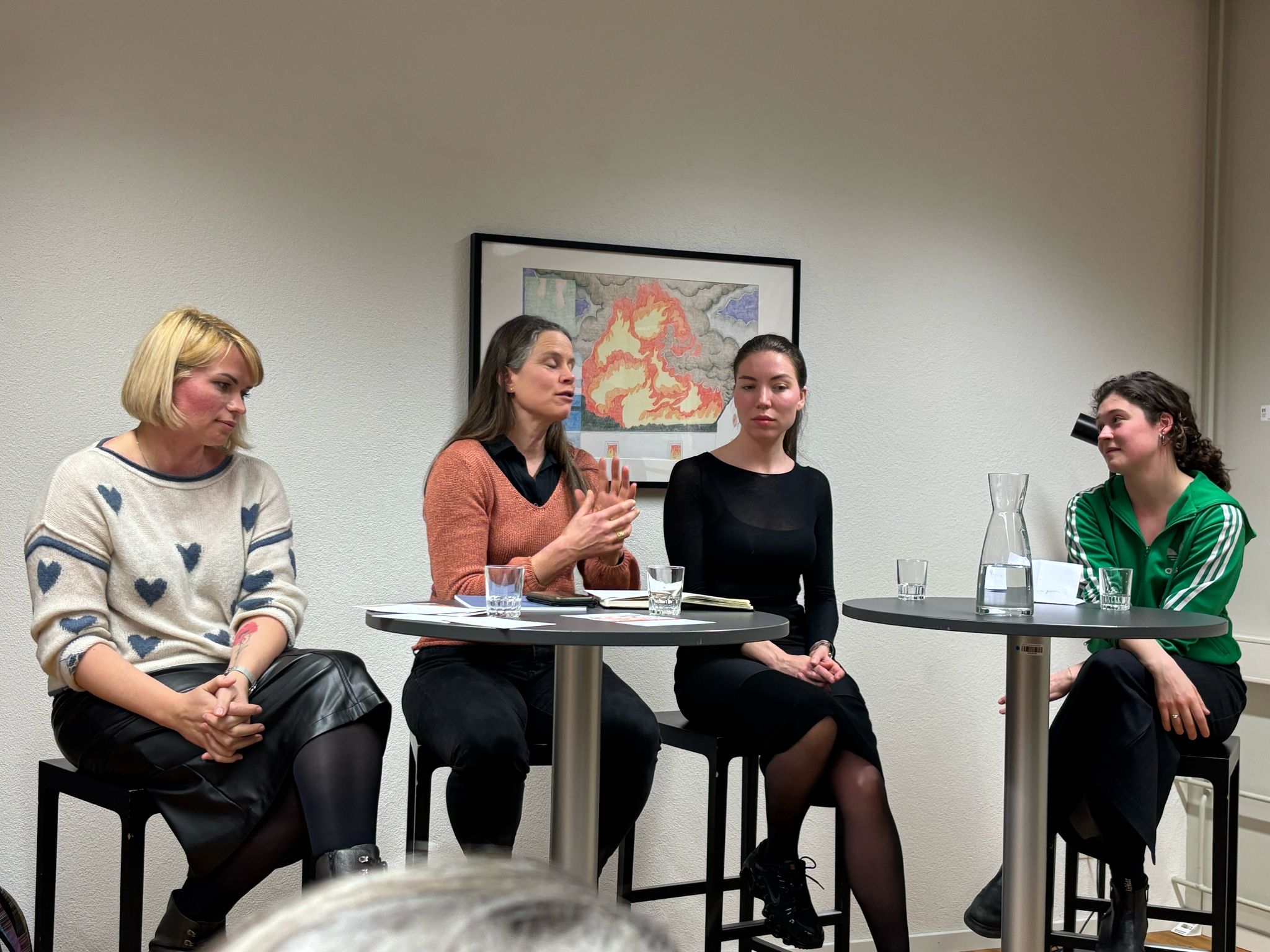
During the panel discussion, USB media coordinator Svitlana Prokopchuk joined artist Florence Fausch, marketing specialist Anastasia Zarya and moderator Cécile Drouet from the University of Bern to explore how culture helps preserve memory while creating space for dialogue. The conversation asked a simple but important question: what role can art play when war seems to last longer than anyone imagined?
The answer was not that art changes history. It changes understanding.
For people who have never experienced war, a painting, an illustration or a personal story can open a conversation that facts alone rarely achieve. For those who have lived through it, creative expression becomes a way to preserve memory without remaining trapped by it.
This is why cultural spaces matter. They allow different experiences to meet—not as hosts and guests, nor as experts and audiences, but simply as people willing to listen to one another.
Three years after the full-scale invasion, those conversations remain just as necessary as they were at the beginning.
Our thanks to the University of Bern, Osteuropastudien OES, the Swiss Eastern European Library and Ost|Est for creating this space for dialogue.