Text: Svitlana Prokopchuk
In Switzerland, integration is often measured by language certificates and employment. However, behind these indicators lies a more complex process in which education, social networks, and the feeling of being accepted come together. For many migrants and refugees, this path means having to start all over again, regardless of their previous experience or profession. Educational and social projects play a key role here: they not only provide practical skills but also create spaces for exchange and support. At the same time, experts in the field of integration increasingly point to another side of the problem, namely growing social tensions and a more critical attitude toward people with migration experience. Under such conditions, integration becomes not only an individual challenge but also a shared task for society as a whole.
Finding Yourself Again: How Sewing Helps to Find a Place in a New Country
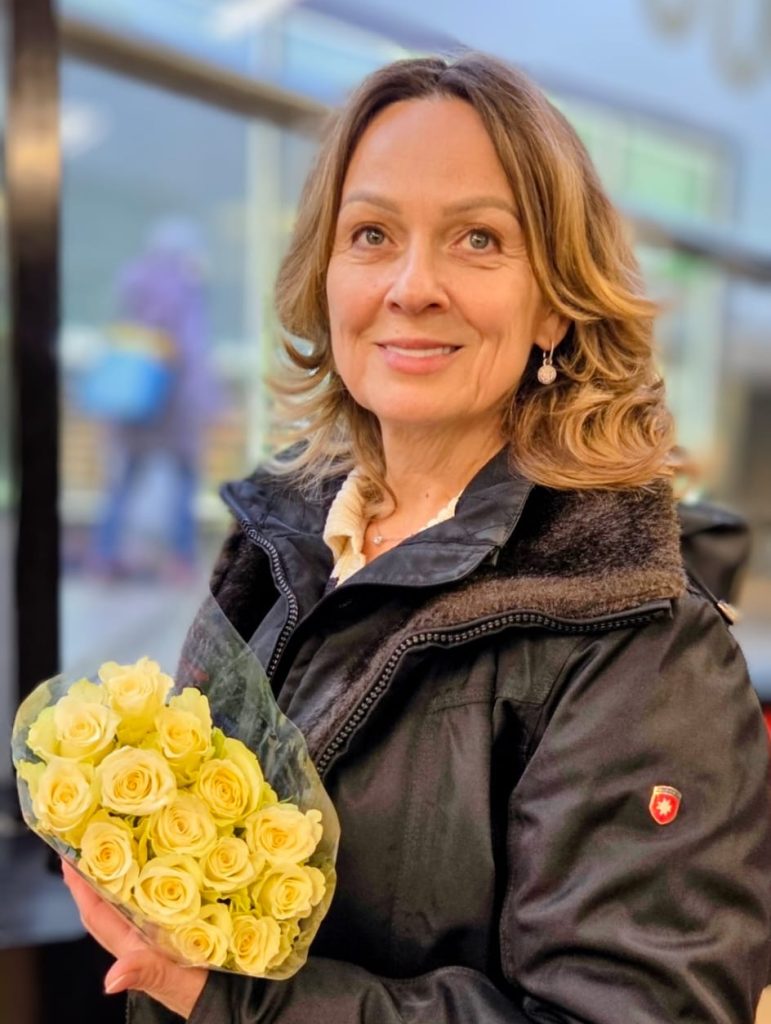
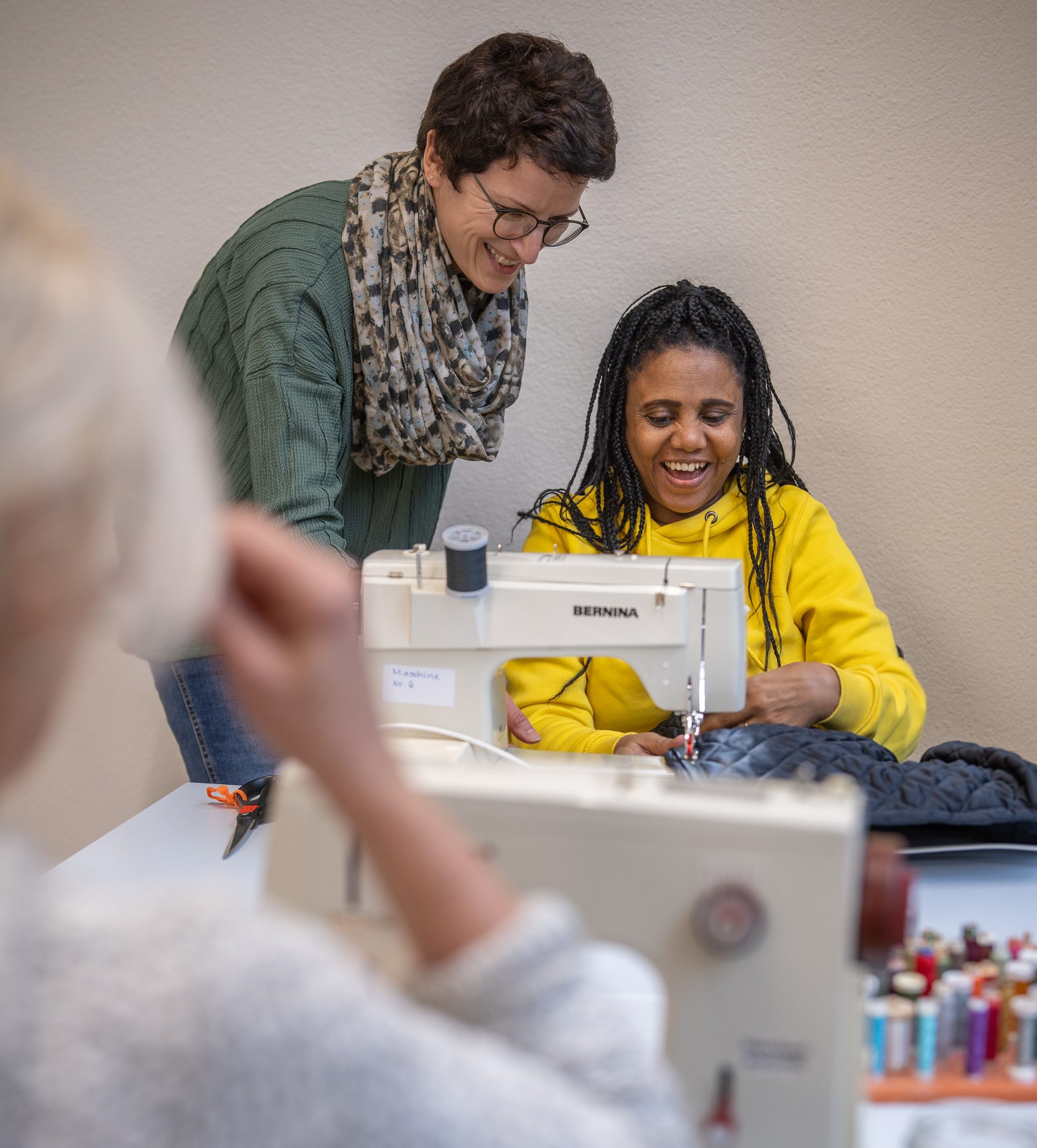
“When you leave your homeland, you have to take your hands and your mind with you,” says Svitlana Syvukha. She smiles, but behind this simple sentence lies an experience familiar to many migrants in Switzerland. In her country of origin, Svitlana trained as a chemical process engineer. However, her life developed in such a way that this profession remained more “for the family” than for her own fulfillment. After moving to the city of Schaffhausen in Switzerland, a different desire emerged: to be active, to find herself, to start anew.
Sewing had already played a role in her life before. And returning to it became an unexpected path to inner renewal. When she learned about a course to which she had been referred by a social worker, she saw it as an opportunity. Today she not only learns herself but also helps others. When the opportunity arose to work as an assistant, she immediately agreed. “With great joy. It is a mutual process: I give something and receive something in return.” Her participation in the project is voluntary. Yet she is convinced that it has meaning. When she speaks about the challenges of integration, Svitlana is open. She is convinced that the key lies not only in state support but also in the individual’s inner attitude. She advises not to avoid work, especially voluntary work, because it often becomes the first step toward new contacts and experiences.
A Space Where It Matters to Be Yourself: How Creativity Helps Women Integrate
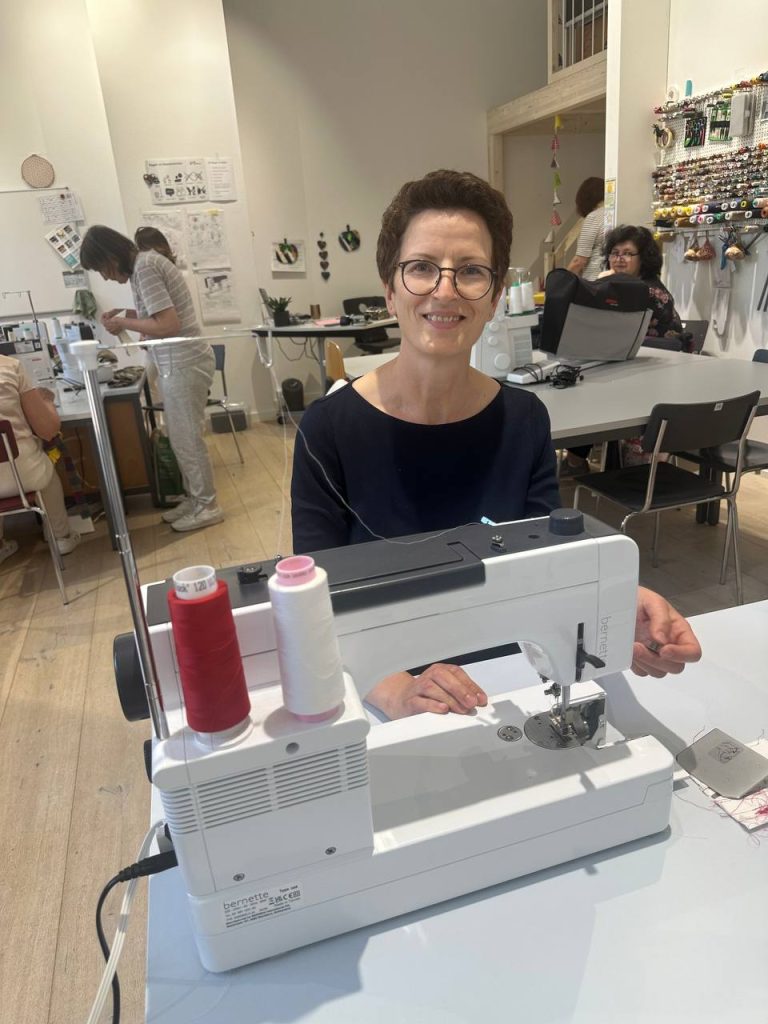
“The experience of Svitlana is very typical for women who come to our sewing courses,” says Hixhrete Biqkaj, under whose leadership they take place. For almost four years, she has been working daily with participants from different backgrounds. “I work with various cultures, and I really enjoy it,” says Ms. Biqkaj. Among the participants are women from Ukraine, Turkey, Afghanistan, and other countries.
Today, around 37 participants are involved in the project. Despite the large number, the approach remains individual: each woman works on her own project and receives support exactly when she needs it. “I do not dictate what should be done. I show possibilities. They decide themselves, and I help them implement their ideas,” explains Hixhrete Biqkaj. The language barrier makes communication more difficult. However, a supportive atmosphere helps to overcome these difficulties. This approach makes the course not only a place of creativity but also an important step on the path to integration. Because true integration begins with a sense of belonging, with support and the opportunity to express oneself.
“We Respect National Identity, but We Teach How Switzerland Works”
Sewing courses are only one of many integration opportunities offered by SAH Schaffhausen. In addition to the atelier, there are German courses for various levels and age groups, conversation courses, modular courses, courses on social orientation, and literacy courses. Elisa Frey explains how these offers can be used and what challenges migrants face. She has been working at SAH Schaffhausen for almost three years. Initially, she taught in the JUMA program for adolescents and young adults. Today, she is responsible for the organization’s external communication.
How would you define successful integration?
I would say three things are decisive: language, work, and social participation. The foundation is language. Without basic language skills, it is almost impossible to work. Of course, there are fields where English is sufficient, such as science or engineering. But in our area of labor integration, we mainly work with people who often do not have a high level of education. Some have never attended school. That is why language is central. Not everyone needs a B2 or C1 level. For vocational training, however, B2 would be ideal. Then come education and work. But does that mean full integration? Not entirely. True integration is reflected in social participation: what contacts a person has and whether they are accepted by society. And it is important to understand that integration is not only the task of migrants but also the responsibility of society.
What is the most important first step?
We call it “social information.” We explain how Switzerland works: where to go, how institutions function. There are workshops on health and psychological support. Sometimes they even visit the police, because many people from other countries are afraid of them. Here we explain that the police serve society. We also talk about rules of coexistence and culture. It is very important to understand how the country functions.
Why are some courses offered separately for men and women?
Because many women initially do not feel comfortable asking certain questions in the presence of men. For example, on topics such as health or gynecology. This is related to cultural background, and such things do not change immediately. It is a gradual process.
Which learning formats work best?
That is difficult to say definitively, but “German in the Park” is very popular. People simply come to speak more German. Based on that, we developed the “Conversation Café,” meetings where people talk, play, and learn informally. But all our other German courses are also very successful. In the JUMA program, participants also have lessons in mathematics and general education. This prepares them for vocational school and provides essential basics. Of course, participants sometimes switch to their native language. But we are very strict: only German is spoken in class. We explain with gestures, pictures, and videos, but we do not translate. At the same time, we respect the native language as part of identity.
Do you take different educational levels into account?
Yes, but our programs are mainly aimed at people with lower levels of education. There are literacy courses where reading and writing are taught from scratch. At the same time, we lack programs for young people with academic education. This is a significant need, but it requires resources.
What challenges do young migrants face?
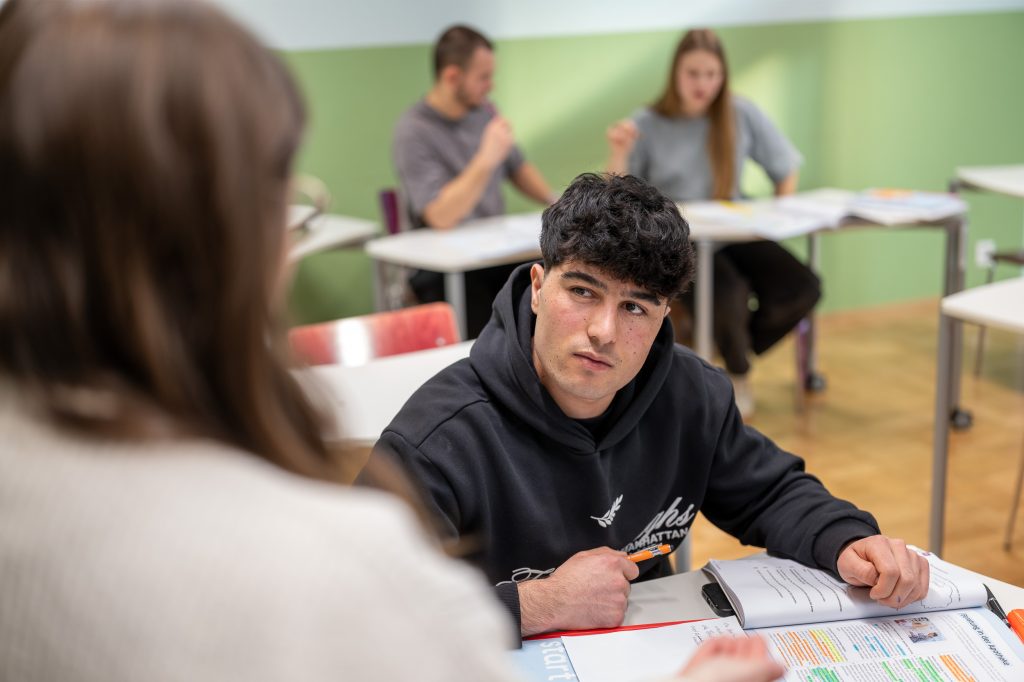
They are very diverse, but increasingly we see a problem of rejection within society. Young people feel that they are not wanted. It is difficult to build a life in a country where you do not feel welcome. It is also currently very difficult to find an apprenticeship. There are simply too few positions.
What are the biggest obstacles in the labor market?
First and foremost, language. Also, preparing application documents. Even taking a professional photo can be a challenge. We support people through job coaching: we help with documents, practice job interviews, and strengthen motivation. Another major issue is the recognition of diplomas. People with a lot of experience often have to start from scratch. This means losing years of work and knowledge. Neither I nor my colleagues see progress here. Often people are told: this qualification is not recognized, deal with it yourself. Yet they submit all documents: study programs, course descriptions, content. It would be possible to assess what can be recognized so that only a few courses would need to be completed in Switzerland. In some professions, this works. In many cases, however, there is clear rejection. Thirty years of experience, and suddenly it seems to mean nothing. A dentist who has practiced for years can at best work as an assistant here. But teeth are the same everywhere.
How do cultural events help reduce prejudice?
Personal contact is very important. People who have never spoken with refugees often have prejudices. Unfortunately, I must say that attitudes toward migrants have worsened recently. Discriminatory statements are expressed more openly. This is a dangerous development. Many people who have never spoken with an Afghan have numerous prejudices about young men from Afghanistan. We, on the other hand, work with them daily and see that they are very open.
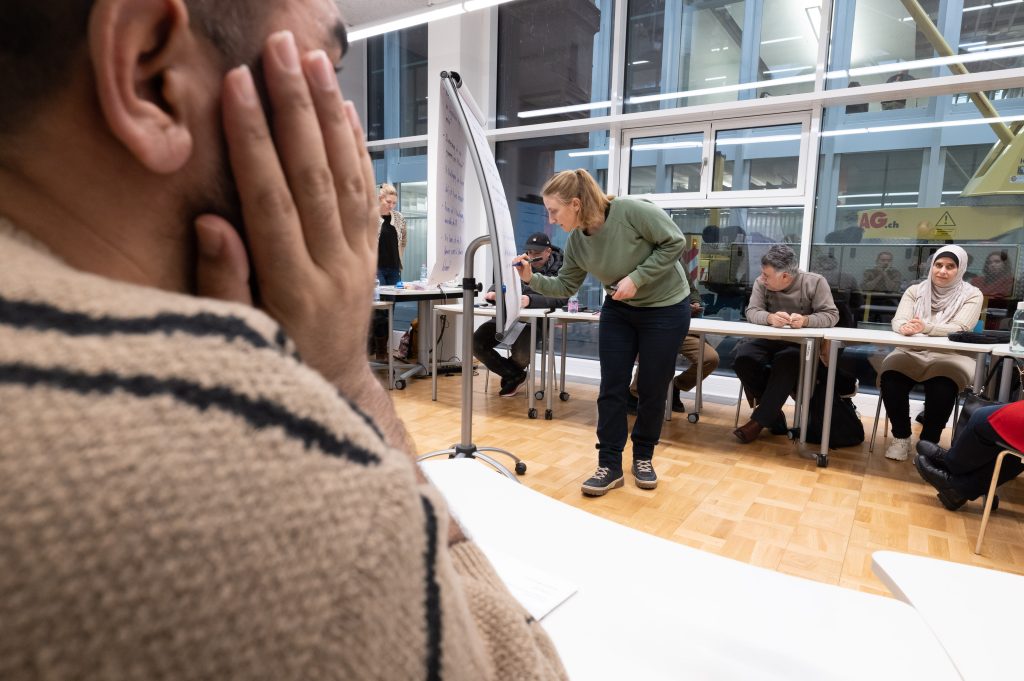
In recent months, since a migration-critical initiative has dominated the media, the mood has clearly worsened in my opinion. In March, we organized a Week Against Racism in Schaffhausen for the first time. There were many events and workshops, and everything went very well. At the same time, we saw that many people still express discriminatory questions and statements. Through this initiative, it seems that many things have become sayable again. Things that would not have been said ten years ago are now spoken openly. “They should all go home” is suddenly no longer considered racist. Statements like “They are all criminals, they should go home” are heard openly on the street. This is a huge insult. I consider it extremely dangerous to create an atmosphere of fear, as if something is being taken away from us. In reality, there is enough for everyone. No one is taking anything away from anyone.
What motivates you in your work?
What motivates me are our participants. When you see how they learn and build their lives after a few years, it is truly something beautiful.