Text: Olena Krylova
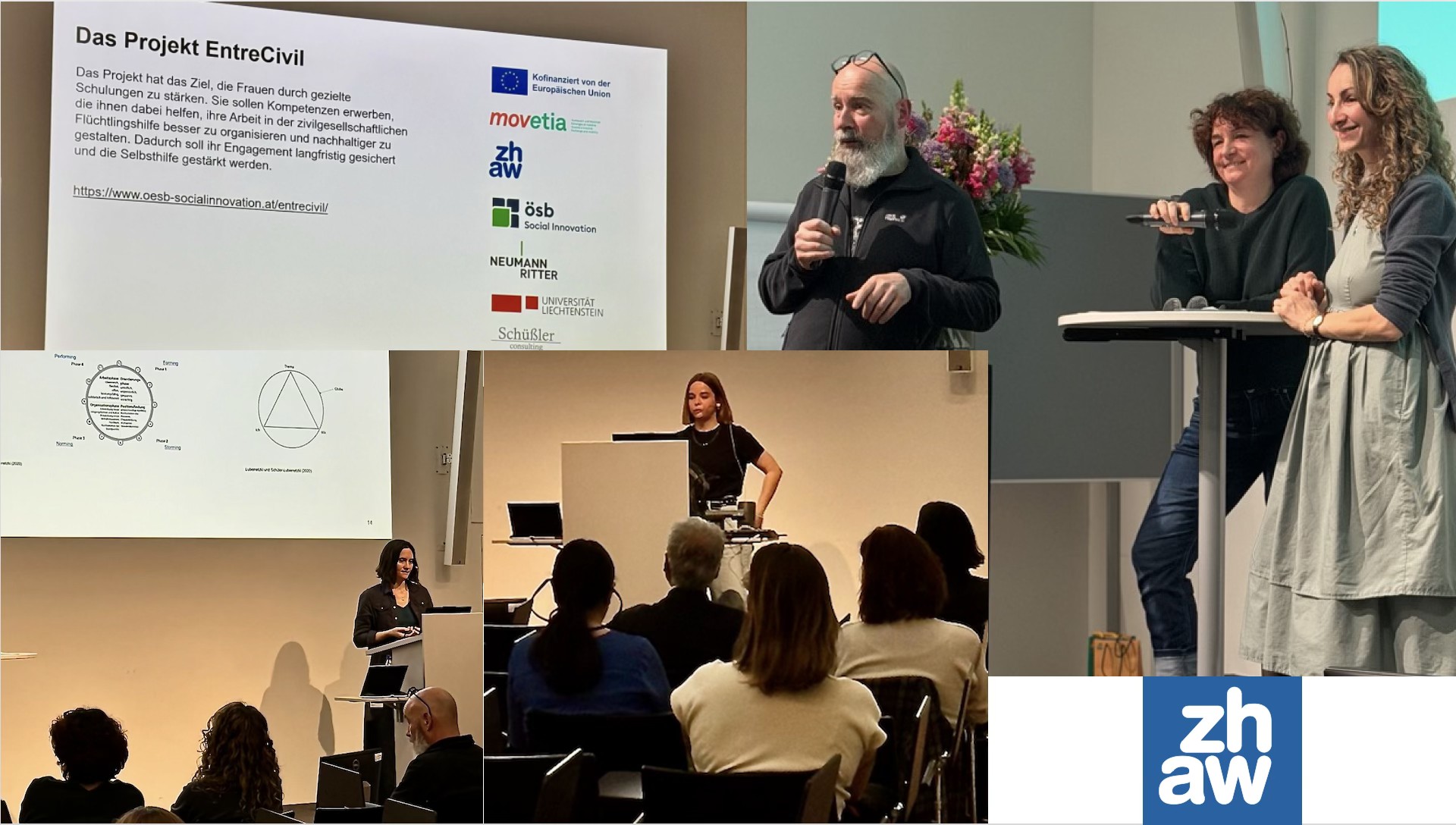
At ZHAW — a leading Swiss university of applied sciences in Zurich — an inspiring panel discussion took place, bringing together around 50 participants. The event was organised within the framework of the EntreCivil project, implemented by ZHAW with the support of Erasmus+ and Movetia. USB and HEKS are the two partner organisations on the Swiss side. EntreCivil is an international project aimed at promoting high-quality and sustainable volunteering, particularly in the field of working with refugees and migrants.
The project results were presented by the ZHAW team led by Prof. Michael Zirkel, followed by a very engaging panel discussion with Olena Krylova (USB) and Jenna Levicka (HEKS).
One of the key themes that clearly emerged during the discussion was the importance of psychosocial competencies in volunteering. Working with refugees requires much more than goodwill — it calls for empathy with healthy boundaries, strong communication skills, active listening, and cultural sensitivity. Equally important is an empowerment-based approach: not solving problems for people, but supporting them in rediscovering their own strengths and ability to act independently.
Participants also reflected on the critical role of support systems for volunteers themselves. Many of them work without access to trauma-informed training, supervision, or spaces for exchange — despite the emotional demands of this work. Sustainable engagement means ensuring that those who support others are also supported.
A particular focus was placed on refugees supporting other refugees. Peer-based initiatives — from education to psychosocial support — demonstrate how trust, shared experience, and mutual understanding can accelerate integration and rebuild confidence. Strengthening these initiatives means investing in capacity-building and creating the right conditions for refugees to take active roles in their communities.
One key takeaway: integration becomes truly meaningful when people move from receiving support to active participation — and ultimately become those who support others.