Text: Svitlana Prokopchuk
War, persecution, and human rights violations have forced thousands of people from around the world to leave their homes and seek safety in Switzerland. For refugees with disabilities, forced migration became a double ordeal: alongside the trauma of loss and adaptation to a new country, they face daily barriers that complicate even basic integration. The search for work — which for many represents a path to dignity and independence — becomes a complex and often exhausting process, caught between language difficulties, bureaucracy, and limited access to accessible education or employment.
The right to education: Vira’s story, waiting for her chance
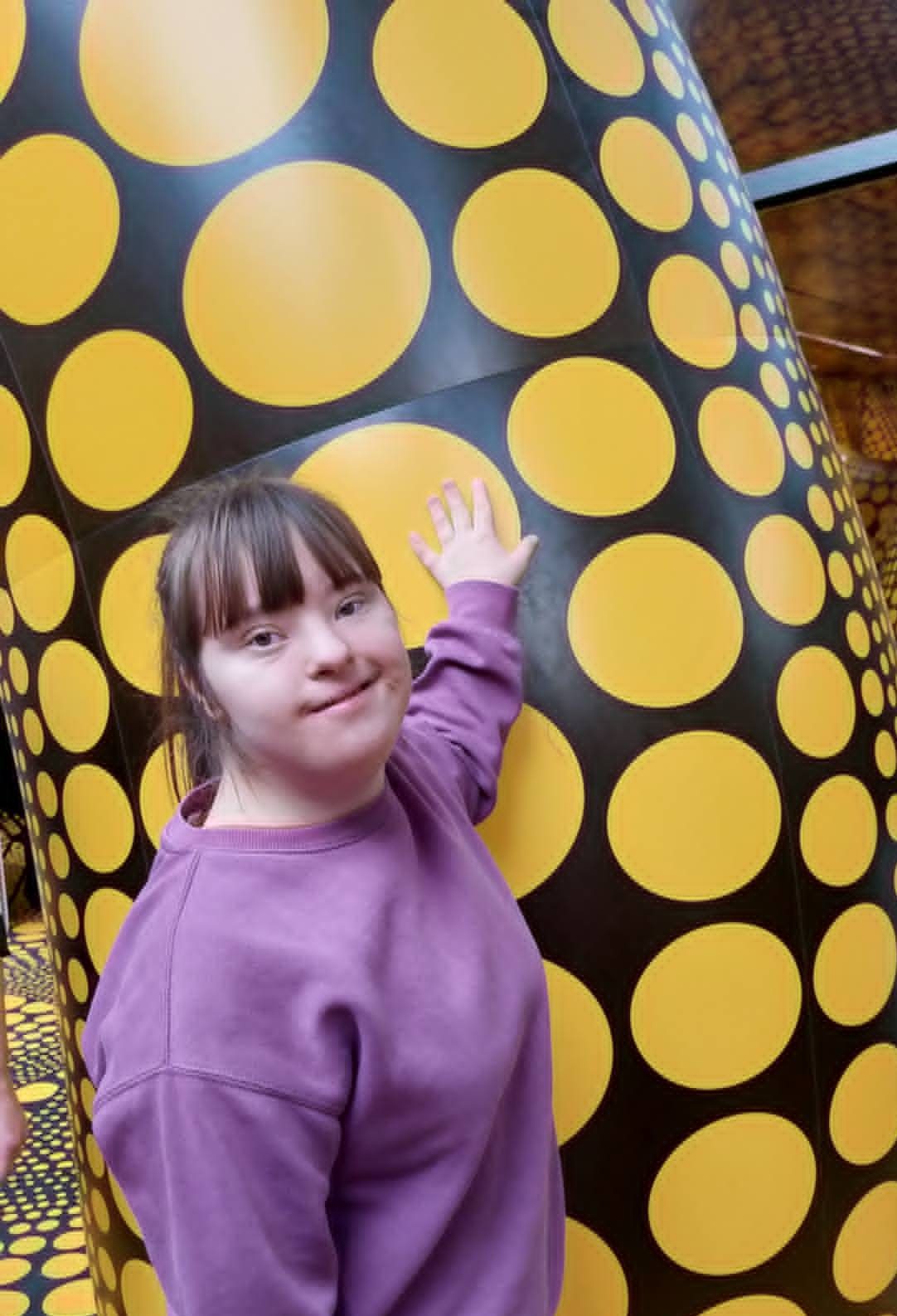
Vira was the first child of Svitlana and Ihor Bohonyuk. The young couple learned that their daughter had been born with Down syndrome at the maternity hospital. Vira also had a serious intestinal defect and a congenital heart condition, and underwent several surgeries before the age of two. Learning to live in a new reality was incredibly difficult. Yet the love and mutual support that defined the family helped them overcome the obstacles and barriers they encountered along the way.
When Russian forces advanced on Kyiv and rockets struck neighbouring buildings, the family — now with three children — decided to leave Ukraine. Packing in a matter of hours, they first arrived in Poland, and a week later moved to Switzerland. Vira attended a special school and seemed to have every chance of starting vocational training. Yet despite both parents being employed, such education is beyond their means — around 20,000 francs per month.
“We had a meeting with the disability insurance authority (Invalidenversicherung, IV). Even though Vira had received a confirmation letter stating that one organisation was prepared to take her on for training, the IV refused to fund it. We are devastated,” says Vira’s mother, Svitlana Bohonyuk. The family is now looking for other options for their daughter with Down syndrome. The next meeting — at which the Bohonyuks hope to persuade IV specialists of the necessity of funding Vira’s education — will take place in two years’ time.
Knowledge exists, but chances are scarce: Oleh’s story in a closed loop
Oleh Aborniev completed his education in Ukraine. “I have cerebral palsy — a congenital condition. I cannot move without a wheelchair. But in every other respect I am healthy, and I even compete professionally in arm wrestling,” Oleh explains.
Oleh fled from Kharkiv with his mother to escape the war. He speaks English well, and in order to integrate successfully into Swiss society, he learned German to a B2 level. When the lift at the language school was out of order, his classmates carried him in his wheelchair up to the third floor. “I completed the language courses, but to receive the certificate I need to pass a written exam. However, I have dyslexia — I cannot write grammatically correct text by hand. On a computer keyboard I can write normally, but it is not possible to take the exam that way. This is not a question of language knowledge — it is a physical characteristic. The result is that I have the knowledge but no proof of it. And employers turn you down without a certificate,” says Oleh.
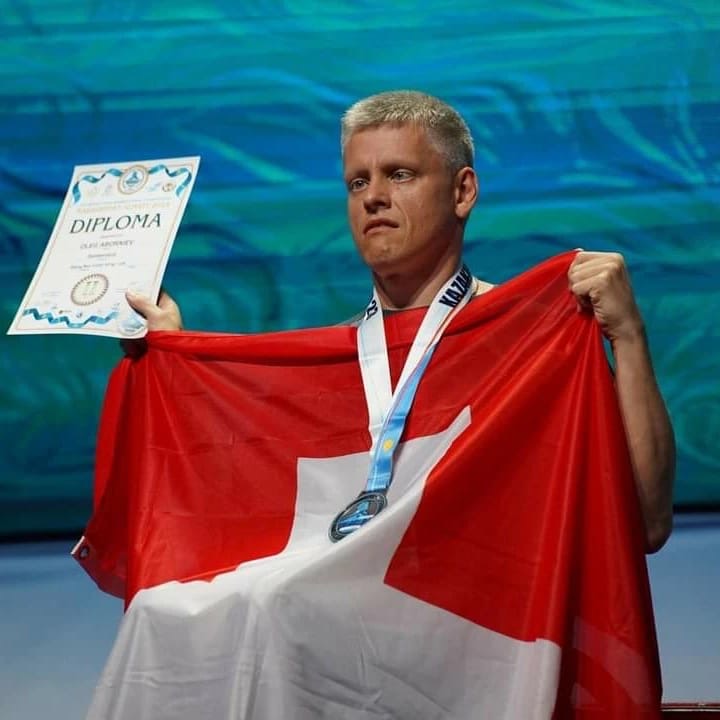
In Ukraine, Oleh worked as a volunteer with children for over 25 years. He wanted to be an example for them — to show that a wheelchair is not a sentence. Professionally, he worked as a translator from English into Ukrainian and organised business seminars, conferences, and international projects, effectively creating a platform for international business cooperation with Ukraine. “Here I was not hired to work with children, with the explanation that it would be ‘uncomfortable’ for me. They didn’t mention the wheelchair directly, of course,” Oleh adds.
Another problem is perception. An employer sees first a migrant — and then a person in a wheelchair on top of that. “Prejudices arise regarding efficiency and working conditions, even though I am perfectly capable of working in an office,” he says. He currently helps Ukrainians free of charge with translation in hospitals and social services. The need is enormous, but he cannot work officially due to the absence of a certificate. A vicious circle.
“I would like to see more attention paid to a person’s actual abilities rather than to formal barriers. Because the problem is often not in a person’s capabilities, but in a system that is not prepared to recognise those capabilities,” he concludes.
When standard processes don’t work. Ingeus ZH shows: integration of people with a double burden is possible
In Switzerland, work is a central factor in social integration. Through employment, the person concerned feels like a fully-fledged member of society — and is seen as such by others.
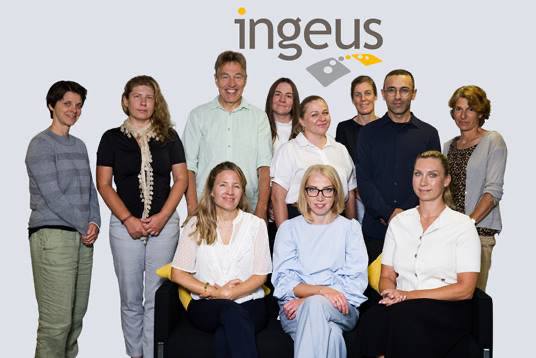
For this reason, a system for the vocational integration of all population groups has been developed. Many companies and organisations are intensively involved in this process — including Ingeus AG, where Vira Rodionova has been working as a job coach since 2024. The international company, with branches in eleven countries, has offices in Switzerland including in Zurich and Lausanne.
“One focus of our work concerns people with a migration background: those who were forced to migrate due to threats to their life or health and are now trying to build a new life in Switzerland,” explains Vira Rodionova. “We support them in finding their footing in their new home — both in everyday life and in successfully entering the primary labour market.”
“The second group comprises people with disabilities (often from the resident population, but not exclusively): individuals who have experienced difficult life circumstances, such as depression, or who have mental or physical impairments. They sometimes require special employment programmes. For them, it is not only about finding a job, but about restoring self-worth, social participation, and the opportunity for self-fulfilment. Our coaching work regularly demonstrates that this is also possible in the primary labour market.” “There is also a mixed group — people with disabilities who are forced to find their footing in a new country.” A key challenge here is that while these individuals receive comparable support to others, they in fact require a significantly more individualised approach.
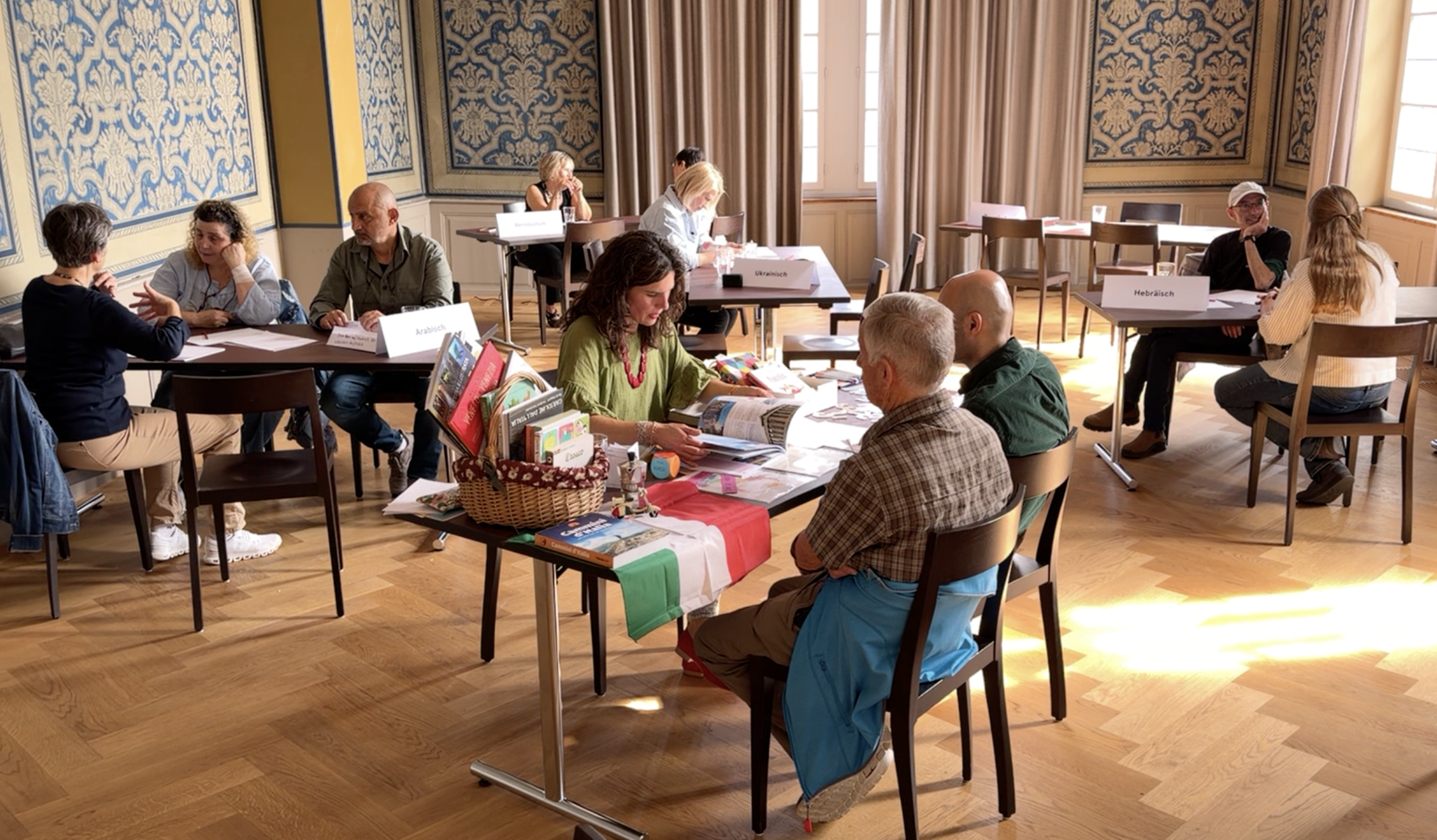
One example is language learning: for a person in a wheelchair, the physical accessibility of educational facilities is essential. Hearing or speech impairments require specialised teaching methods. An event organised by NCBI highlighted the challenges facing this group — people forcibly displaced with disabilities — and raised the question of how they can best be supported.
“My conclusions, however, are sobering: the vocational integration of every person is preceded by a preparation phase. Numerous questions must already be addressed at that stage: access to sufficient information and adapted language learning programmes. Existing German courses as a second language barely take into account specific sensory impairments,” adds Vira Rodionova.
There are also challenges in organising basic living needs — adapted housing and care provision. The situation on the labour market is no less complex. In addition to individual barriers, migrants with disabilities face obstacles typical of the job search process: mistrust of qualifications, an oversaturated labour market, the psychological consequences of traumatic experiences, and — particularly often — a lack of self-confidence. The loss of professional identity in a new environment represents a serious obstacle on the path to employment.
Vira Rodionova: “At the same time, practice shows: finding a job is possible.” Employment not only secures financial independence but also has a positive effect on people’s mental and physical well-being.
On how to enter the labour market: “The entry into the labour market begins with a realistic assessment of one’s position: what competencies is the employer looking for, and how can they be deployed most successfully under the given conditions? Important steps include learning the language, having qualifications recognised or translated, building references, and gaining initial practical experience through internships. Central to all of this is the inner readiness to engage with a new professional reality.”
As for employers: there are companies that offer adapted workplaces for people with disabilities. These positions generally do not require high qualifications, but they are tailored to the needs of the employees and allow them to experience themselves as useful. However, there are very few such companies. This is where particularly thorough research and an optimal employer network are of great importance — something Ingeus ZH possesses.
“At present, support for people with a double burden — disability combined with refugee experience — is insufficient and requires more attention. Especially since the current tendency is to provide more social assistance rather than to invest in suitable integration programmes, which would have the advantage of enabling these individuals to become more fully-fledged members of society.” Ingeus remains strongly committed to the integration of all those affected.
Not a sentence — a starting point!
The stories of people with special needs who also carry refugee experience are not only about hardship. They are above all about strength, resilience, and the capacity to begin again where everything seems lost. In this complex integration process, civil society and non-profit organisations play a vital role — they are often the first point of support, the first bridge to a new life. Through them, people gain not only information but also the sense that they are not alone.
Switzerland, despite certain systemic challenges, has significant potential to develop effective and humane models of integration. There are resources, experience, and an understanding that every person has value. Yet even the best programmes remain mere instruments if the most important element is missing — the inner decision to act. Motivation becomes the decisive factor. Not as an abstract word, but as a daily choice. And external support — from specialists, organisations, and communities — can strengthen a person’s inner resources. Because the experience of migration is not a sentence. It is a starting point.