Text: Olena Krylova
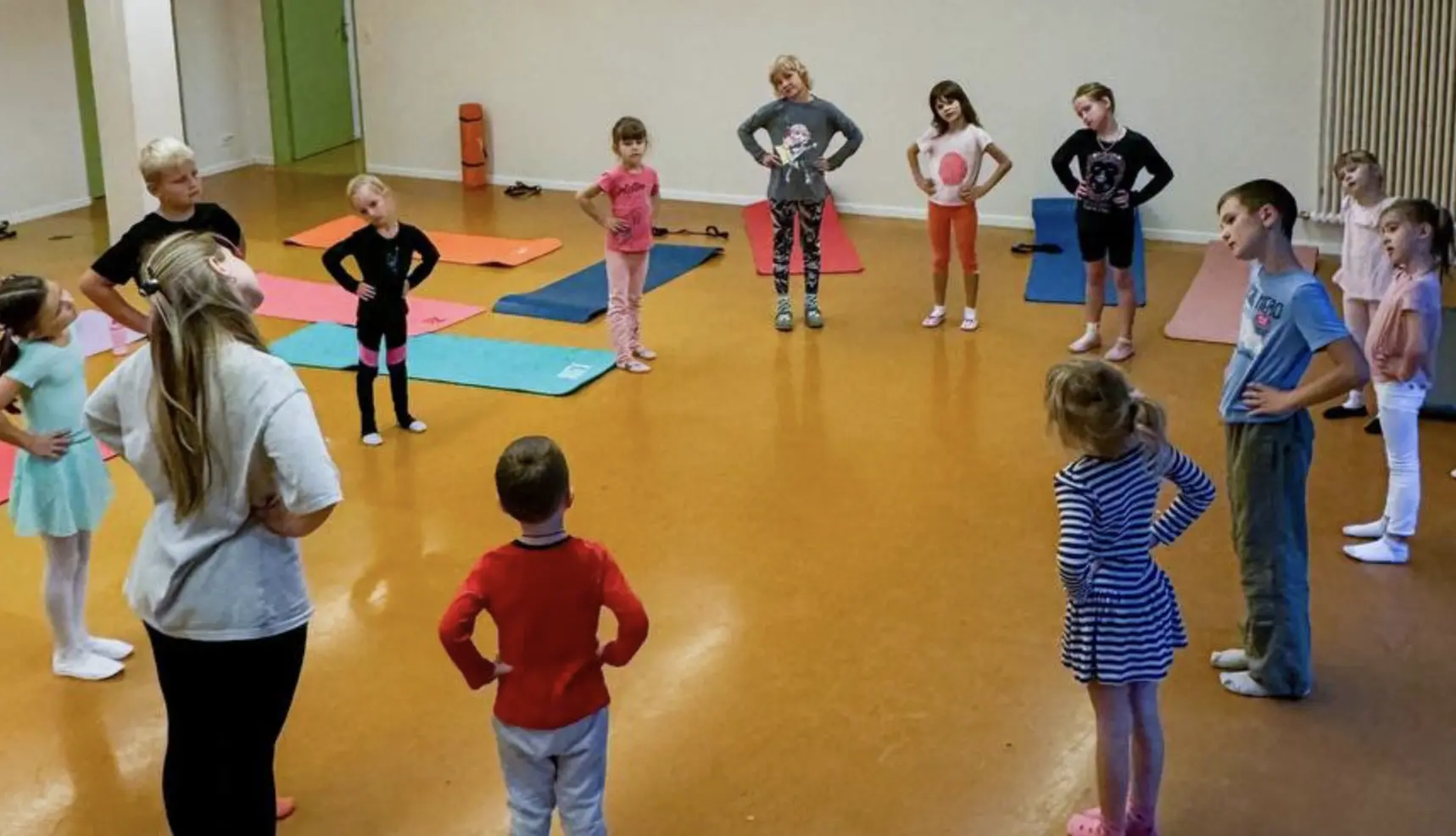
In Burgdorf, twice a week, a room fills with the particular energy of small children discovering what their bodies can do. There is laughter, concentration, the occasional tumble, and — if you listen carefully — the sound of something being built: confidence, coordination, and the quiet joy of belonging somewhere. The dance studio for children was started by Julia, a USB volunteer whose passion for movement and teaching found its outlet not in a professional studio or a funded programme, but in the simple decision to show up and offer what she had. The classes run across two age groups — four to five year olds, and six to eight year olds — each structured around what children at that stage actually need.
The younger group explores rhythm and freedom of movement, learning to hear music and respond to it with their whole bodies. The older group builds on that foundation, developing flexibility, coordination, and a growing sense of their own individual style. Every class is, in its own way, a small lesson in self-expression: that you have a way of moving that is yours, and that it is worth showing. The developmental benefits are real and well-documented — dance at this age supports motor skills, spatial awareness, and physical health. But what happens in Julia’s classes goes beyond the technical.
Children who are still finding their footing in a new country, a new language, a new social world, find in dance a form of communication that requires none of those things. The body knows how to participate before the words arrive. That openness is built into the studio by design. The groups welcome children of all nationalities, and Julia teaches in German as well, ensuring that no family is left at the door because of language. What began as a small volunteer initiative is now drawing growing interest from the wider Burgdorf community — proof that when something is genuinely welcoming, people feel it.
USB has always held that integration is not a checklist but a lived experience, built in small rooms, at shared tables, and yes, on dance floors. Julia’s studio is exactly that kind of place: unpretentious, warm, and quietly transformative. For the children who come each week, it is simply a place where they dance. That, it turns out, is enough.