Text: Svitlana Prokopchuk
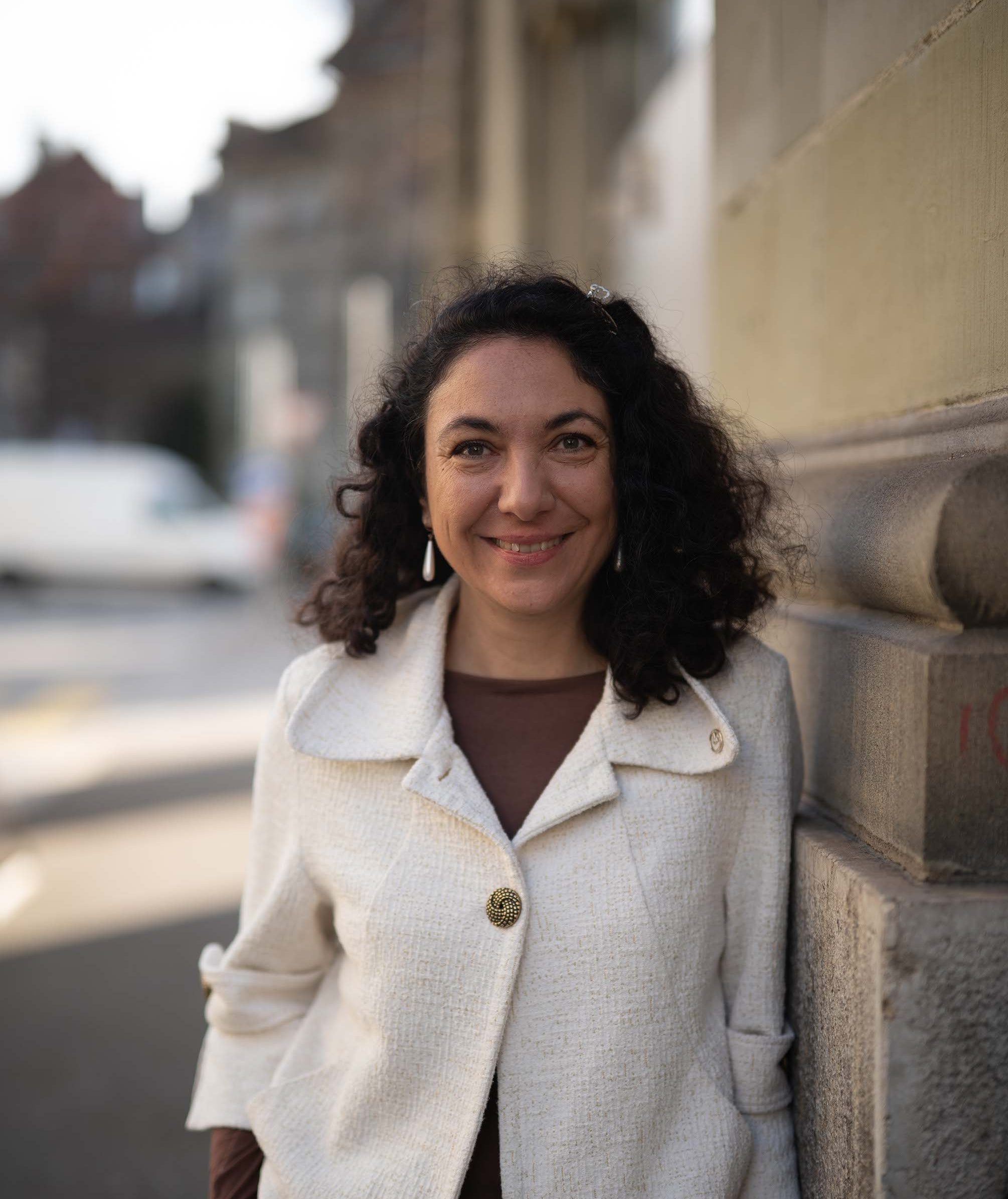
One person applied several times to the same employer. They only got the job – exactly the position they had applied for – after a networking meeting, which was simply an ordinary conversation over a cup of coffee with a colleague from their field. Stories like this move Lora Slovak again and again. She is a project manager at the City of Bern’s Office for Migration and Racism Issues (Fachstelle für Migrations- und Rassismusfragen) and has led the Bernetz programme for several years. Bernetz is a ten-month programme for qualified migrants looking for work that matches their education and professional experience. A university degree and years of professional experience do not guarantee that someone will quickly find a job in their field: in Switzerland, many people start their careers almost from scratch – partly because they have no professional contacts here yet. Lora Slovak stresses that Bernetz is not a job placement programme. Above all, participants gain access to people who can open up new professional opportunities, and they learn to build their own network independently.
There is a lot of talk in Switzerland about the shortage of skilled workers. Why, in your view, do so many highly qualified migrants struggle to find work in their profession at the same time? Where does the paradox lie?
The skills shortage affects specific professions and sectors. But the people who come to Switzerland are far more diverse than the professions where there is a shortage. Each person brings their own individual “baggage”: education, potential, professional and personal interests and experience. Even if someone is lucky and their profession actually falls within an area where skilled workers are lacking, other hurdles still have to be overcome. For example, if it is a so-called “regulated profession” – one that requires certain conditions to be met, such as recognised training or a recognised diploma – the diploma first has to be recognised.
That is an expensive and lengthy process. On top of that come further hurdles, because the legal rules differ for people from third countries and for citizens of EU countries. For people from third countries, for example, getting medical training recognised is somewhat more difficult. Unfortunately, in some cases people even have to complete their entire education again, even though they already have the relevant qualification and are ready to work. For “non-regulated” professions, these difficulties do not formally exist. However, diplomas and experience are often not recognised, or not fully recognised, even when there are no formal barriers. There are also other hurdles, such as language. In Switzerland the situation is even more complex, because it is not about one language but several. And finally, people often lack a professional network – people such as former colleagues, employers, or people from the same field. And that is exactly where Bernetz tries to step in.
How is the programme structured?
Bernetz has two important components. The first consists of courses and training geared to the Swiss labour market, as well as, for example, improving application documents. Only after that comes the second phase, which we call networking (Vernetzung) – building professional networks. The first phase runs from January to May. From June to October, participants are individually matched with professionals from their respective fields.
The two components build on each other so that people first gain knowledge of how the Swiss labour market works. There are usually two to three modules per month, mostly in the evening, so that participants can work alongside the programme. The focus is above all on an individual assessment of each person’s professional situation, identifying their key skills and abilities, and setting professional goals. Each intake has 18 participants. They work together in groups. This is important too, because it creates very good group dynamics and the participants can learn from one another.
Which modules are part of the first phase?
For example, “personal presence.” Here participants practise with an actor to see what impression they make: How do I present myself properly? How do I stay authentic while coming across as professional, especially in a job interview? We also have a module to prepare for job interviews, with a theoretical part first and then practical training. After the COVID-19 pandemic, we also introduced a module on LinkedIn and networking through social media. It originally came about as a kind of emergency module, but it has proven its worth, because social media is becoming more and more important.
And how does the networking itself work?
By networking, or building a professional network, we mean two to three conversations – one-off meetings with professionals from the participant’s field. The aim is for them to get to know Swiss colleagues. I deliberately say “colleagues,” because these conversations take place on an equal footing. It is not a job interview. It is first and foremost about getting to know each other as professionals and experts.
At these meetings, participants learn how a particular profession works in Switzerland, where to look for work, what they should know about the profession, which software is used in that field in Switzerland, or what to pay attention to when applying in that particular field. The person they meet then puts them in touch with two further contacts. The idea is that, through a snowball effect, a small professional network emerges that participants can later expand on their own.
Has it ever happened that someone spoke with a colleague and then said: “Oh no, this profession isn’t for me in Switzerland”?
Yes, that has happened. But participants don’t have to stick to their Plan A. We can carry on and use the networking opportunities for a Plan B. In general, though, it is good if people come to Bernetz already knowing roughly which professional direction they want to take. We don’t offer career or vocational counselling. We first refer people who are still unsure about their professional plans to the relevant specialist services so they can clarify this.
What role does residence status play in taking part in the Bernetz programme?
Bernetz is aimed at adult migrants with good qualifications who speak German at least at B1 level and came to Switzerland as adults, meaning they did not go to school here. The cantonal requirement is that the programme is not aimed at people from the asylum system or with protection status S, as there are other programmes and responsible bodies for these groups. Bernetz’s target group is very specific. Most are people who came to Switzerland through family reunification, do not receive social assistance, and are not registered with the RAV (regional employment centre).
In your opinion, what can Swiss society learn from migrants?
Diversity is part of our society. People with different life paths, experiences and perspectives enrich our life together and open up new ways of seeing things. At the same time, it is important to me not to reduce people to their origins or to attribute certain characteristics to them. Every person brings their own story and individual experiences. That is why I am convinced that we can all learn from one another – regardless of where we come from. What matters is that we meet each other with openness and make exchange possible. It would be a shame to waste this potential by drawing dividing lines where encounter and exchange could happen.
Do you remember a meeting or a contact made through Bernetz that fundamentally changed someone’s working life?
I am always very moved when I hear stories that came about thanks to the programme. For example, one networking partner was helping a participant build professional contacts, but was so impressed by her that she said: “I have a position to fill here.” In another case, a networking partner found a different job and passed her own position on to a participant in the programme, personally supporting her application. Or there is the story of a participant who had applied several times to the same employer. Only after a networking meeting with that same person did he get the job – exactly the position he had applied for. A networking meeting is really just a conversation between colleagues over a cup of coffee. There is no obligation whatsoever to arrange a job or look for an open position. But when something like that happens, I am truly delighted.
If you could change just one thing about employers’ attitudes towards migrants, what would it be?
It takes courage to invite people to a job interview who don’t fit a particular pattern and may not have the education traditionally considered typical for that profession. Because certain “gaps” in the CVs of people with a migration background can in fact represent very valuable life and professional experience. For example, I always say: after the birth of my two children, I became a much better manager than I was before, because before I had children, I couldn’t even have imagined how much I am capable of. This is also of great importance for Switzerland. A society cannot afford to leave unused the resources and potential it already has. People who come to Switzerland with their experience, qualifications and skills are an important resource. That is why I am convinced: it is worth investing in these people’s potential and giving them the opportunity to contribute their abilities here.
Photo: Manuel Castellote