Text: Svitlana Prokopchuk
On 3 November in Aarau, women with refugee experience told politicians and officials exactly where the system holds them back: children who need looking after, a language course that only the husband was offered, a diploma that suddenly counts for nothing in the new country. The public hearing “Education Opens Doors – Equal Opportunities for Refugee Women” («Bildung öffnet Türen – Chancengleichheit für geflüchtete Frauen») was organised by NCBI Schweiz, the Refugee Parliament (Flüchtlingsparlament) and the Refugee Forum (Flüchtlingsforum).
In Switzerland, integration is usually measured in language certificates and employment contracts. But these figures rarely show who is left out – and why. Women with refugee experience face a double barrier. That is why this conversation was moved to a place where it cannot go unheard.
A format where experience becomes an argument
A public hearing works differently from an ordinary conference or round table. Here, experts do not speak about women with refugee experience – the women speak for themselves. Their stories are not illustrations for a presentation; they are the starting point of the entire discussion.
First, the women share their own experiences: how they searched for a language course, where they left their children, how they tried to get their qualifications recognised. Next, people with refugee experience present recommendations they developed themselves in joint projects. Only then does the panel get the floor. Representatives of politics, cantonal administration, social organisations and practice respond not to abstract questions, but to the concrete stories of real people.
This order changes the whole dynamic of the conversation. Personal experience becomes an argument – and the argument becomes a question: who is responsible, and what can be changed right now?
Who sat at the table
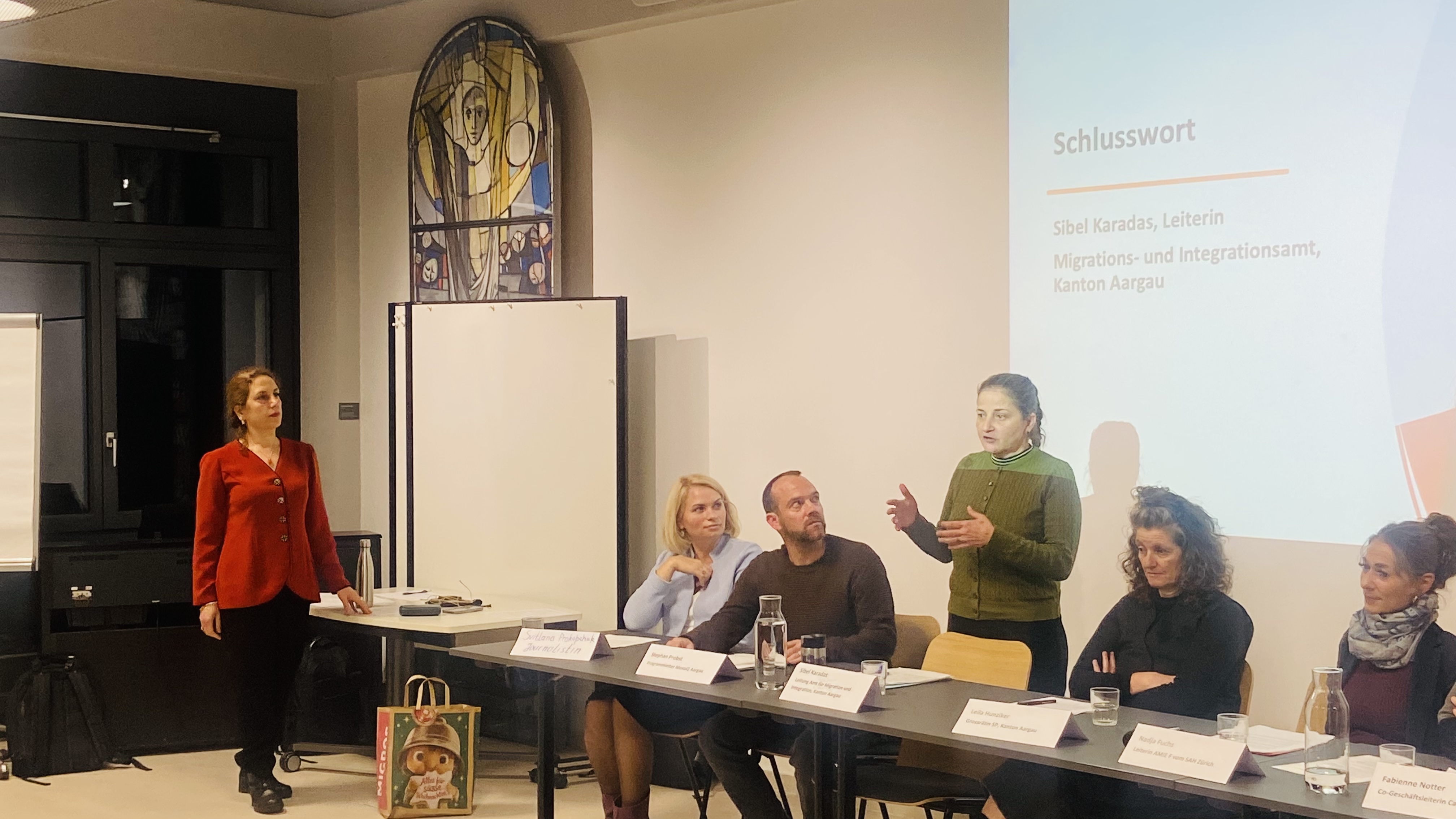
The panel covered the entire chain, from legislation to everyday practice:
Nadja Fuchs (AMIE-F, SAH Zürich – a programme for mothers in initial vocational training);
Elvira Hänni (Ecoplan);
Lelia Hunziker (member of the Grand Council of the Canton of Aargau);
Sibel Karadas (Integration Delegate of the Canton of Aargau and Head of the Integration and Counselling Section at the Office for Migration and Integration);
Fabienne Notter (Caritas Aargau);
Stephan Probst (HEKS MosaiQ Aargau – a service for qualified migrants).
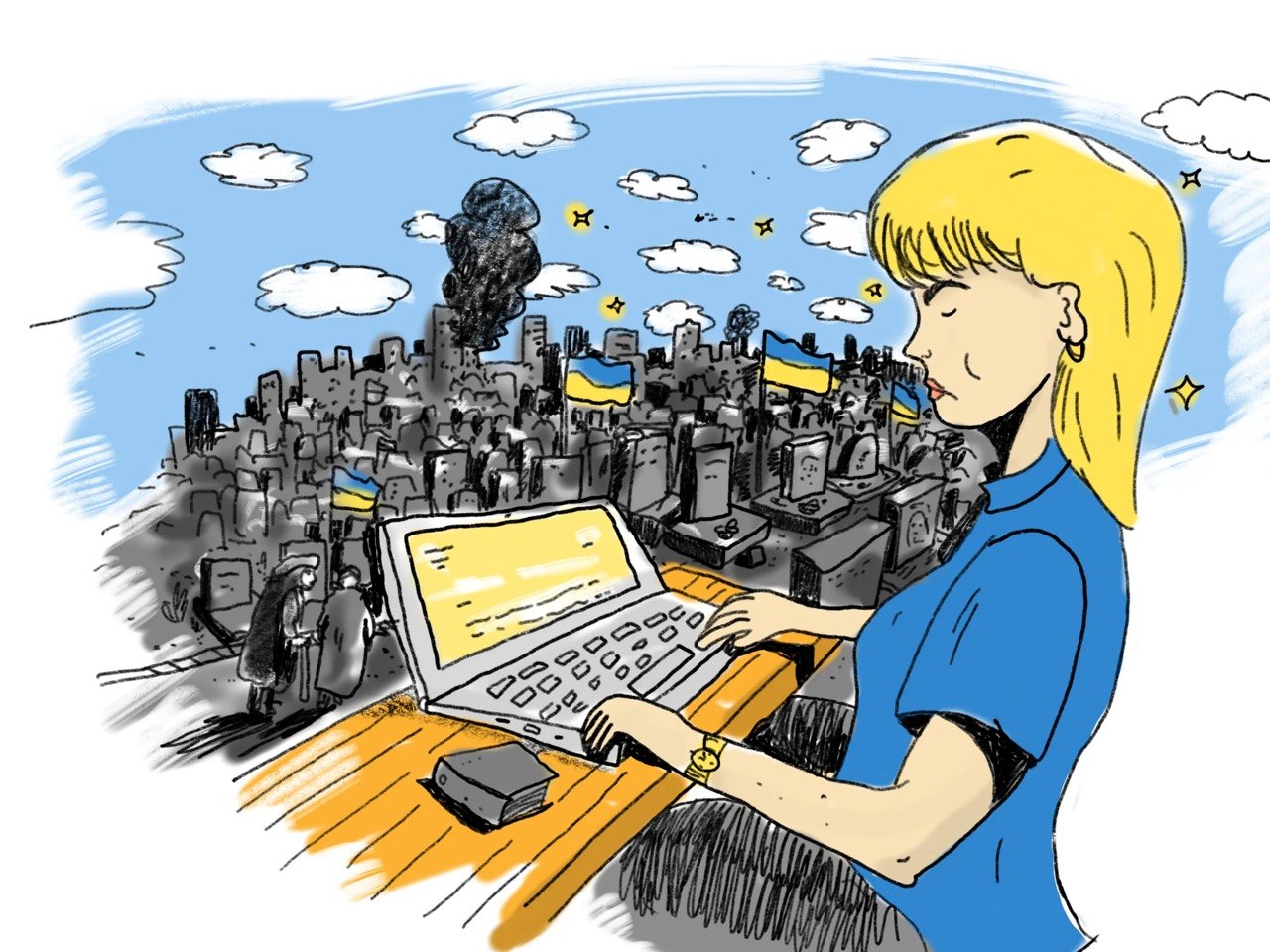
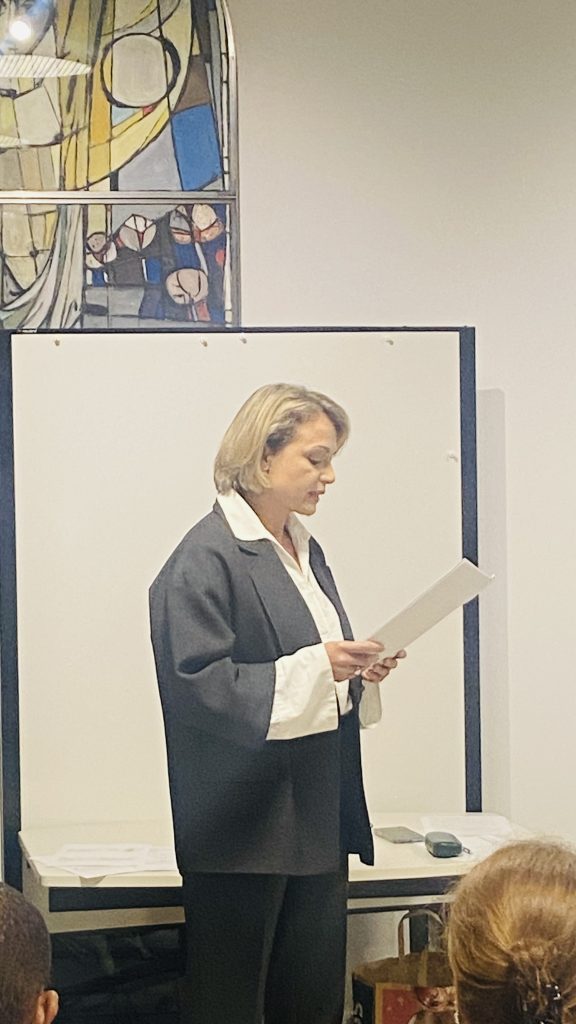
The author of this article, USB media coordinator and journalist Svitlana Prokopchuk, also sat on the panel. She came to Switzerland because of the war, talks every day with Ukrainian women who are taking that step now, and spoke about her own experience and about equal rights for women regardless of nationality or migration background.
It is precisely this diversity that makes the format valuable. In the same room sit those who write the rules, those who apply them, and those who live with their consequences every day – and know how to change them.
Four questions in search of answers
Equal opportunities. What structural barriers prevent women with refugee experience from gaining equal access to education and the labour market – and who should remove them?
Quick job or lasting education? Policy often demands the fastest possible entry into work. But doesn’t this trap women for years in low-paid, insecure jobs?
Room for action. What can municipalities, job coaches, career guidance services and cantonal authorities already do today within the existing rules?
Invisible obstacles. What role do family obligations, childcare, non-recognition of qualifications and gender expectations play?
Ten recommendations: from stories to demands
The most important outcome of the hearing is not the conversations themselves but the document that emerges from them. People with refugee experience drew up the ten recommendations themselves, based on their own experience. They address very practical issues:
Education before work. Access to language courses and training must exist from day one, without long waiting times. Short-term pressure to find work only entrenches insecurity.
Childcare during training. Affordable – and available everywhere. Women with refugee experience usually have no grandparents or relatives who can step in informally.
Part-time vocational training. Models such as “Mütter in Ausbildung” and AMIE-F show that mothers with young children can learn a profession when flexible schedules and support come together.
Language courses for both parents. When only the husband gets a course, it reinforces dependency and old gender roles. The benchmark is at least level B2, and for women who have spent years caring for children, the right to courses should be extended.
Equal access regardless of status and place of residence. Whether a woman gets a course must not depend on which municipality she lives in. The authors of the recommendations call the current situation a “municipality lottery”.
Faster recognition of diplomas and experience. Simpler, cheaper, less bureaucratic – so that women can build on their knowledge instead of starting from scratch.
Individual guidance for every woman. A conversation with the husband alone is not enough. Personal, culturally sensitive career guidance is needed.
Safety and psychological support. Protected housing with privacy and accessible psychological help are prerequisites for being able to learn at all.
Predictable residence status. Anyone who does not know whether they can stay is unlikely to invest years in education. Fast, reliable decisions boost motivation.
Monitoring. Everyone working in the migration field should regularly check whether their measures are actually narrowing the gender gap.
Why this instrument works
Public hearings shorten the distance between experience and decision. Women who are usually described in reports as a “target group” appear here as experts in their own lives. Professionals and politicians receive not general statistics, but the specific points where the system fails – along with ready-made proposals for fixing them.