Text: Svitlana Prokopchuk
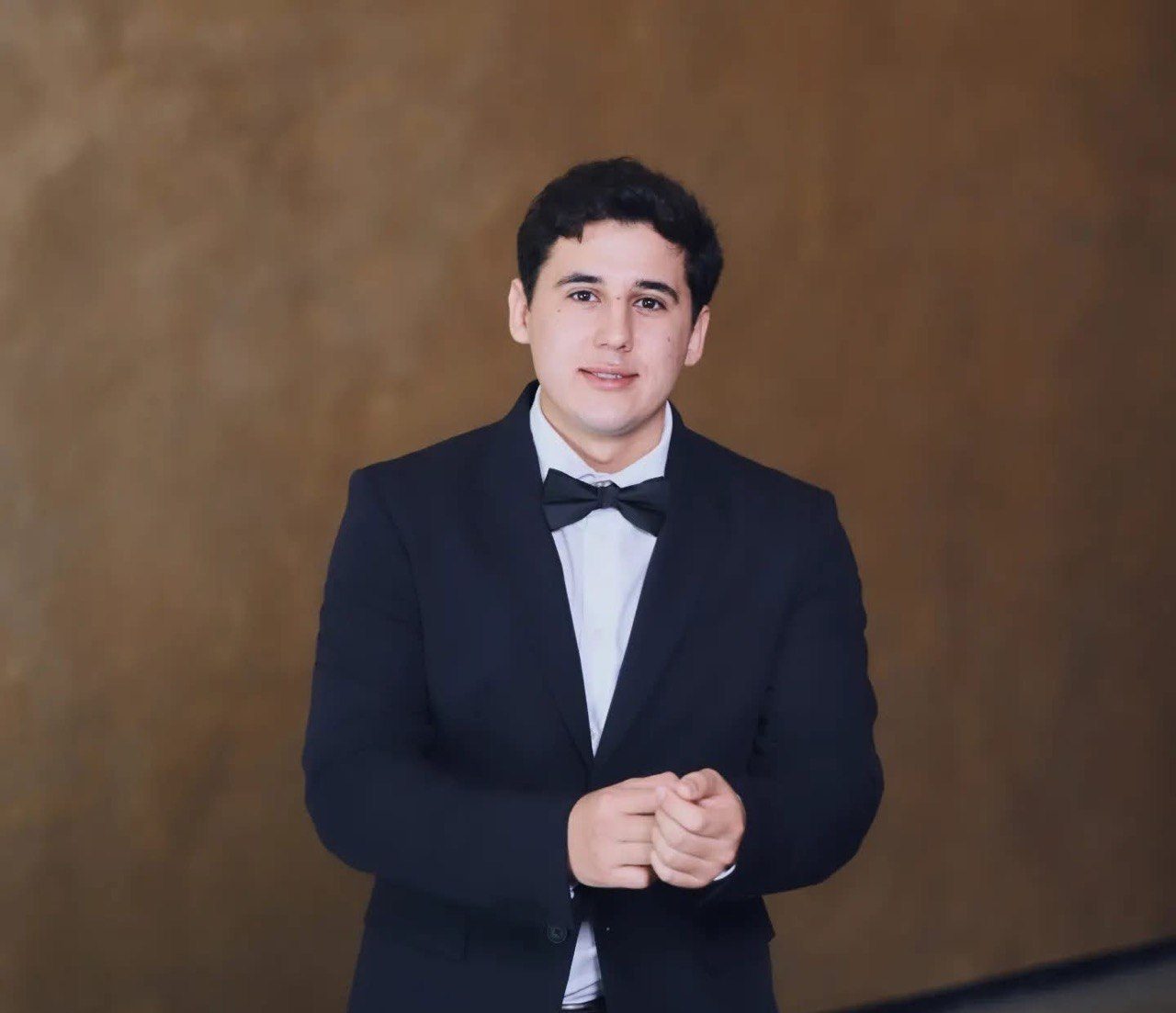
Yurii Strakhov is a Ukrainian opera singer whose professional path is being shaped in Europe while at the same time reflecting the broader experience of Ukrainians abroad. Moving, studying in Switzerland and Italy, participating in international competitions, and a new stage at the Paris Opera — this is not only a story of talent and perseverance, but also an example of integration through profession and culture. In this conversation, Yurii talks about his path in music, his experience of living in different countries, and how modern opera is searching for a new audience and new meanings.
— Yurii, tell us where you are from and where you studied?
— My family and I lived in the city of Brovary, Kyiv region. My parents are musicians: my mother is an opera conductor and violinist, my father is an opera singer, a baritone. I studied at a music school, in particular with my father. There I learned to sing and mastered the piano, and then continued my path as an opera singer, a baritone. After music school in Brovary, I studied at the Kyiv Conservatory, and at the age of 18 I entered the opera studio in Bern, Switzerland.
— Do you live through music?
— Yes, I do.
— In recent years you studied and worked in Italy, and were also in Germany. Now you are going to France. Tell us a bit about the life of an opera singer in Europe.
— The life of an opera singer is very different for everyone. My path turned out quite unique, so I cannot say: do it this way and you will get the same result. My logic was this: the younger I am, the more I want to declare myself. Therefore, I constantly traveled to international competitions and auditions. I have been to Romania, Italy, Germany, Austria, the Netherlands, Norway. As a result, I became a laureate of competitions in these countries.
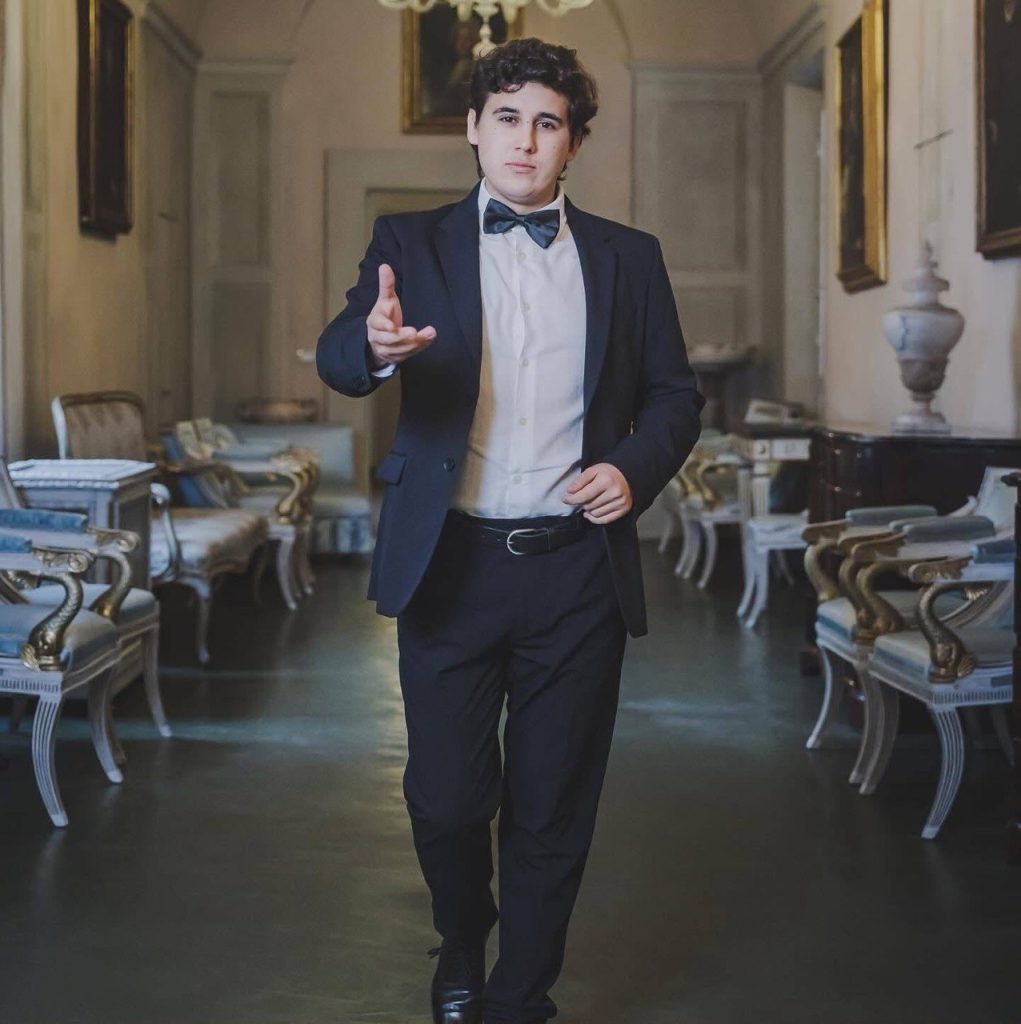
— Now you are going to France. Can it be said that you will represent Ukraine at the Paris Opera?
— In my understanding, every Ukrainian abroad forms the general impression of the country, regardless of profession. Therefore, it is pleasant for me to think that I represent my country, especially if I can show Ukrainian musicians at a high level. I am simply trying to достойно represent Ukraine through my work. At the National Opera of Paris, at the Bastille theatre, I start in September, so the details are still unknown to me. The opera studio is a part of the theatre where separate auditions take place, young singers are recruited there. Participants study, but also take part in productions. It is something between study and work. And, importantly, this activity is also paid.
— How difficult is it today, in your opinion, for a young singer to build a career in Europe? What difficulties and challenges did you face?
— I think that everyone here has a very individual story and their own path. In any case, this is a profession in which there is no stability in the classical sense. There is no such thing as: you received a diploma, completed your studies, and are guaranteed to have a job in a theatre. Everything works differently. Everyone goes through their own path, and often it is quite unpredictable. One of the main difficulties is that your previous experience, the so-called background, plays an important role. You need to constantly study, participate in projects, go through auditions, constantly declare yourself. This is a process that requires time, endurance, and systematic work on yourself.
— What is more important today for an opera singer: voice, acting skills, or media presence — in particular presence on social networks, on YouTube, etc.?
— This discussion has existed for a long time. Media presence alone is already a challenge of modernity. If you look at old recordings and discussions, previously, of course, priority was given to the voice. Opera then did not require such stage activity or complex visual solutions as today. But given the general digitalization and the change in audience expectations, opera is also forced to transform in order to remain interesting. Therefore, now, in my opinion, voice and acting skills are on the same level. It is important for the audience not only to hear, but also to see: a convincing presence, emotion, dramaturgy. Today these are, условно speaking, actors who can sing. As for media presence — it also matters. I am sure that theatres, even at the selection stage, may additionally search for information about the performer online, watch recordings on YouTube or other platforms. At the same time, I know many successful singers who do not have an active presence on social networks. That is, it is important, but not decisive.
— Doesn’t it seem unfair to you that people with great talent may remain less visible than bloggers who gain millions of views and earn well from it?
— This is rather a consequence of digitalization. Today it is much easier to gather an audience thanks to regular content production. Personally, this does not offend me. But the question is different: is such content always really worth attention? This is already a matter of taste and choice of everyone — both the viewer and the creator. It is also important to understand how much effort stands behind this or that result. In different fields, these efforts have a different nature.
— How has the war affected opera art, in particular in Ukraine?
— The war has undoubtedly affected art. When the full-scale invasion began, I was already abroad, but it still had a direct impact. First of all, the Russian repertoire completely disappeared for me. There were situations when I was invited to concerts in which artists from Russia participated. In such cases, I try to find out their position: do they condemn the aggression against Ukraine? If there is no clear position, I refuse to participate in such projects. I consider the tendency to reduce or completely remove Russian music to be correct. In my opinion, when cultural institutions limit the presence of Russian cultural product, this is support for Ukraine.
— If we talk about repertoire, we see not only a rejection of Russian music, but also the emergence of new themes, in particular war-related ones, in Ukrainian opera. How do you feel about this?
— Art during war acquires special significance. Foreigners often ask me about the situation in Ukraine, in particular about what is happening with theatres and cultural life. And at such moments you understand that art is not only about aesthetics. It is also a way to speak with the world, to explain what is happening, and to convey our experience. On the one hand, art can respond to war directly: through new themes, plots, productions. On the other hand, it provides support — both emotional and psychological. It can be both a way of living through the experience and a certain form of escape from reality, an opportunity to switch for a short time. Therefore, I would say that art during war performs several functions at once: it speaks, supports, and helps to maintain inner balance. By the way, foreigners are strongly impressed when I tell them how during an opera performance an air raid siren sounds and the audience goes down to a shelter. If the siren does not last long, the performance is continued.
— You were talking about a change in attitudes toward Russian artists. Have you felt a change in attitudes toward Ukrainian artists?
— It seems to me that yes, there are certain changes. In particular, there is more attention and interest. People are genuinely impressed that, despite the war, cultural life in Ukraine has not stopped, that artists continue to work, perform, and create. And this, in a certain sense, shapes a different perception of Ukrainians — as very resilient, dedicated people who, even in difficult circumstances, do not stop developing culture. People continue to create despite not getting enough sleep. On the other hand, I am not sure that the attitude toward Ukrainian artists has changed significantly. I also cannot say that, for example, Italians suddenly stopped loving Russians and started loving Ukrainians more. In their view, art and politics are separate things, and they emphasize this. They continue to invite Russian artists and stage Russian repertoire. At the same time, in Lithuania, the city is completely covered in Ukrainian flags, and from what I have heard, there is practically a complete ban on Russian repertoire there. So everything differs greatly depending on the country.
— How do you see opera, say, in 10–20 years? What needs to be done for it to develop?
— Opera is gradually moving into a digital format. Streaming platforms are emerging, online broadcasts of performances, the possibility to engage with opera remotely. Opera is trying to become more media-oriented, more accessible to a wider audience. At the same time, it is changing according to the needs of the modern viewer. New works are appearing that address актуальні topics — politics, war, contemporary life. I am convinced that opera will continue to exist. It is a living art that cannot be replaced either by technology or artificial intelligence. A live voice, live emotions — these are things that cannot be fully reproduced by a machine. As for Ukrainian opera, I would like it to become more well known in the world. This is, in fact, what I am working on.
— And who is today’s opera audience?
— There are two main camps: supporters of classical productions — with historical costumes and traditional presentation, and supporters of modern interpretations — with актуальні images and reinterpretations. In general, the audience is still older, but theatres are actively working to attract young people. There are special projects for children: they study music, come to the theatre, and even take part in performances — they sing, move, sometimes go on stage. Opera must change in order to remain alive, but at the same time it is important not to lose its essence. Because opera is a synthesis of many arts: music, theatre, voice, orchestra, scenography. And this depth should not disappear. It can simply take on new forms.