Text: Svitlana Prokopchuk
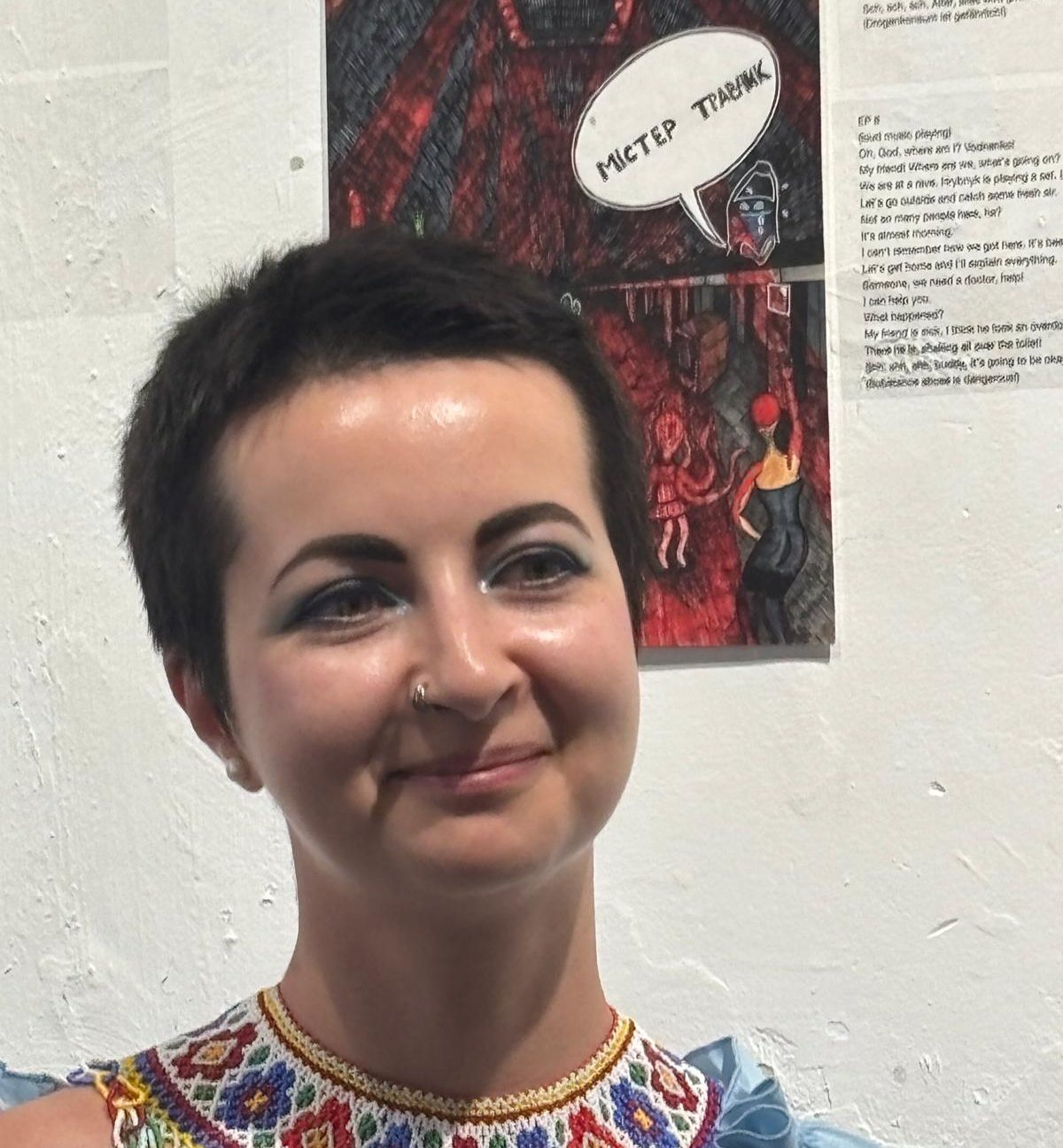
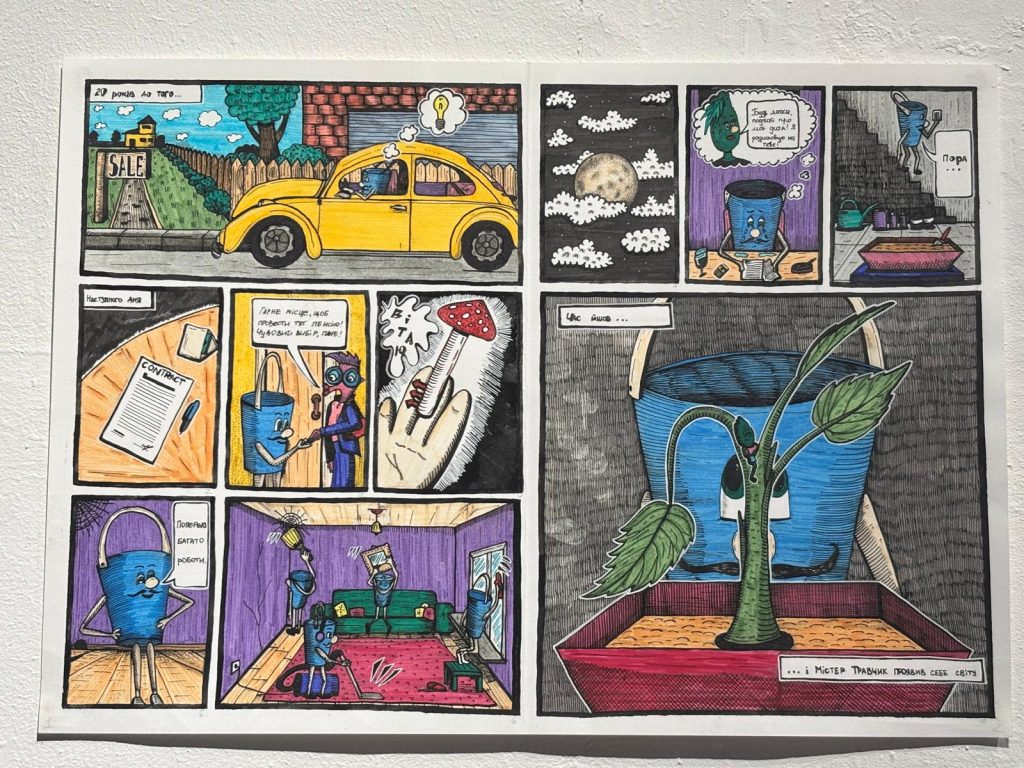
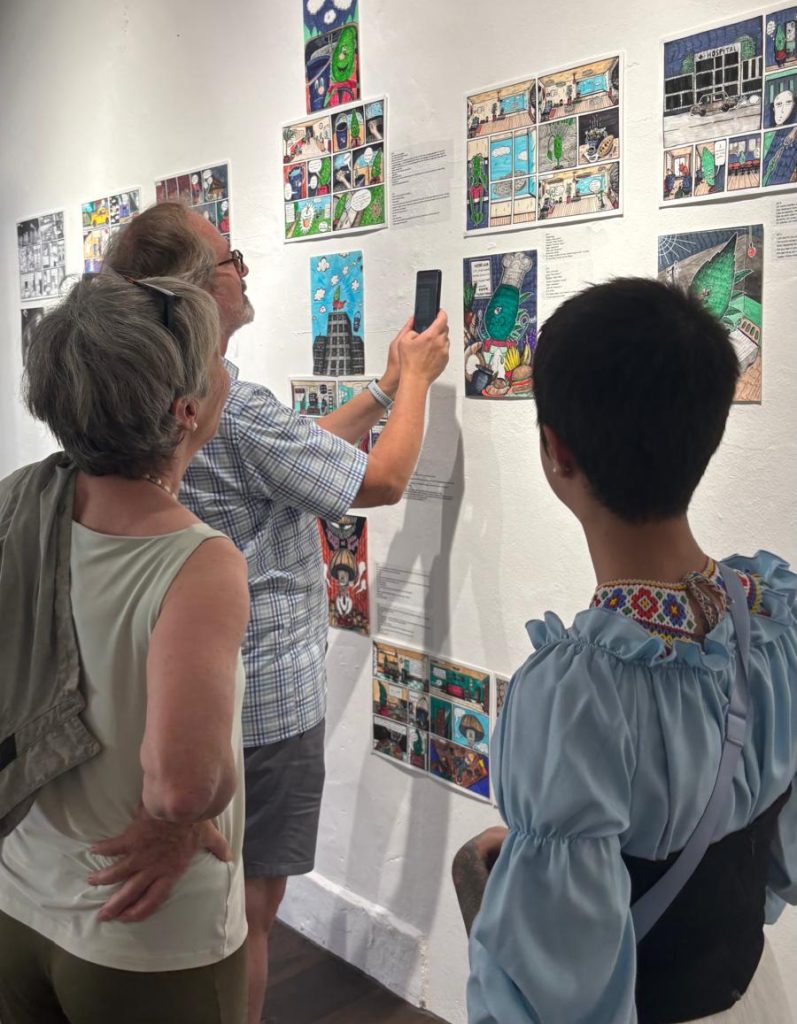
The comic “Mr. Travchyk” by artist Tamara Safarova is traveling to Switzerland: its exhibition opens at the Open Art Museum St. Gallen with the support of the USB Association. The work, which Tamara began conceptualizing in 2021 and started creating literally on the eve of Russia’s full scale invasion, when she had to leave Kyiv, has over four years evolved into a cohesive story about vulnerability, belonging, and the search for home, executed in ink, pen, and markers. In a conversation with USB, Tamara reflects on working with trauma, the sense of home, and the search for inner support through the art of comics.
— How does the transition from personal trauma to working with collective memory emerge in your artistic practice, and where do you draw the line between art as therapy and art as public expression?
I am a Ukrainian artist of Azerbaijani origin, living and working in Kyiv. I am self taught: I have been drawing all my life, but I only began building my artistic career in 2022. The full scale invasion became a trigger to realize that there might be no time left. I truly believe that art can change the world and reach people’s hearts. For me personally, it also has a therapeutic effect: I work with identity, cultural heritage, trauma, and transformation, and I also create participatory projects, collaborative works with people without formal art education. Through comic workshops, I see how art improves mental health and the overall well being of participants. Recently, my focus has been on landscapes marked by trauma and extraction. Unfortunately, there are many such places in Ukraine. I am interested in how the body and the landscape can become tools of healing, not only for individuals but also on a collective level.
— How does a fatalistic perception of reality, shaped by living under air raid sirens and bombardments, influence your artistic practice?
I have come to terms with the “moment of mortality”: if you choose to remain in Ukraine, this decision requires acknowledging the possibility of different scenarios. Perhaps it is more accurate to say not “accept,” but to try to comprehend, because fully accepting it is personally difficult for me. Comics often work with autobiographical experience, moving from the individual to the collective. I do the same, taking my own experiences or those of people around me and looking for parallels with collective processes. There are also predecessors: “Maus” by Art Spiegelman about his father, a concentration camp survivor, or “Persepolis” by Marjane Satrapi about growing up in Iran after the revolution. I am drawn to how the combination of image and text allows for telling complex stories. “Mr. Travchyk” began as a story about the legalization of medical cannabis, a particularly relevant issue during wartime due to the need to treat trauma among both military personnel and civilians. Over time, however, I realized that the comic is about much more: about otherness and the feeling of being “different” in the world. The theme of searching for home is also present: for me, home is прежде всего an inner state, because today it exists and tomorrow it may not. That is why it is important to find support within oneself. At the same time, it is also a matter of safety, as in Ukraine it is currently impossible to feel physically secure.
— What are your expectations of the Swiss audience at the exhibition in St. Gallen?
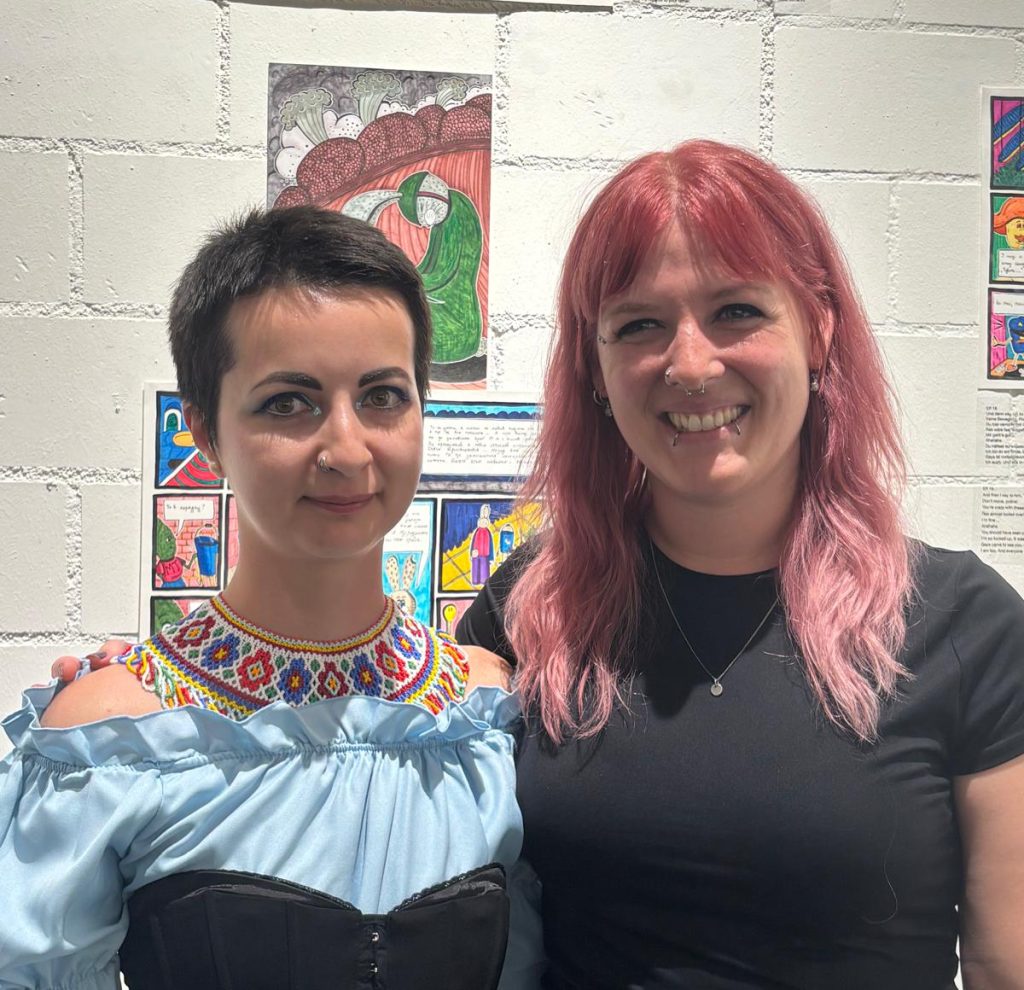
I try to minimize expectations in order to avoid disappointment. For me, the very fact that the exhibition will take place is already important. I want to act as a kind of bridge between cultures, which is connected to my mixed Ukrainian Azerbaijani identity. It matters to me that both Ukrainian and Swiss audiences see common ground despite differences. In the workshop, I work with the theme of memory: recollections, objects from home, experiences of loss, dreams, and imagination. I provide tools and techniques, and then each participant works with their own story in a safe space. I am curious to see what parallels will emerge among the participants.
— How can art become a tool of cultural diplomacy between countries and communities?
My exhibition activity began exactly with this: my first exhibition took place in 2022 at a museum in Stuttgart. The project “Postcards from Ukraine” presented Ukrainian cities before the full scale invasion as an archive of memory. I want the world to see Ukraine not only through the war, but through its culture and heritage. This is what cultural diplomacy is: speaking about Ukraine, its history, and its statehood, which are often distorted or appropriated. That is why it is important for Ukrainian culture to sound loud and clear in the world.
The exhibition “Mr. Travchyk” at the Open Art Museum St. Gallen runs from June 24 to September 27, 2026.