On-site reporting: Olena Krylova, Venice
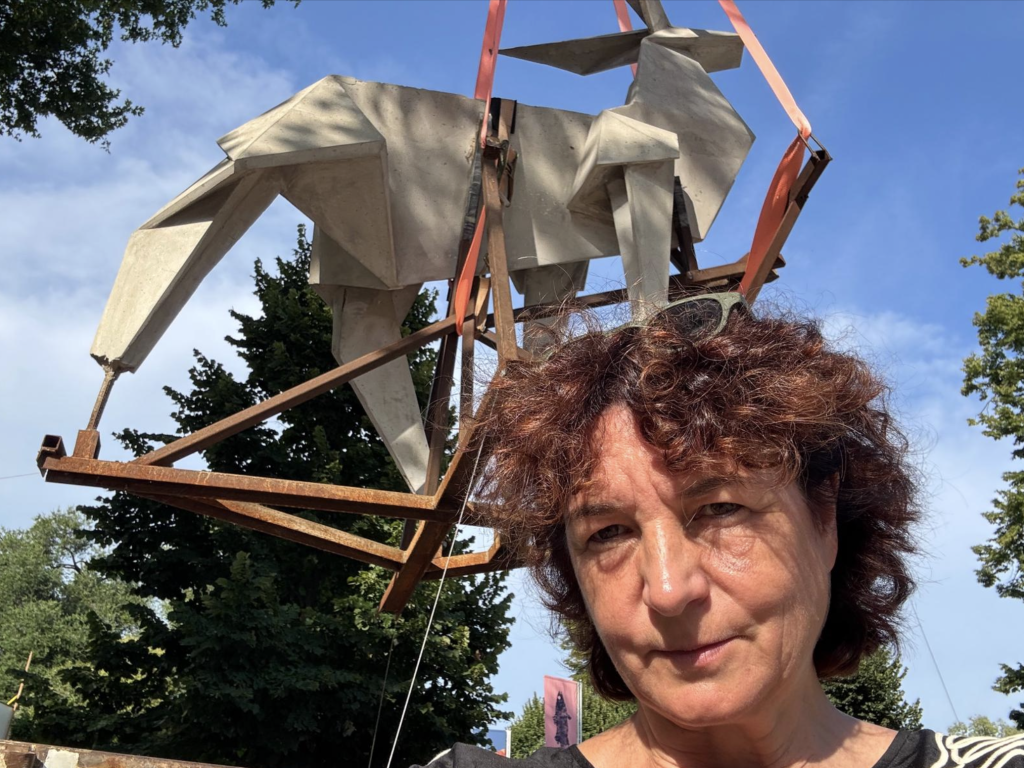
In August 2024, as the front line drew closer to Pokrovsk, the artist Zhanna Kadyrova did something that sounds impossible: she evacuated a sculpture. Her concrete «Deer», created in 2019 for a public park in the Donetsk region, was carefully dismantled by the artist, curator Leonid Marushchak and a team of municipal workers, and moved to safety — the way one moves a grandmother, an archive, a family photograph. In 2025, the Deer travelled more than 3,000 kilometres across Europe on the open bed of a truck. Today it hangs suspended from a crane on the Venetian lagoon, part of Ukraine’s national pavilion at the 61st Venice Biennale.
A sculpture that had to flee. It is hard to imagine a more precise image for what millions of people already know from their own lives: displacement does not only move bodies. It moves languages, songs, recipes, archives, entire cultures — and the question of what survives the journey is anything but abstract.
A Biennale in a minor key
This year’s Biennale, titled «In Minor Keys» and conceived by the late curator Koyo Kouoh, deliberately turns away from spectacle. It asks visitors to slow down and listen to quieter registers — memory, ritual, intimacy, transformation. And when one walks through the Giardini, the Arsenale and the palazzi of Venice with open eyes, one theme returns again and again, in dozens of national accents: what happens to culture when people are forced to move?
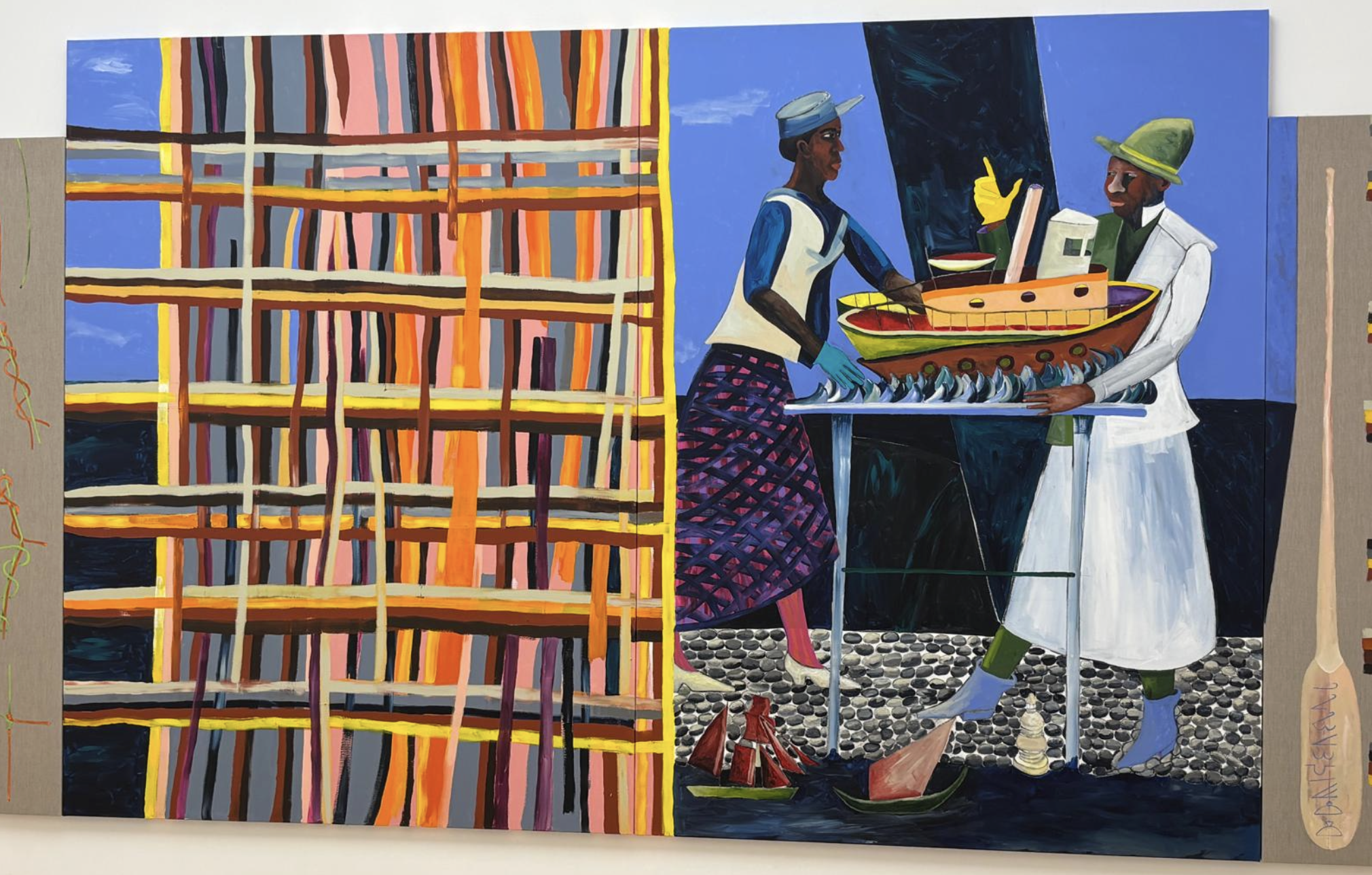
The answers come from every continent. At the Kosovo pavilion, Brilant Milazimi’s seventeen-metre painting shows a line of figures suspended in waiting — shaped by borders, bureaucracy and uncertain futures, a condition familiar to anyone who has ever held a temporary permit. Somalia’s first-ever pavilion gives space to the diaspora poet Warsan Shire, whose spatialised verses speak of displacement across three floors of a Venetian palazzo. The Bahamas honours the late artist John Beadle with an installation built from salvaged Junkanoo carnival costumes — a community carrying its own tradition forward after loss. At the Moroccan pavilion, Amina Agueznay’s monumental weaving installation asks how craft knowledge passes from hand to hand across generations and thresholds.
In this chorus, Ukraine’s «Security Guarantees» is one voice among many — but a piercing one. «These guarantees were supposed to protect us. But they existed only on paper», Kadyrova has said of the 1994 Budapest Memorandum that gives the pavilion its title. Her wandering Deer, torn from its pedestal, mirrors the experience of every person who has had to leave home without knowing when, or whether, return will be possible.
Joy as resistance
A short vaporetto ride away, in the Palazzo Contarini Polignac in Dorsoduro, the collateral exhibition «Still Joy — From Ukraine into the World» (PinchukArtCentre, until 1 August) takes the theme somewhere unexpected. Instead of documenting loss, it documents what refuses to be lost. Curators Björn Geldhof and Oleksandra Pogrebnyak built the exhibition around testimonies of joy collected in Ukraine — stories that, in their words, express a profound will to live and make it possible to imagine a future together.
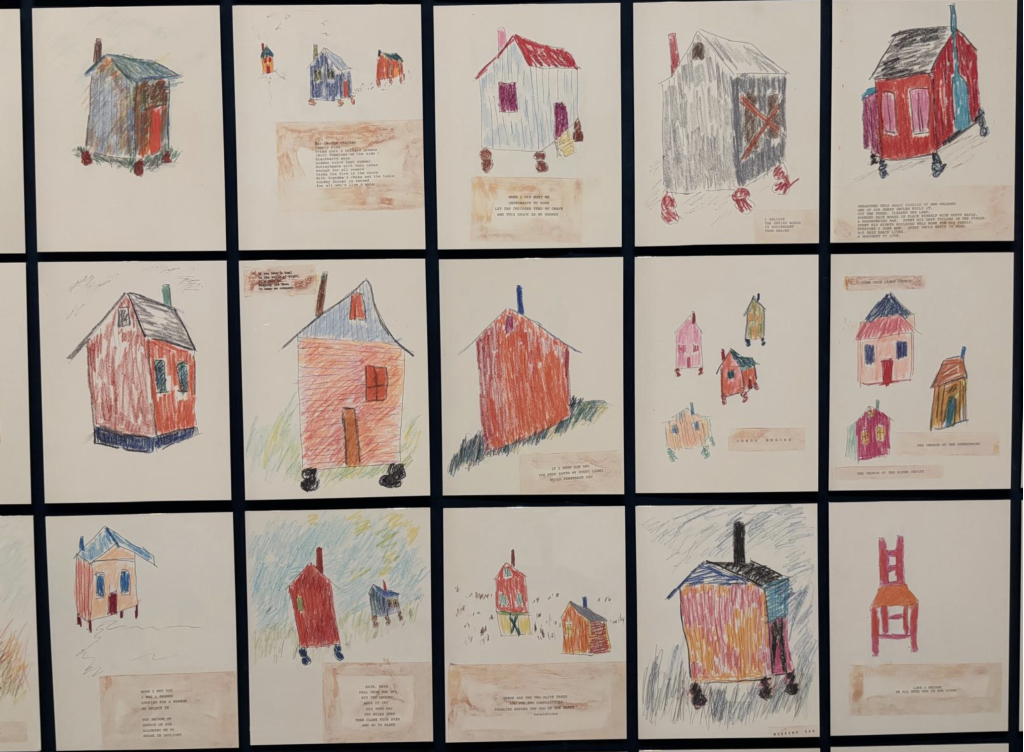
The exhibition deliberately places Ukrainian artists in dialogue with international ones. Ashfika Rahman’s installation of 4’849 Hindu temple bells speaks for displaced Indigenous communities in Bangladesh; Roman Khimei and Yarema Malashchuk’s video follows a boy who fled to Poland as he revisits his hometown Zaporizhzhia through a robot — speaking with his mother across the distance that war has created. Displacement, the exhibition insists, is not a national story. It is a human one, and so is the stubborn capacity for joy inside it.
Hlib Stryzhko, a marine and former prisoner of war whose collected stories anchor the exhibition, put it simply at the opening: «I love life very much, and I think life loves me too.»
Why this matters beyond Venice
For communities living in displacement — including the Ukrainian community in Switzerland — Venice this year offers something more useful than sympathy: it offers a vocabulary. It shows that a culture in movement is not a culture in decline. Traditions can be dismantled, transported and reassembled. Archives can travel on the back of a truck. Poetry written in exile can fill a palazzo. And joy, carefully collected and passed on, can stand alongside grief without cancelling it.
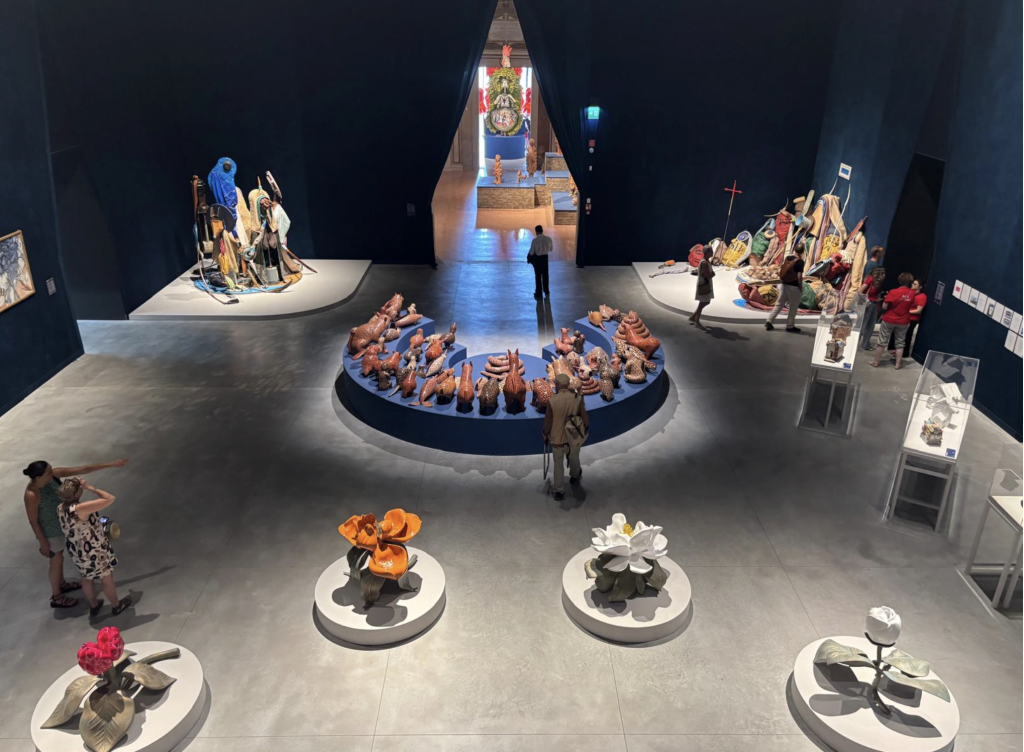
This is precisely the terrain on which diaspora cultural work operates every day — in studios, community radios, exhibition halls and rehearsal rooms far from Venice. The Biennale simply confirms, on the world’s most visible art stage, what displaced communities everywhere already practise: that carrying culture across a border is itself a creative act.
Or, if no additional voice is gathered, the final word belongs to Hlib Stryzhko, whose reminder travels well beyond the lagoon: the strength of the displaced lies in the ability to find joy every day, despite everything.